

Thysonopoda
T. tricuspidota.
T. aequolir
1. rnicrophlhoirna
T ocutlirons
T. pectinoto
T. onenlalir
T. cristoto
T. egregia
T. cornuta /T. spinicoudata
M. norvegica
N.aurtralis
N. capensis
N. muchii
N. simplex
Preudeuphausia
P. latifrons
P. sinico
E. brevis
E. frigid0
E. hrohnii
E. recurvo
E. lucens
E nona
E. pacific0
E. similis
E. superb0
E. voilentini
E. tenero
E. distinguendo
E. hernigibba
E. longirostrir
E. spinifera
E. triocontho
Meganycliphones
Nyctiphanes
Euphausia
Thysonb'ersa
T. inermis
T. raschii
T. gregaria
T. longicoudato
T. mocruro
T. vicina
Nernatoscelis
N. difficilis
N. megolops
N. rnicrops/N. otlantica
N. rnicrapr
N. tenelia
S. corinotum
S . suhmii
S. elongatum
S. iongicorne
S. obbrevioturn
S. maximum
Stylocheiron
'I
_ I
P- x x x x x
I -11,30
I ,2,3,3l
30
1,2,5,30, 31
1,2,29
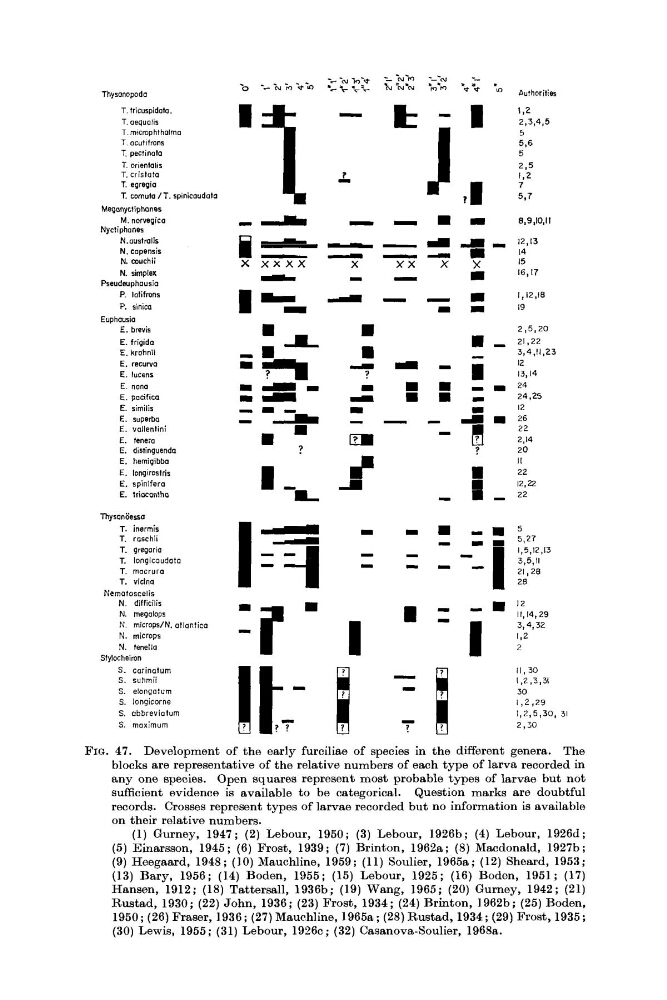
FIG. 47. Development of the early furciliae of species in the different genera. The
blocks are representative of the relative numbers of each type of larva recorded in
any one species. Open squares represent most probable types of larvae but not
sufficient evidence is available to be categorical. Question marks are doubtful
records. Crosses represent types of larvae recorded but no information is available
on their relative numbers.
( I ) Gurney, 1947; (2) Lebour, 1950; (3) Lebour, 1926b; (4) Lebour, 1926d;
(5) Einarsson, 1945; (6) Frost, 1939; (7) Brinton, 1962a; (8) Macdonald, 1927b;
(9) Hsegaard, 1948; (10) Mauchline, 1959; (11) Soulier, 1965a; (12) Sheard, 1953;
(13) Bary, 1956; (14) Boden, 1955; (15) Lebour, 1925; (16) Boden, 1951; (17)
Hansen, 1912; (18) Tattersall, 1936b; (19) Wang, 1965; (20) Gurney, 1942; (21)
Rustad, 1930; (22) John, 1936; (23) Frost, 1934; (24) Brinton, 1962b; (25) Boden,
1950; (26) Fraser, 1936; (27) Mauchline, 1965a; (28) Rustad, 1934; (29) Frost, 1935;
(30) Lewis, 1955; (31) Lebour, 1926c; (32) Casanova-Soulier, 1968a.
T. tricuspidota.
T. aequolir
1. rnicrophlhoirna
T ocutlirons
T. pectinoto
T. onenlalir
T. cristoto
T. egregia
T. cornuta /T. spinicoudata
M. norvegica
N.aurtralis
N. capensis
N. muchii
N. simplex
Preudeuphausia
P. latifrons
P. sinico
E. brevis
E. frigid0
E. hrohnii
E. recurvo
E. lucens
E nona
E. pacific0
E. similis
E. superb0
E. voilentini
E. tenero
E. distinguendo
E. hernigibba
E. longirostrir
E. spinifera
E. triocontho
Meganycliphones
Nyctiphanes
Euphausia
Thysonb'ersa
T. inermis
T. raschii
T. gregaria
T. longicoudato
T. mocruro
T. vicina
Nernatoscelis
N. difficilis
N. megolops
N. rnicrops/N. otlantica
N. rnicrapr
N. tenelia
S. corinotum
S . suhmii
S. elongatum
S. iongicorne
S. obbrevioturn
S. maximum
Stylocheiron
'I
_ I
P- x x x x x
I -11,30
I ,2,3,3l
30
1,2,5,30, 31
1,2,29
FIG. 47. Development of the early furciliae of species in the different genera. The
blocks are representative of the relative numbers of each type of larva recorded in
any one species. Open squares represent most probable types of larvae but not
sufficient evidence is available to be categorical. Question marks are doubtful
records. Crosses represent types of larvae recorded but no information is available
on their relative numbers.
( I ) Gurney, 1947; (2) Lebour, 1950; (3) Lebour, 1926b; (4) Lebour, 1926d;
(5) Einarsson, 1945; (6) Frost, 1939; (7) Brinton, 1962a; (8) Macdonald, 1927b;
(9) Hsegaard, 1948; (10) Mauchline, 1959; (11) Soulier, 1965a; (12) Sheard, 1953;
(13) Bary, 1956; (14) Boden, 1955; (15) Lebour, 1925; (16) Boden, 1951; (17)
Hansen, 1912; (18) Tattersall, 1936b; (19) Wang, 1965; (20) Gurney, 1942; (21)
Rustad, 1930; (22) John, 1936; (23) Frost, 1934; (24) Brinton, 1962b; (25) Boden,
1950; (26) Fraser, 1936; (27) Mauchline, 1965a; (28) Rustad, 1934; (29) Frost, 1935;
(30) Lewis, 1955; (31) Lebour, 1926c; (32) Casanova-Soulier, 1968a.