

116
THE BIOLOGY OF EUPHAUSIIDS
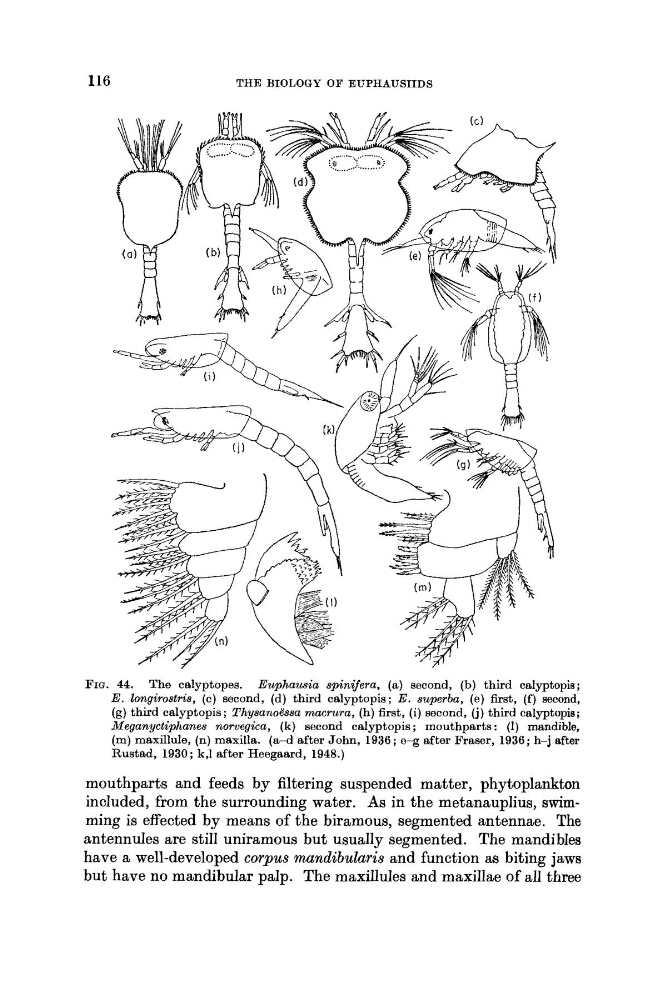
FIG. 44. The calyptopes. Euphausiu spinijeru, (a) second, (b) third calyptopis;
E. Zonqirosiris, (c) second, (d) third calyptopis; E. superba, (e) first, (f) second,
(g) third calyptopis; Thysaiaoessa macrura, (h) first, (i) second, (j) third calyptopia;
Meqanyctiphanes norveqica, (k) second calyptopis ; mouthparts : (1) mandible,
(m) maxillule, (n) maxilla. (a-d after John, 1936; e-g after Fraser, 1936; h-j after
Rustad, 1930; k,l after Heegaard, 1948.)
mouthparts and feeds by filtering suspended matter, phytoplankton
included, from the surrounding water. As in the metanauplius, swimming is effected by means of the biramous, segmented antennae. The
antennules are still uniramous but usuaIly segmented. The mandibles
have a well-developed corpus mndibularis and function as biting jaws
but have no mandibular palp. The maxillules and maxillae of a11 three
THE BIOLOGY OF EUPHAUSIIDS
FIG. 44. The calyptopes. Euphausiu spinijeru, (a) second, (b) third calyptopis;
E. Zonqirosiris, (c) second, (d) third calyptopis; E. superba, (e) first, (f) second,
(g) third calyptopis; Thysaiaoessa macrura, (h) first, (i) second, (j) third calyptopia;
Meqanyctiphanes norveqica, (k) second calyptopis ; mouthparts : (1) mandible,
(m) maxillule, (n) maxilla. (a-d after John, 1936; e-g after Fraser, 1936; h-j after
Rustad, 1930; k,l after Heegaard, 1948.)
mouthparts and feeds by filtering suspended matter, phytoplankton
included, from the surrounding water. As in the metanauplius, swimming is effected by means of the biramous, segmented antennae. The
antennules are still uniramous but usuaIly segmented. The mandibles
have a well-developed corpus mndibularis and function as biting jaws
but have no mandibular palp. The maxillules and maxillae of a11 three