

106
THE BIOLOGY OF EUPTIAUSIIDS
100
T.raschii
M.norvegico
0
..
o)
60m
c 0
+
e
a" 4 0 -
20
Egg diameter
( m m )
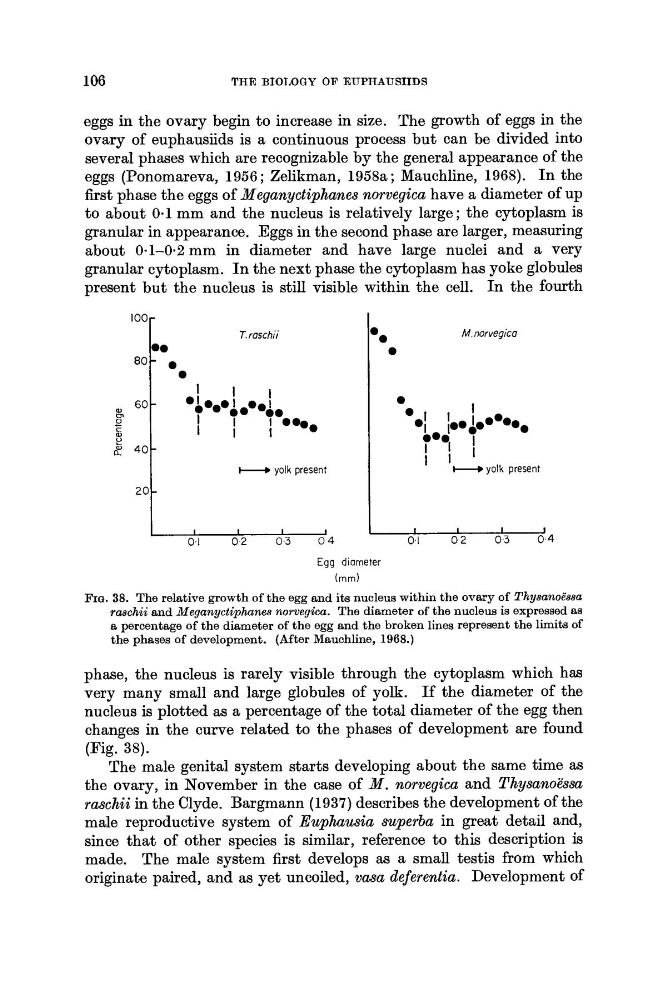
FIG. 38. The relative growth of the egg and its nucleus within the ovary of Thysanobsa
raschii and Meganyctiphunes norvegica. The diameter of the nucleus is expressed as
a percentage of the diameter of the egg and the broken lines represent the limits of
the phases of development. (After Msuchline, 1968.)
I
'
1
1
0
0
" 0 01 0 . 1
0 0 0.
00
I
I
yolk present
yolk present
'
-
I
I
I
I
I
I
I
J
phase, the nucleus is rarely visible through the cytoplasm which has
very many small and large globules of yolk. If the diameter of the
nucleus is plotted as a percentage of the total diameter of the egg then
changes in the curve related to the phases of development are found
(Fig. 38).
The male genital system starts developing about the same time as
the ovary, in November in the case of M . norvegica and Thysanoessa
raschii in the Clyde. Bargmann (1937) describes the development of the
male reproductive system of Euphausia superba in great detail and,
since that of other species is similar, reference to this description is
made. The male system first develops as a small testis from which
originate paired, and as yet uncoiled, vasa deferentia. Development of
eggs in the ovary begin to increase in size. The growth of eggs in the
ovary of euphausiids is a continuous process but can be divided into
several phases which are recognizable by the general appearance of the
eggs (Ponomareva, 1956; Zelikman, 1958a; Mauchline, 1968). In the
first phase the eggs of Neganyctiphanes norvegica have a diameter of up
to about 0.1 mm and the nucleus is relatively large ; the cytoplasm is
granular in appearance. Eggs in the second phase are larger, measuring
about 0-1-0.2 mm in diameter and have large nuclei and a very
granular cytoplasm. In the next phase the cytoplasm has yoke globules
present but the nucleus is still visible within the cell. In the fourth
THE BIOLOGY OF EUPTIAUSIIDS
100
T.raschii
M.norvegico
0
..
o)
60m
c 0
+
e
a" 4 0 -
20
Egg diameter
( m m )
FIG. 38. The relative growth of the egg and its nucleus within the ovary of Thysanobsa
raschii and Meganyctiphunes norvegica. The diameter of the nucleus is expressed as
a percentage of the diameter of the egg and the broken lines represent the limits of
the phases of development. (After Msuchline, 1968.)
I
'
1
1
0
0
" 0 01 0 . 1
0 0 0.
00
I
I
yolk present
yolk present
'
-
I
I
I
I
I
I
I
J
phase, the nucleus is rarely visible through the cytoplasm which has
very many small and large globules of yolk. If the diameter of the
nucleus is plotted as a percentage of the total diameter of the egg then
changes in the curve related to the phases of development are found
(Fig. 38).
The male genital system starts developing about the same time as
the ovary, in November in the case of M . norvegica and Thysanoessa
raschii in the Clyde. Bargmann (1937) describes the development of the
male reproductive system of Euphausia superba in great detail and,
since that of other species is similar, reference to this description is
made. The male system first develops as a small testis from which
originate paired, and as yet uncoiled, vasa deferentia. Development of
eggs in the ovary begin to increase in size. The growth of eggs in the
ovary of euphausiids is a continuous process but can be divided into
several phases which are recognizable by the general appearance of the
eggs (Ponomareva, 1956; Zelikman, 1958a; Mauchline, 1968). In the
first phase the eggs of Neganyctiphanes norvegica have a diameter of up
to about 0.1 mm and the nucleus is relatively large ; the cytoplasm is
granular in appearance. Eggs in the second phase are larger, measuring
about 0-1-0.2 mm in diameter and have large nuclei and a very
granular cytoplasm. In the next phase the cytoplasm has yoke globules
present but the nucleus is still visible within the cell. In the fourth