

FAUNA AND FLORA OF MANGROVE SWAMPS
87
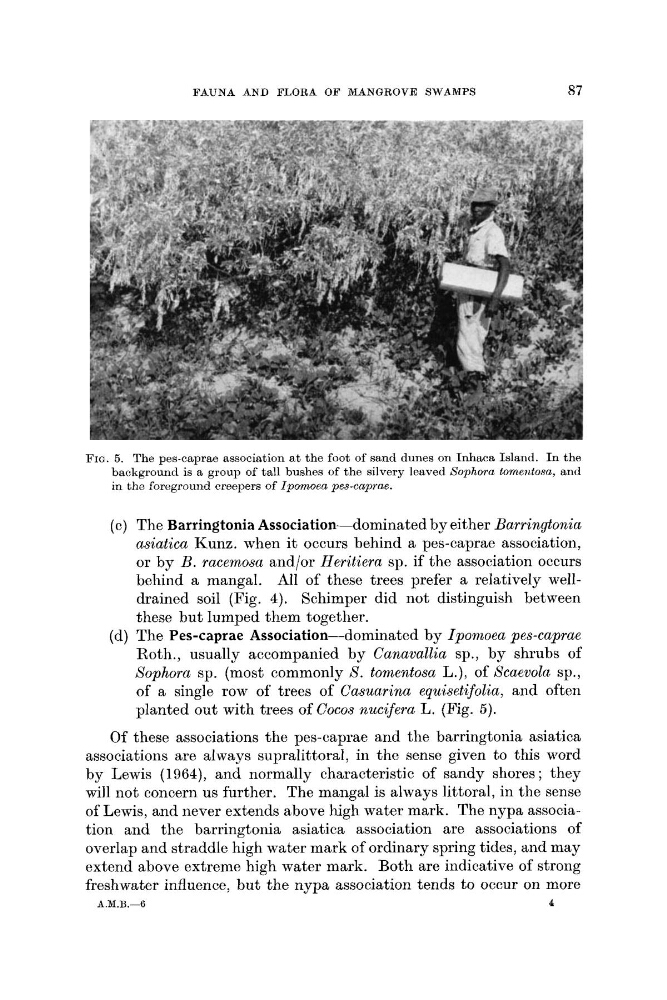
FIG. 5. The pes-caprae association a t the foot of sand dunes on Inhaca Island. In the
background is a group of tall bushes of the silvery leaved Sophora tomentosa, and
in the foreground creepers of Ipomoea pes-caprae.
(c) The Barringtonia Association-dominated by either Barringtoizia
asiatica Kunz. when it occurs behind a pes-caprae association,
or by B. racemosa and/or Heritiera sp. if the association occurs
behind a mangal. All of these trees prefer a relatively welldrained soil (Fig. 4). Schiniper did not distinguish between
these but lumped them together.
(d) The Pes-caprae Association-dominated by Ipomoea pes-caprae
Roth., usually accompanied by Canavallia sp., by shrubs of
Sophora sp. (most commonly S. tomentosa L.), of Xcaevola sp.,
of a single row of trees of Casuarina equisetifolia, and often
planted out with trees of Cocos nucifera L. (Fig. 5 ) .
Of these associations the pes-caprae and the barringtonia asiatica
associations are always supralittoral, in the sense given to this word
by Lewis (1964), and normally characteristic of sandy shores; they
will not concern us further. The mangal is always littoral, in the sense
of Lewis, and never extends above high water mark. The nypa association and the barringtonia asiatica association are associations of
overlap and straddle high water mark of ordinary spring tides, and may
extend above extreme high water mark. Both are indicative of strong
freshwater influence, but the nypa association tends to occur on more
A.M.B.-6
4
87
FIG. 5. The pes-caprae association a t the foot of sand dunes on Inhaca Island. In the
background is a group of tall bushes of the silvery leaved Sophora tomentosa, and
in the foreground creepers of Ipomoea pes-caprae.
(c) The Barringtonia Association-dominated by either Barringtoizia
asiatica Kunz. when it occurs behind a pes-caprae association,
or by B. racemosa and/or Heritiera sp. if the association occurs
behind a mangal. All of these trees prefer a relatively welldrained soil (Fig. 4). Schiniper did not distinguish between
these but lumped them together.
(d) The Pes-caprae Association-dominated by Ipomoea pes-caprae
Roth., usually accompanied by Canavallia sp., by shrubs of
Sophora sp. (most commonly S. tomentosa L.), of Xcaevola sp.,
of a single row of trees of Casuarina equisetifolia, and often
planted out with trees of Cocos nucifera L. (Fig. 5 ) .
Of these associations the pes-caprae and the barringtonia asiatica
associations are always supralittoral, in the sense given to this word
by Lewis (1964), and normally characteristic of sandy shores; they
will not concern us further. The mangal is always littoral, in the sense
of Lewis, and never extends above high water mark. The nypa association and the barringtonia asiatica association are associations of
overlap and straddle high water mark of ordinary spring tides, and may
extend above extreme high water mark. Both are indicative of strong
freshwater influence, but the nypa association tends to occur on more
A.M.B.-6
4