

334
ELVEZIO GHIRARDELLI
to iYpadella, shows as well some affinities with the genus Eukhronia.
Figures 5 and 6 of Tokioka (1939b) recall in a surprising way the
appearance of the specimen of Eukhronia bathyantarctica which I
mentioned.
From all these observations, it seems that it may be safely stated
that in pelagic chaetognaths mating or fertilization are different in
character from those described for Xpadella cephaloptera. This can
easily be understood if one takes into account the different habitat,
benthic in h'padella and Bathyspadella and pelagic in all other species.
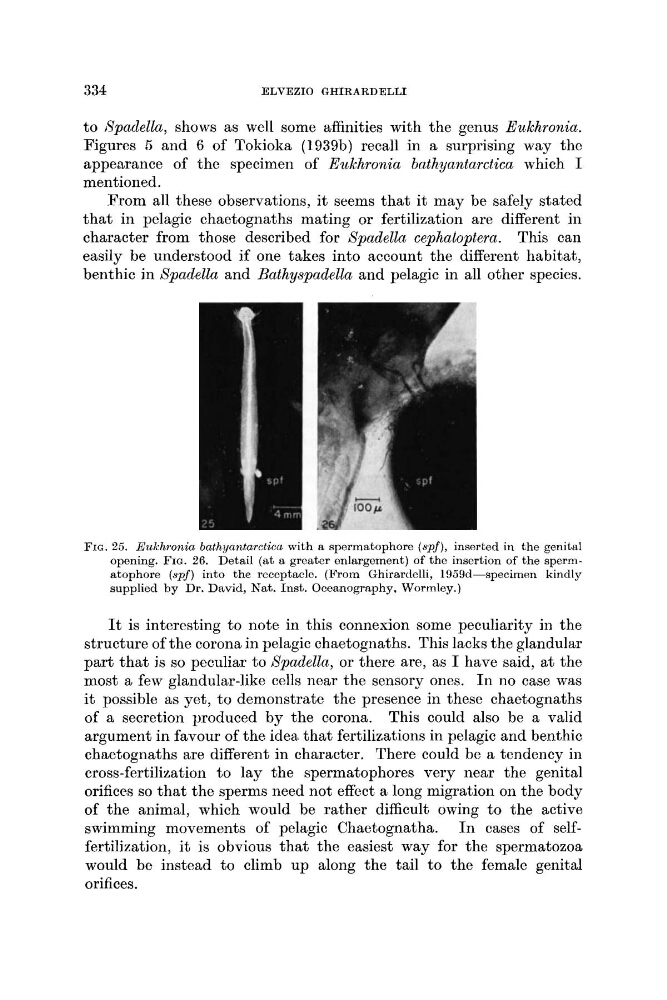
FIG. 25. Eukhronia bathyantarctica with a spermatophore (spf), inserted in the genital
opcning. FIG. 26. Detail (at a greater enlargement) of the insertion of the spermatophore (&)
into the receptacle. (From Ghirardelli, 1969d-specimen kindly
supplied by Dr. David, Kat. Inst. Oceanography, Wormley.)
It is interesting to note in this connexion some peculiarity in the
structure of the corona in pelagic chaetognaths. This lacks the glandular
part that is so peculiar to Xpadella, or there are, as I have said, at the
most a few glandular-like cells near the sensory ones. I n no case was
it possible as yet, to demonstrate the presence in these chaetognaths
of a secretion produced by the corona, This could also be a valid
argument in favour of the idea, that fertilizations in pelagic and benthic
chaetognaths are different in character. There could be a tendency in
cross-fertilization to lay the spermatophores very near the genital
orifices so that the sperms need not effect a long migration on the body
of the animal, which would be rather difficult owing to the active
swimming movements of pelagic Chaetognatha. I n cases of selffertilization, it is obvious that the easiest way for the spermatozoa
would be instead to climb up along the tail to the female genit,al
orifices.
ELVEZIO GHIRARDELLI
to iYpadella, shows as well some affinities with the genus Eukhronia.
Figures 5 and 6 of Tokioka (1939b) recall in a surprising way the
appearance of the specimen of Eukhronia bathyantarctica which I
mentioned.
From all these observations, it seems that it may be safely stated
that in pelagic chaetognaths mating or fertilization are different in
character from those described for Xpadella cephaloptera. This can
easily be understood if one takes into account the different habitat,
benthic in h'padella and Bathyspadella and pelagic in all other species.
FIG. 25. Eukhronia bathyantarctica with a spermatophore (spf), inserted in the genital
opcning. FIG. 26. Detail (at a greater enlargement) of the insertion of the spermatophore (&)
into the receptacle. (From Ghirardelli, 1969d-specimen kindly
supplied by Dr. David, Kat. Inst. Oceanography, Wormley.)
It is interesting to note in this connexion some peculiarity in the
structure of the corona in pelagic chaetognaths. This lacks the glandular
part that is so peculiar to Xpadella, or there are, as I have said, at the
most a few glandular-like cells near the sensory ones. I n no case was
it possible as yet, to demonstrate the presence in these chaetognaths
of a secretion produced by the corona, This could also be a valid
argument in favour of the idea, that fertilizations in pelagic and benthic
chaetognaths are different in character. There could be a tendency in
cross-fertilization to lay the spermatophores very near the genital
orifices so that the sperms need not effect a long migration on the body
of the animal, which would be rather difficult owing to the active
swimming movements of pelagic Chaetognatha. I n cases of selffertilization, it is obvious that the easiest way for the spermatozoa
would be instead to climb up along the tail to the female genit,al
orifices.