

SOME ASPECTS OF THE BIOLOGY OF THE CHAETOGNATHS
325
the receptacles. The same individuals can also mate together several
times in a short while and the act may occur in the laboratory at
various hours of the day but takes place mostly in the late afternoon
when evening has begun. On the other hand, the strong light used to
illuminate the microscope field does not seem to disturb individuals
preparing for mating or those already mated.
2
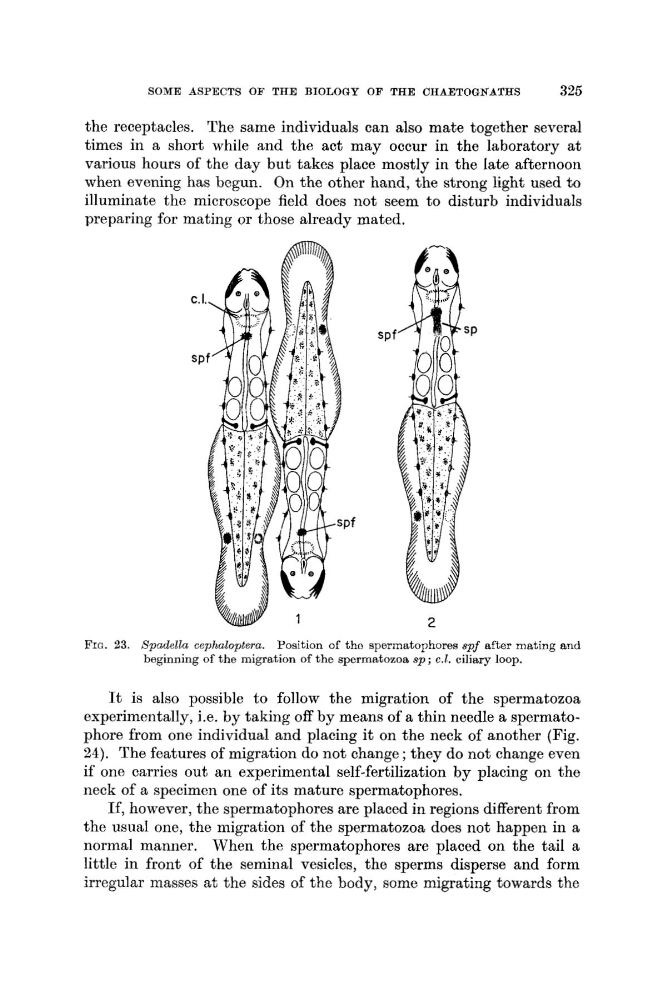
FIG. 23. Spadclla cephaloptera. Position of the spermatophores spf after mating and
beginning of the migration of the spermatozoa sp ; c.i. ciliary loop.
It is also possible to follow the migration of the spermatozoa
experimentally, i.e. by taking off by means of a thin needle a spermatophore from one individual and placing it on the neck of another (Fig.
24). The features of migration do not change ; they do not change even
if one carries out an experimental self-fertilization by placing on the
neck of a specimen one of its mature spermatophores.
If, however, the spermatophores are placed in regions different from
the usual one, the migration of the spermatozoa does not happen in a
normal manner. When the spermatophores are placed on the tail a
little in front of the seminal vesicles, the sperms disperse and form
irregular masses a t the sides of the body, some migrating towards the
325
the receptacles. The same individuals can also mate together several
times in a short while and the act may occur in the laboratory at
various hours of the day but takes place mostly in the late afternoon
when evening has begun. On the other hand, the strong light used to
illuminate the microscope field does not seem to disturb individuals
preparing for mating or those already mated.
2
FIG. 23. Spadclla cephaloptera. Position of the spermatophores spf after mating and
beginning of the migration of the spermatozoa sp ; c.i. ciliary loop.
It is also possible to follow the migration of the spermatozoa
experimentally, i.e. by taking off by means of a thin needle a spermatophore from one individual and placing it on the neck of another (Fig.
24). The features of migration do not change ; they do not change even
if one carries out an experimental self-fertilization by placing on the
neck of a specimen one of its mature spermatophores.
If, however, the spermatophores are placed in regions different from
the usual one, the migration of the spermatozoa does not happen in a
normal manner. When the spermatophores are placed on the tail a
little in front of the seminal vesicles, the sperms disperse and form
irregular masses a t the sides of the body, some migrating towards the