

HOME ASPECTS O F THE BIOLOGY O F TIIE CHAETOGNATHS
295
receptacle, is nevertheless quite distinct from it. It is present only
at the moment of the laying and therefore it has been called a temporary oviduct (Stevens, 1910). Thc seminal receptacle is closed
anteriorly contrary to what Bordis (1920) affirmed ; posteriorly
it turns at a right angle towards the outside and forms the vagina
which opens into the external genital papilla. The papilla is formed by
a few cells which constitute a sort of small cupola; they continue
towards the inside of the body in two layers. To the inner one there
follows the syncytium which lines the seminal pouch. Several elongated
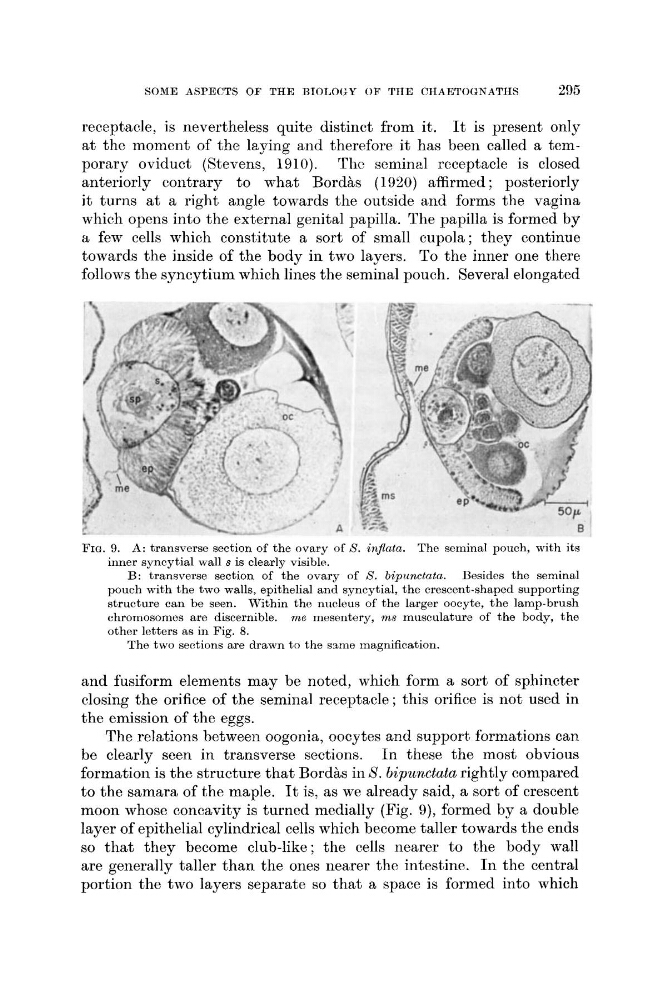
FIG. 9. A: transverse section of the ovary of S. inflata. The seminal pouch, with its
inner syncytial wall s is clearly visible.
B: transverse section of the ovary of S. bipunctata. Besides the seminal
pouch with the two walls, epithelial and syncytial, the crescent-shaped supporting
structure can be seen. Within tho nucleus of the larger oocyte, the lamp-brush
chromosonics are discernible. me mesentery, ms musculature of the body, the
other letters as in Fig. 8.
The two sections are drawn t o the ssme magnification.
and fusiform elements may be noted, which form a sort of sphincter
closing the orifice of the seminal receptacle ; this orifice is not used in
the emission of the eggs.
The relations between oogonia, oocytes and support formations can
be clearly seen in transverse sections. In these the most obvious
formatioii is the structure that Bordis in S. bipunctata rightly compared
to the samara of the maple. It is, as we already said, a sort of crescent
moon whose concavity is turned medially (Fig. 9), formed by a double
layer of epithelial cylindrical cells which become taller towards the ends
so that they become club-like; the cells nearer to the body wall
are generally taller than the ones nearer the intestine. I n the central
portion the two layers separate so that a space is formed into which
295
receptacle, is nevertheless quite distinct from it. It is present only
at the moment of the laying and therefore it has been called a temporary oviduct (Stevens, 1910). Thc seminal receptacle is closed
anteriorly contrary to what Bordis (1920) affirmed ; posteriorly
it turns at a right angle towards the outside and forms the vagina
which opens into the external genital papilla. The papilla is formed by
a few cells which constitute a sort of small cupola; they continue
towards the inside of the body in two layers. To the inner one there
follows the syncytium which lines the seminal pouch. Several elongated
FIG. 9. A: transverse section of the ovary of S. inflata. The seminal pouch, with its
inner syncytial wall s is clearly visible.
B: transverse section of the ovary of S. bipunctata. Besides the seminal
pouch with the two walls, epithelial and syncytial, the crescent-shaped supporting
structure can be seen. Within tho nucleus of the larger oocyte, the lamp-brush
chromosonics are discernible. me mesentery, ms musculature of the body, the
other letters as in Fig. 8.
The two sections are drawn t o the ssme magnification.
and fusiform elements may be noted, which form a sort of sphincter
closing the orifice of the seminal receptacle ; this orifice is not used in
the emission of the eggs.
The relations between oogonia, oocytes and support formations can
be clearly seen in transverse sections. In these the most obvious
formatioii is the structure that Bordis in S. bipunctata rightly compared
to the samara of the maple. It is, as we already said, a sort of crescent
moon whose concavity is turned medially (Fig. 9), formed by a double
layer of epithelial cylindrical cells which become taller towards the ends
so that they become club-like; the cells nearer to the body wall
are generally taller than the ones nearer the intestine. I n the central
portion the two layers separate so that a space is formed into which