

12
J . A. GULLAX’IU AND J . E. CARROZ
which until recently had been only lightly exploited, have become
depleted (see the annual reports of the I.C.N.A.F. Assessment subCommittee in the I.C.N.A.F. Red Books ; Beverton and Hodder, 1962)
(Figs. 5 and 6).
The exploitation of the pelagic species (particularly herring) has not
(up t o 1965) gone so far as that of the bottom-living cod, haddock, etc.,
but some of the local stocks of herring, such as those in the southern
North Sea have been seriously depleted by fishing, and lately there has
been increasing concern about other herring stocks (see recent I.C.E.S.
Liaison Committee reports).
These events in the North Atlantic may be summarized in the form
of a map showing the approximate date at which the fishing on each
stock reached a level a t which further increase in the amount of fishing
would give no appreciable increase in the sustained yield (see Fig. 7 ) .
Most recently a major part of the expansion of European fishing has
been outside the North Atlantic, particularly off the west coast of
Africa. Even as far away as off the roasts of South Africa and South
West Africa by 1965 the country taking the biggest catch of hake
(Merluccius cupensis Castlenau), the main bottom-living species, was
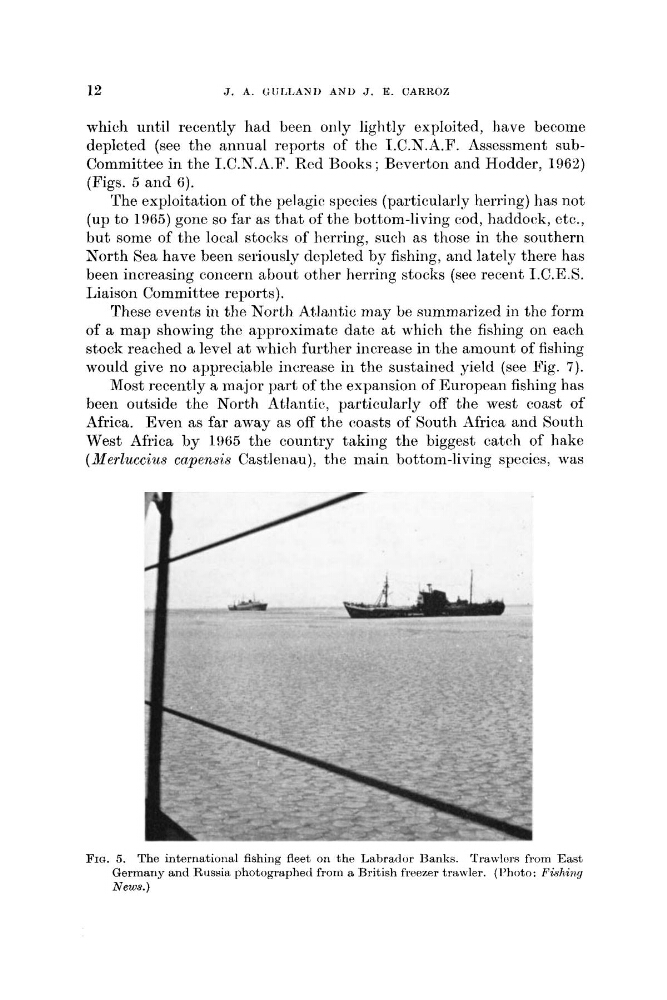
FIG. 5. The international fishing fleet on the Labrador Uanlrs. Trawlors from East
Germany and Russia photographed from a British freezer trawler. (Photo: Fishing
News.)
J . A. GULLAX’IU AND J . E. CARROZ
which until recently had been only lightly exploited, have become
depleted (see the annual reports of the I.C.N.A.F. Assessment subCommittee in the I.C.N.A.F. Red Books ; Beverton and Hodder, 1962)
(Figs. 5 and 6).
The exploitation of the pelagic species (particularly herring) has not
(up t o 1965) gone so far as that of the bottom-living cod, haddock, etc.,
but some of the local stocks of herring, such as those in the southern
North Sea have been seriously depleted by fishing, and lately there has
been increasing concern about other herring stocks (see recent I.C.E.S.
Liaison Committee reports).
These events in the North Atlantic may be summarized in the form
of a map showing the approximate date at which the fishing on each
stock reached a level a t which further increase in the amount of fishing
would give no appreciable increase in the sustained yield (see Fig. 7 ) .
Most recently a major part of the expansion of European fishing has
been outside the North Atlantic, particularly off the west coast of
Africa. Even as far away as off the roasts of South Africa and South
West Africa by 1965 the country taking the biggest catch of hake
(Merluccius cupensis Castlenau), the main bottom-living species, was
FIG. 5. The international fishing fleet on the Labrador Uanlrs. Trawlors from East
Germany and Russia photographed from a British freezer trawler. (Photo: Fishing
News.)