

188
WILLIAM MACNAE
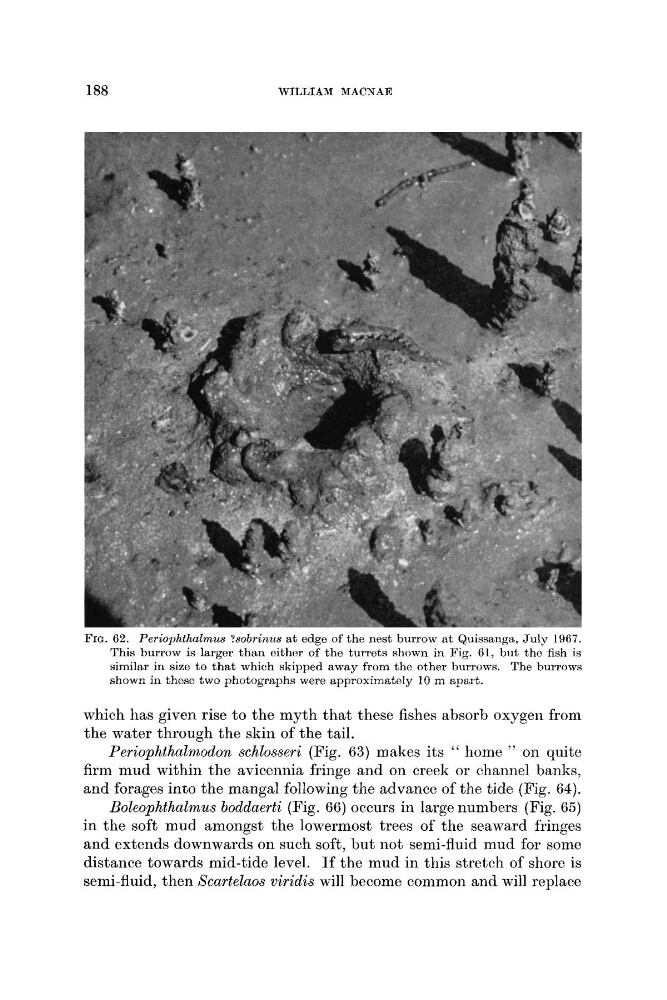
FIG. 82. Periophthalmus ?sobrims a t edge of the nest burrow a t Quissanga, July 19G7.
This burrow is larger than either of the turrets shown in Fig. GI, but thc fish is
similar in size to that which skipped away from the other burrows. The burrows
shown in these two photographs were approximately 10 m apart.
which has given rise to the myth that these fishes absorb oxygen from
the water through the skin of the tail.
Periophthalrnodon schlosseri (Fig. 63) makes its " home " on quite
firin mud within the avicennia fi-iiige and on creek or channel banks,
and forages into the mangal following the advance of the tide (Fig. 64).
Boleophthalrnzcs boddaerti (Fig. 66) occurs in large numbers (Fig. 65)
in the soft mud amongst the lowermost trees of the seaward fringes
and extends downwards on such soft, but not semi-fluid mud for some
distance towards mid-tide level. If the mud in this stretch of shore is
semi-fluid, then Xcartelaos viridis will become common and will replace
WILLIAM MACNAE
FIG. 82. Periophthalmus ?sobrims a t edge of the nest burrow a t Quissanga, July 19G7.
This burrow is larger than either of the turrets shown in Fig. GI, but thc fish is
similar in size to that which skipped away from the other burrows. The burrows
shown in these two photographs were approximately 10 m apart.
which has given rise to the myth that these fishes absorb oxygen from
the water through the skin of the tail.
Periophthalrnodon schlosseri (Fig. 63) makes its " home " on quite
firin mud within the avicennia fi-iiige and on creek or channel banks,
and forages into the mangal following the advance of the tide (Fig. 64).
Boleophthalrnzcs boddaerti (Fig. 66) occurs in large numbers (Fig. 65)
in the soft mud amongst the lowermost trees of the seaward fringes
and extends downwards on such soft, but not semi-fluid mud for some
distance towards mid-tide level. If the mud in this stretch of shore is
semi-fluid, then Xcartelaos viridis will become common and will replace