

FAUNA AND FLORA OF MANGROVE SWAMPS
145
coast of Moqambique and elsewhere suggests that experimental
measurements may be worth while and that even in-the-field estirnations may yield evidence to verify such a suggestion.
Under conditions of very poor soils, as for example in the Bay of
Inhambane, Avicennia marina occupies the whole mangal and other
species appear t o be unable to grow well enough to supersede it.
D. Viviparity
Many species of mangrove show an apparent viviparity. The
zygote, once formed, develops uninterruptedly through the embryo
into the seedling without the intervention of any resting stage. This
viviparity is frequently cited as an adaptation to life in the mangrove
zones. But other equally successful mangroves do, in fact, possess
seeds with a resting stage.
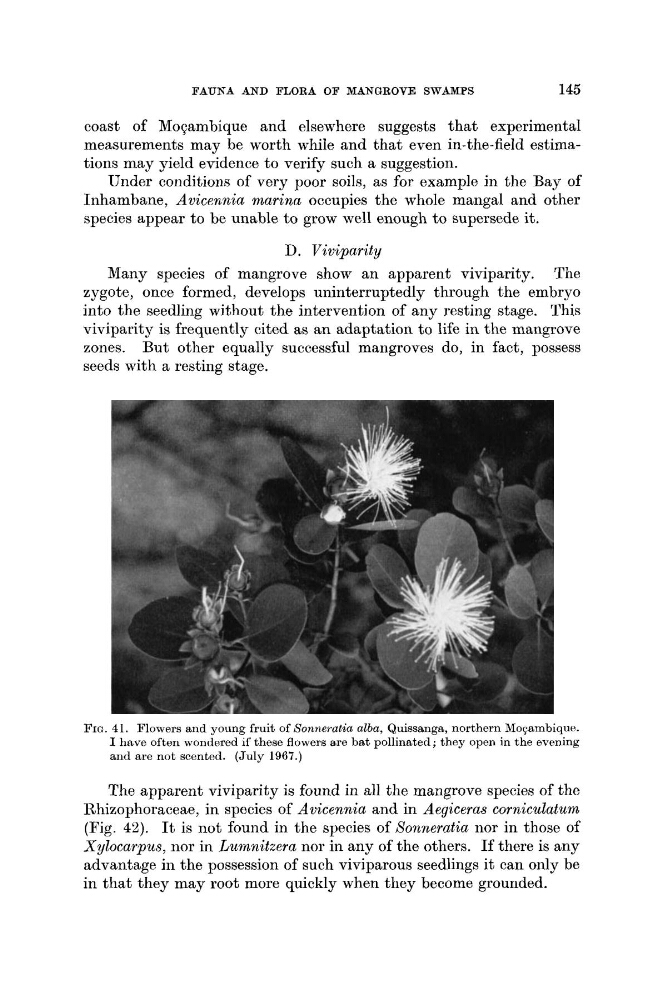
FIG. 41. Flowers and young fruit of Sonneratia alba, Quissanga, northern Moqambique.
I have often wondered if these flowers are bat pollinated; they open in the evening
and are not scented. (July 1967.)
The apparent viviparity is found in all the mangrove species of the
Rhizophoraceae, in species of Avicennia and in Aegiceras corniculaturn
(Fig. 42). It is not found in the species of Sonneratia nor in those of
Xylocarpus, nor in Lumnitzera nor in any of the others. If there is any
advantage in the possession of such viviparous seedlings it can only be
in that they may root more quickly when they become grounded.
145
coast of Moqambique and elsewhere suggests that experimental
measurements may be worth while and that even in-the-field estirnations may yield evidence to verify such a suggestion.
Under conditions of very poor soils, as for example in the Bay of
Inhambane, Avicennia marina occupies the whole mangal and other
species appear t o be unable to grow well enough to supersede it.
D. Viviparity
Many species of mangrove show an apparent viviparity. The
zygote, once formed, develops uninterruptedly through the embryo
into the seedling without the intervention of any resting stage. This
viviparity is frequently cited as an adaptation to life in the mangrove
zones. But other equally successful mangroves do, in fact, possess
seeds with a resting stage.
FIG. 41. Flowers and young fruit of Sonneratia alba, Quissanga, northern Moqambique.
I have often wondered if these flowers are bat pollinated; they open in the evening
and are not scented. (July 1967.)
The apparent viviparity is found in all the mangrove species of the
Rhizophoraceae, in species of Avicennia and in Aegiceras corniculaturn
(Fig. 42). It is not found in the species of Sonneratia nor in those of
Xylocarpus, nor in Lumnitzera nor in any of the others. If there is any
advantage in the possession of such viviparous seedlings it can only be
in that they may root more quickly when they become grounded.