

140
WILLIAM MACNAE
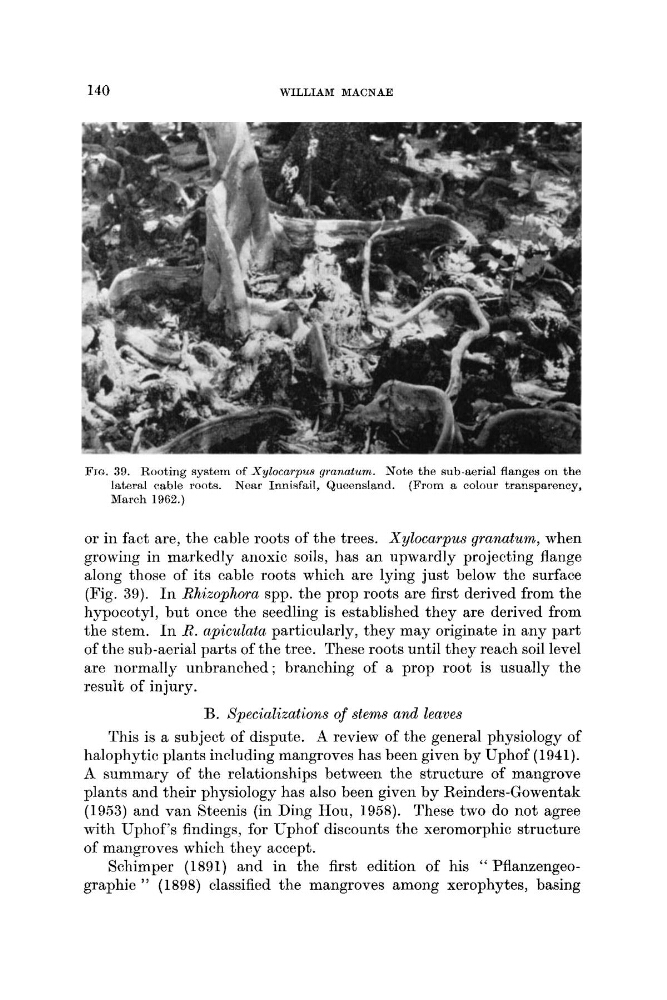
FIG. 39. Rooting system of Xylocarpus granatum. Note the sub-aerial flanges on the
lateral cable roots. Near Innisfail, Qucensland. (From 8 colour transparency,
March 1962.)
or in fact are, the cable roots of the trees. Xylocarpus granatum, when
growing in markedly anoxic soils, has an upwardly projecting flange
along those of its cable roots which are lying just below the surface
(Fig. 39). I n Rhizophora spp. the prop roots are first derived from the
hypocotyl, but once the seedling is established they are derived from
the stem. I n R. apiculata particularly, they may originate in any part
of the sub-aerial parts of the tree. These roots until they reach soil level
are normally unbranched; branching of a prop root is usually the
result of injury.
B. Xpecializations of stems and leaves
This is a subject of dispute. A review of the general physiology of
halophytic plants including mangroves has been given by Uphof (1941).
A summary of the relationships between the structure of mangrove
plants and their physiology has also been given by Reinders-Gowentak
(1953) and van Steenis (in Ding Hou, 1958). These two do not agree
with Uphof’s findings, for Uphof discounts the xeromorphic structure
of mangroves which they accept.
Sehimper (1891) and in the first edition of his “ Pflanzengeographie ” (1 898) classified the mangroves among xerophytes, basing
WILLIAM MACNAE
FIG. 39. Rooting system of Xylocarpus granatum. Note the sub-aerial flanges on the
lateral cable roots. Near Innisfail, Qucensland. (From 8 colour transparency,
March 1962.)
or in fact are, the cable roots of the trees. Xylocarpus granatum, when
growing in markedly anoxic soils, has an upwardly projecting flange
along those of its cable roots which are lying just below the surface
(Fig. 39). I n Rhizophora spp. the prop roots are first derived from the
hypocotyl, but once the seedling is established they are derived from
the stem. I n R. apiculata particularly, they may originate in any part
of the sub-aerial parts of the tree. These roots until they reach soil level
are normally unbranched; branching of a prop root is usually the
result of injury.
B. Xpecializations of stems and leaves
This is a subject of dispute. A review of the general physiology of
halophytic plants including mangroves has been given by Uphof (1941).
A summary of the relationships between the structure of mangrove
plants and their physiology has also been given by Reinders-Gowentak
(1953) and van Steenis (in Ding Hou, 1958). These two do not agree
with Uphof’s findings, for Uphof discounts the xeromorphic structure
of mangroves which they accept.
Sehimper (1891) and in the first edition of his “ Pflanzengeographie ” (1 898) classified the mangroves among xerophytes, basing