

138
WILLIAM MACNAE
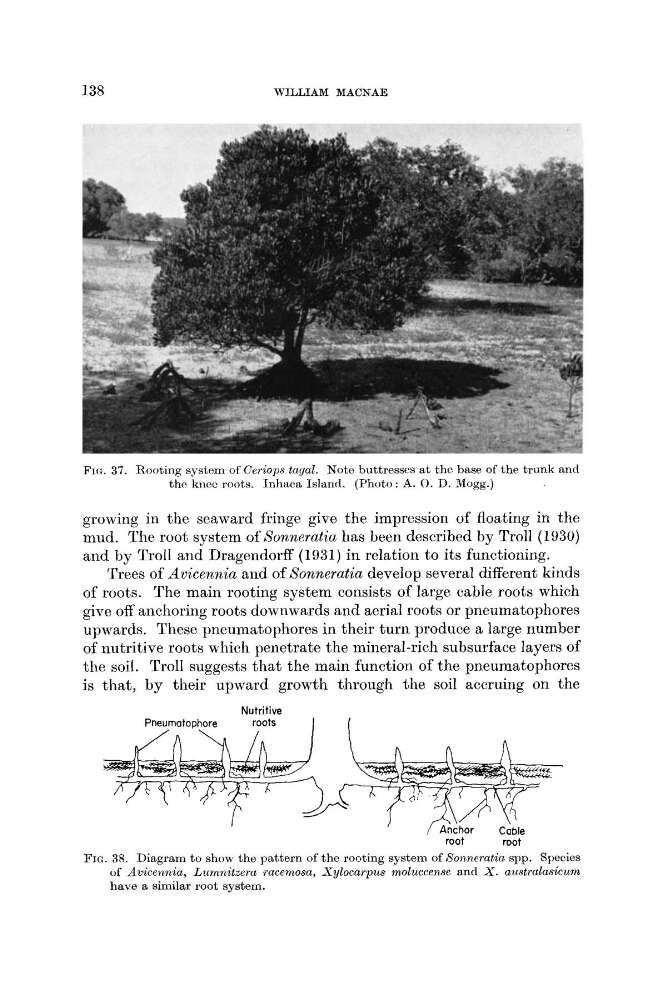
FIG. 37. Rooting system of Ceriops tayal. Note buttresses a t the base of the trunk and
thr krire roots. Inhaca Island. (Photo : A. 0. D. Mogg.)
growing in the seaward fringe give the impression of floating in the
mud. The root system of Sonneratia has been described by Troll (1930)
and by Troll and Dragendorff (1931) in relation to its functioning.
Trees of Avicennia and of Sonneratia develop several different kinds
of roots. The main rooting system consists of large cable roots which
give off anchoring roots downwards and aerial roots or pneuinatophores
upwards. These pneumatophores in their turn produce a large number
of nutritive roots which penetrate the mineral-rich subsurface layers of
the soil. Troll suggests that the main function of the pneumatophores
is that, by their upward growth through the soil accruing on the
Nutritive
root
root
FIG. 38. Diagram to show the pattern of the rooting system of Sonneratia spp. Species
of Avicennia, Lumnitzera racemosa, Xylocarpus moluccense and X . australasicum
have a similar root system.
WILLIAM MACNAE
FIG. 37. Rooting system of Ceriops tayal. Note buttresses a t the base of the trunk and
thr krire roots. Inhaca Island. (Photo : A. 0. D. Mogg.)
growing in the seaward fringe give the impression of floating in the
mud. The root system of Sonneratia has been described by Troll (1930)
and by Troll and Dragendorff (1931) in relation to its functioning.
Trees of Avicennia and of Sonneratia develop several different kinds
of roots. The main rooting system consists of large cable roots which
give off anchoring roots downwards and aerial roots or pneuinatophores
upwards. These pneumatophores in their turn produce a large number
of nutritive roots which penetrate the mineral-rich subsurface layers of
the soil. Troll suggests that the main function of the pneumatophores
is that, by their upward growth through the soil accruing on the
Nutritive
root
root
FIG. 38. Diagram to show the pattern of the rooting system of Sonneratia spp. Species
of Avicennia, Lumnitzera racemosa, Xylocarpus moluccense and X . australasicum
have a similar root system.