

134
WILLIAM MACNAE
corniculatum, species of Pandanus and other components of the
barringtonia and nypa associations. Behind there persists the bruguiera
forests which may be extensive or merely a strip separating the creek
from ceriops thickets.
Towards the latitudinal limits of mangroves where normally
dvicennia marina is the only mangrove present, the trees bordering the
creeks are taller as a result of better drainage as the banks of the creek
a,re approached. This is stressed by Chapman (in Chapman and
Ronaldson, 1958) in his study of mangroves near Auckland, New
Zealand. Chapman suggests that waterlogging of the soil causes
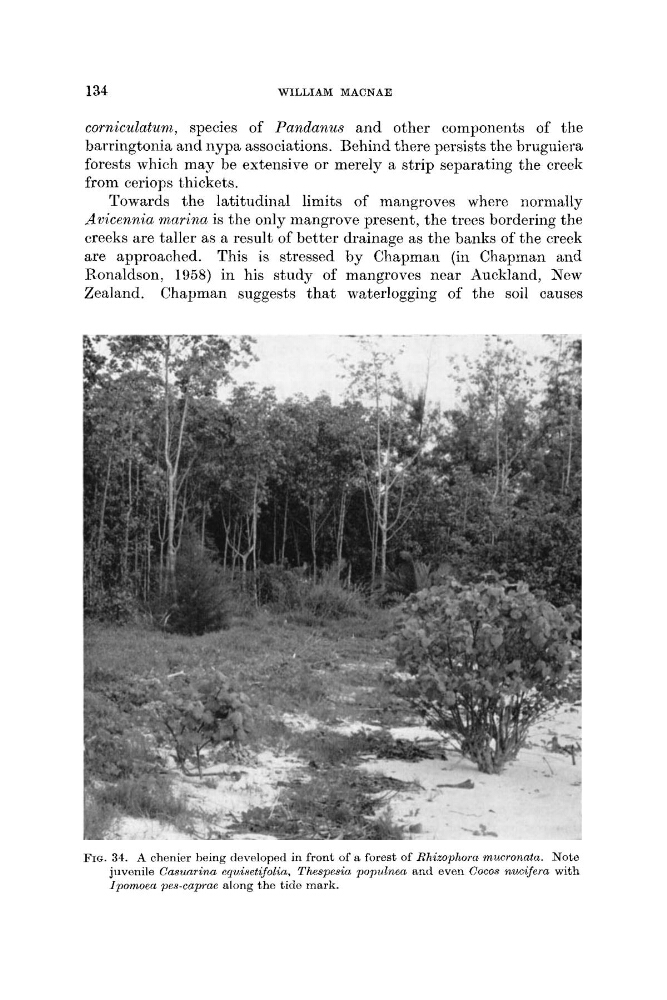
FIG. 34. A chenier being developed in front of a forest of Rhizophora. mucronata. Note
juvenile Casuarina equ.isetifolia, Thespasia. populnen and even COCOS ?amifera with
Ipomoea pes-caprae along the tide mark.
WILLIAM MACNAE
corniculatum, species of Pandanus and other components of the
barringtonia and nypa associations. Behind there persists the bruguiera
forests which may be extensive or merely a strip separating the creek
from ceriops thickets.
Towards the latitudinal limits of mangroves where normally
dvicennia marina is the only mangrove present, the trees bordering the
creeks are taller as a result of better drainage as the banks of the creek
a,re approached. This is stressed by Chapman (in Chapman and
Ronaldson, 1958) in his study of mangroves near Auckland, New
Zealand. Chapman suggests that waterlogging of the soil causes
FIG. 34. A chenier being developed in front of a forest of Rhizophora. mucronata. Note
juvenile Casuarina equ.isetifolia, Thespasia. populnen and even COCOS ?amifera with
Ipomoea pes-caprae along the tide mark.