

82
MARINE MOLLUSCS AS HOSTS FOR SYMBIOSES
cercariae, thus serving as a source for glycogen synthesis. Later, Cheng
and Burton (1966) examined for a similar process in Crassostrea
virginica parasitized by Bucephalus sp. and found an identical pattern.
It is of importance to state at this point that both Glypthelmins
pennsylvaniensis and Bucephalus sp. include sporocyst but not redial
stages in their life cycles, hence the uptake of nutrients by the intramolluscan sporocysts, which are devoid of a mouth, must be by
absorption from the micro-environment.
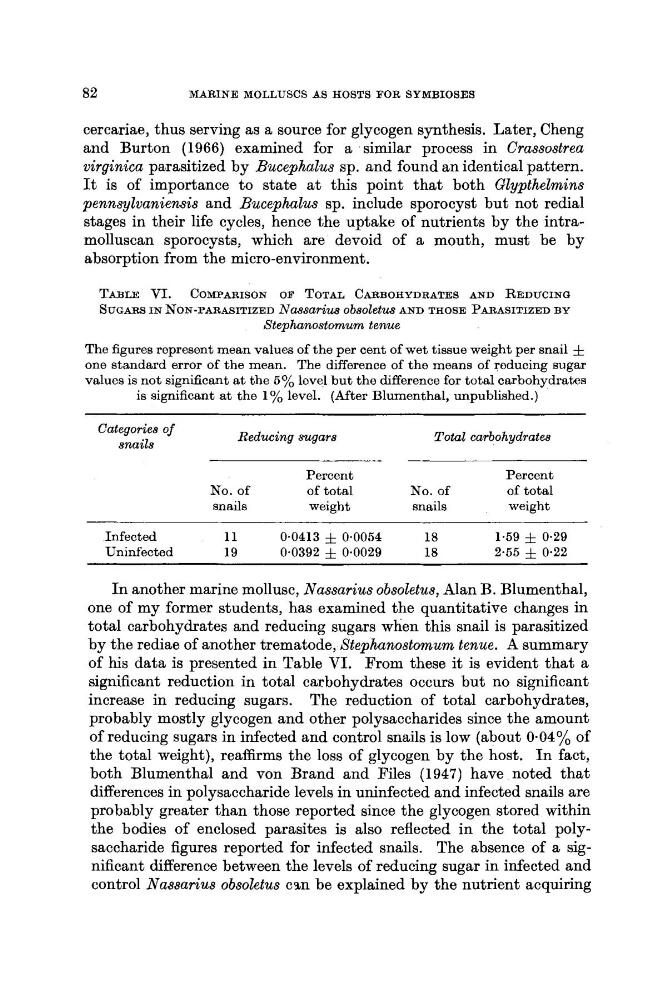
TABLE VI. COMPARISON OF TOTAL CARBOHYDRATES AND REDUCING
SUGARS IN NON-PARASITIZED Nassarius obsoletus AND THOSE PARASITIZED BY
Stephanostomum tenue
The figures represent mean values of the per cent of wet tissue weight per snail 5
one standard error of the mean. The difference of the means of roducing sugar
values is not significant at the 5% level but the difference for total carbohydrates
is significant a t the 1% level. (After Blumenthal, unpublished.)
Categories of
snails
Reducing sugars
Total carbohydrates
Percent
Percent
No. of
of total
No. of
of total
snails
weight
snails
weight
Infected
11
0.0413 & 0.0054
18
1.59 - & 0.29
Uninfected
19
0.0392 f 0.0029
18
2-55
0.22
In another marine mollusc, Nassarius obsoletus, Alan B. Blumenthal,
one of my former students, has examined the quantitative changes in
total carbohydrates and reducing sugars when this snail is parasitized
by the rediae of another trematode, Xtephanostomum tenue. A summary
of his data is presented in Table VI. From these it is evident that a
significant reduction in totaI carbohydrates occurs but no significant
increase in reducing sugars. The reduction of total carbohydrates,
probably mostly glycogen and other polysaccharides since the amount
of reducing sugars in infected and control snails is low (about 0.04% of
the total weight), reaffirms the loss of glycogen by the hosb. In fact,
both Blumenthal and von Brand and Piles (1947) have noted that
differences in polysaccharide levels in uninfected and infected snails are
probably greater than those reported since the glycogen stored within
the bodies of enclosed parasites is also reflected in the total polysaccharide figures reported for infected snails. The absence of a significant difference between the levels of reducing sugar in infected and
control Nassarius obsoletus c m be explained by the nutrient acquiring
MARINE MOLLUSCS AS HOSTS FOR SYMBIOSES
cercariae, thus serving as a source for glycogen synthesis. Later, Cheng
and Burton (1966) examined for a similar process in Crassostrea
virginica parasitized by Bucephalus sp. and found an identical pattern.
It is of importance to state at this point that both Glypthelmins
pennsylvaniensis and Bucephalus sp. include sporocyst but not redial
stages in their life cycles, hence the uptake of nutrients by the intramolluscan sporocysts, which are devoid of a mouth, must be by
absorption from the micro-environment.
TABLE VI. COMPARISON OF TOTAL CARBOHYDRATES AND REDUCING
SUGARS IN NON-PARASITIZED Nassarius obsoletus AND THOSE PARASITIZED BY
Stephanostomum tenue
The figures represent mean values of the per cent of wet tissue weight per snail 5
one standard error of the mean. The difference of the means of roducing sugar
values is not significant at the 5% level but the difference for total carbohydrates
is significant a t the 1% level. (After Blumenthal, unpublished.)
Categories of
snails
Reducing sugars
Total carbohydrates
Percent
Percent
No. of
of total
No. of
of total
snails
weight
snails
weight
Infected
11
0.0413 & 0.0054
18
1.59 - & 0.29
Uninfected
19
0.0392 f 0.0029
18
2-55
0.22
In another marine mollusc, Nassarius obsoletus, Alan B. Blumenthal,
one of my former students, has examined the quantitative changes in
total carbohydrates and reducing sugars when this snail is parasitized
by the rediae of another trematode, Xtephanostomum tenue. A summary
of his data is presented in Table VI. From these it is evident that a
significant reduction in totaI carbohydrates occurs but no significant
increase in reducing sugars. The reduction of total carbohydrates,
probably mostly glycogen and other polysaccharides since the amount
of reducing sugars in infected and control snails is low (about 0.04% of
the total weight), reaffirms the loss of glycogen by the hosb. In fact,
both Blumenthal and von Brand and Piles (1947) have noted that
differences in polysaccharide levels in uninfected and infected snails are
probably greater than those reported since the glycogen stored within
the bodies of enclosed parasites is also reflected in the total polysaccharide figures reported for infected snails. The absence of a significant difference between the levels of reducing sugar in infected and
control Nassarius obsoletus c m be explained by the nutrient acquiring