

4. ANALYSIS O F FACTORS INVOLVED IN SYMBIOSIS
59
alimentary tract activates it, thus enabling it to migrate to the appropriate site, become attached, and encyst as a metacercaria.
Relative to marine molluscs, it is known through the work of Cheng
et al. (1966b) that the plasma of several species of pelecypods, namely
Tapes philippinarum ( = T . semidecussata), Mytilus edulis, Modiolus
demissus, Mercenaria mercenaria, Mya arenaria, Crassostrea virginica
and C. gigas, will induce the encystment of the cercaria of Himasthla
quissetensis. It is believed that in nature once the cercariae succeed in
penetrating one of these molluscan hosts, contact with plasma within
the open circulatory system induces encystment, i.e. the secretion of
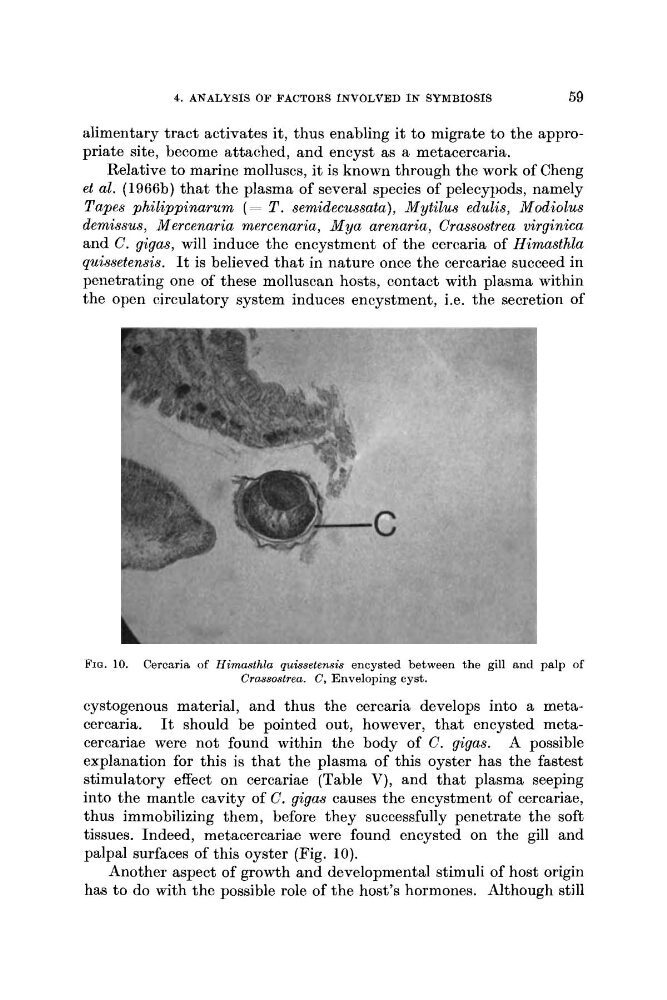
FIG. 10. Cercaria of Himasthla quissetensis encysted between the gill and palp of
Crassostrea. C, Enveloping cyst.
cystogenous material, and thus the cercaria develops into a metacercaria. It should be pointed out, however, that encysted metacercariae were not found within the body of C. gigas. A possible
explanation for this is that the plasma of this oyster has the fastest
stimulatory effect on cercariae (Table V), and that plasma seeping
into the mantle cavity of C. gigas causes the encystment of cercariae,
thus immobilizing them, before they successfully penetrate the soft
tissues. Indeed, metacercariae were found encysted on the gill and
palpal surfaces of this oyster (Fig. 10).
Another aspect of growth and developmental stimuli of host origin
has t o do with the possible role of the host’s hormones. Although still
59
alimentary tract activates it, thus enabling it to migrate to the appropriate site, become attached, and encyst as a metacercaria.
Relative to marine molluscs, it is known through the work of Cheng
et al. (1966b) that the plasma of several species of pelecypods, namely
Tapes philippinarum ( = T . semidecussata), Mytilus edulis, Modiolus
demissus, Mercenaria mercenaria, Mya arenaria, Crassostrea virginica
and C. gigas, will induce the encystment of the cercaria of Himasthla
quissetensis. It is believed that in nature once the cercariae succeed in
penetrating one of these molluscan hosts, contact with plasma within
the open circulatory system induces encystment, i.e. the secretion of
FIG. 10. Cercaria of Himasthla quissetensis encysted between the gill and palp of
Crassostrea. C, Enveloping cyst.
cystogenous material, and thus the cercaria develops into a metacercaria. It should be pointed out, however, that encysted metacercariae were not found within the body of C. gigas. A possible
explanation for this is that the plasma of this oyster has the fastest
stimulatory effect on cercariae (Table V), and that plasma seeping
into the mantle cavity of C. gigas causes the encystment of cercariae,
thus immobilizing them, before they successfully penetrate the soft
tissues. Indeed, metacercariae were found encysted on the gill and
palpal surfaces of this oyster (Fig. 10).
Another aspect of growth and developmental stimuli of host origin
has t o do with the possible role of the host’s hormones. Although still