

REFERENCES
367
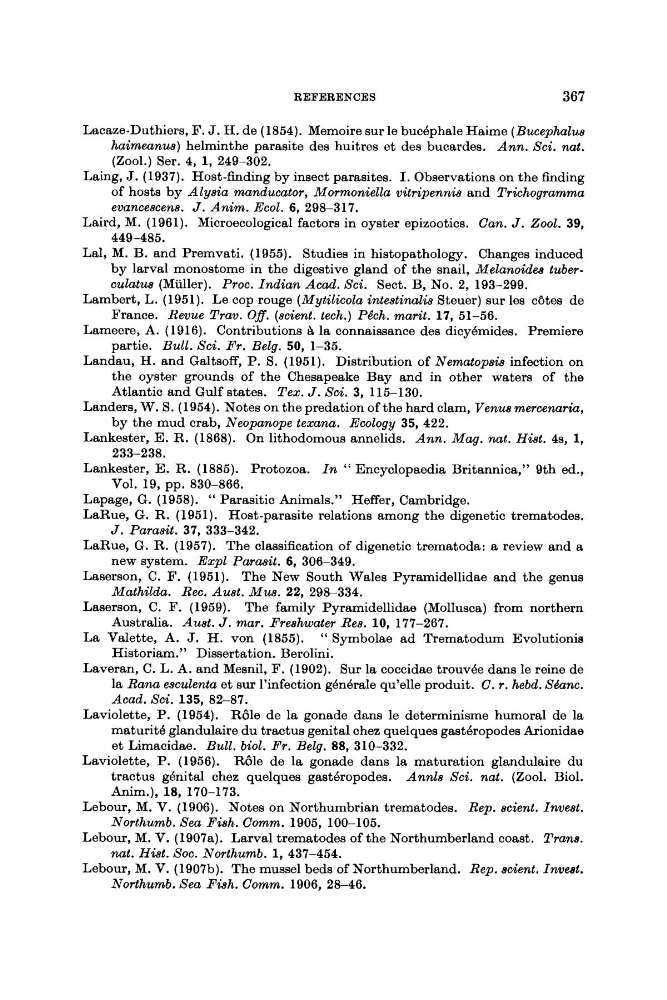
Lacaze-Duthiers, F. J. H. de (1854). Memoire sur le buc6phale Haime (Bucephalus
haimeanus) helminthe parasite des huitres et des bucardes. A m . Sci. nat.
(Zool.) Ser. 4, 1, 249-302.
Laing, J. (1937). Host-finding by insect parasites. I. Observations on the finding
of hosts by Alyeia manducator, Mormoniella vitripennis and Trichogramma
evancescens. J . Anim. Ecol. 6 , 298-317.
Laird, M. (1961). Microecological factors in oyster epizootics. Can. J . 2001. 39,
Lal, M. B. and Premvati. (1955). Studies in histopathology. Changes induced
by larval monostome in the digestive gland of the snail, Melanoidea tuberculatw (Miiller). Proc. Indian Acad. Sci. Sect. B, No. 2, 193-299.
Lambert, L. (1951). Le cop rouge (Mytilicola intestinalis Steuer) sup les c6tes de
France. Revue Trav. Off. (scient. tech.) Ptch. marit. 17, 51-56.
Lameere, A. (1916). Contributions B la connaissance des dicy6mides. Premiere
partie. Bull. Sci. Fr. Belg. 50, 1-35.
Landau, H. and Galtsoff, P. S. (1951). Distribution of Nematopsk infection on
the oyster grounds of the Chesapeake Bay and in other waters of the
Atlantic and Gulf states. Tex. J . Sci. 3, 115-130.
Landers, W. S. (1954). Notes on the predation of the hard clam, Venue mercenaria,
by the mud crab, Neopanope texana. Ecology 35, 422.
Lankester, E. R. (1868). On lithodomous annelids. Ann. Mag. nat. Hist. 4s, 1,
Lankester, E. R. (1885). Protozoa. I n ‘‘ Encyclopaedia Britannica,” 9th ed.,
Lapage, G. (1958). “ Parasitic Animals.” Heffer, Cambridge.
LaRue, G. R. (1951). Host-parasite relations among the digenetic trematodes.
J . Parasit. 37, 333-342.
LaRue, G. R. (1957). The classification of digenetic trematoda: a review and a
new system. ExpZ Parasit. 6 , 306-349.
Laserson, C. F. (1951). The New South Wales Pyramidellidae and the genus
Mathilda. Rec. Aust. Mua. 22, 298-334.
Laserson, C. F. (1959). The family Pyramidellidae (Mollusca) from northern
Australia. Aust. J . mar. Freshwater Res. 10, 177-267.
La Valette, A. J. H. von (1855). “ Symbolae ad Trematodum Evolutionis
Historiam.” Dissertation. Berolini.
Laveran, C. L. A. and Mesnil, F. (1902). Sur la coccidae trouv6e dans le reine de
la Rana esculenta et sur l’infection g6nerale qu’elle produit. C . r . hebd. SBanc.
Acad. Sci. 135, 82-87.
Laviolette, P. (1954). R81e de la gonade dans le determinisme humoral de la
maturite glandulaire du tractus genital chez quelques gast6ropodes Arionidae
et Limacidae. Bull. biol. Pr. Belg. 88, 310-332.
Laviolette, P. (1956). R61e de la gonade dans la maturation glandulaire du
tractus g6nital chez quelques gast6ropodes. Ann18 Sci. nat. (Zool. Biol.
Anim.), 18, 170-173.
Lebour, M. V. (1906). Notes on Northumbrian trematodes. Rep. scient. Invest.
Northumb. Sea Fish. Comm. 1905, 100-105.
Lebour, M. V. (1907a). Larval trematodes of the Northumberland coast. Trans.
nat. Hist. SOC. Northumb. 1, 437-454.
Lebour, M. V. (1907b). The mussel beds of Northumberland. Rep. scient. Inueclt.
Northumb. 8ea F k h . Comm. 1906, 28-46.
449-485.
233-238.
Vol. 19, pp. 830-866.
367
Lacaze-Duthiers, F. J. H. de (1854). Memoire sur le buc6phale Haime (Bucephalus
haimeanus) helminthe parasite des huitres et des bucardes. A m . Sci. nat.
(Zool.) Ser. 4, 1, 249-302.
Laing, J. (1937). Host-finding by insect parasites. I. Observations on the finding
of hosts by Alyeia manducator, Mormoniella vitripennis and Trichogramma
evancescens. J . Anim. Ecol. 6 , 298-317.
Laird, M. (1961). Microecological factors in oyster epizootics. Can. J . 2001. 39,
Lal, M. B. and Premvati. (1955). Studies in histopathology. Changes induced
by larval monostome in the digestive gland of the snail, Melanoidea tuberculatw (Miiller). Proc. Indian Acad. Sci. Sect. B, No. 2, 193-299.
Lambert, L. (1951). Le cop rouge (Mytilicola intestinalis Steuer) sup les c6tes de
France. Revue Trav. Off. (scient. tech.) Ptch. marit. 17, 51-56.
Lameere, A. (1916). Contributions B la connaissance des dicy6mides. Premiere
partie. Bull. Sci. Fr. Belg. 50, 1-35.
Landau, H. and Galtsoff, P. S. (1951). Distribution of Nematopsk infection on
the oyster grounds of the Chesapeake Bay and in other waters of the
Atlantic and Gulf states. Tex. J . Sci. 3, 115-130.
Landers, W. S. (1954). Notes on the predation of the hard clam, Venue mercenaria,
by the mud crab, Neopanope texana. Ecology 35, 422.
Lankester, E. R. (1868). On lithodomous annelids. Ann. Mag. nat. Hist. 4s, 1,
Lankester, E. R. (1885). Protozoa. I n ‘‘ Encyclopaedia Britannica,” 9th ed.,
Lapage, G. (1958). “ Parasitic Animals.” Heffer, Cambridge.
LaRue, G. R. (1951). Host-parasite relations among the digenetic trematodes.
J . Parasit. 37, 333-342.
LaRue, G. R. (1957). The classification of digenetic trematoda: a review and a
new system. ExpZ Parasit. 6 , 306-349.
Laserson, C. F. (1951). The New South Wales Pyramidellidae and the genus
Mathilda. Rec. Aust. Mua. 22, 298-334.
Laserson, C. F. (1959). The family Pyramidellidae (Mollusca) from northern
Australia. Aust. J . mar. Freshwater Res. 10, 177-267.
La Valette, A. J. H. von (1855). “ Symbolae ad Trematodum Evolutionis
Historiam.” Dissertation. Berolini.
Laveran, C. L. A. and Mesnil, F. (1902). Sur la coccidae trouv6e dans le reine de
la Rana esculenta et sur l’infection g6nerale qu’elle produit. C . r . hebd. SBanc.
Acad. Sci. 135, 82-87.
Laviolette, P. (1954). R81e de la gonade dans le determinisme humoral de la
maturite glandulaire du tractus genital chez quelques gast6ropodes Arionidae
et Limacidae. Bull. biol. Pr. Belg. 88, 310-332.
Laviolette, P. (1956). R61e de la gonade dans la maturation glandulaire du
tractus g6nital chez quelques gast6ropodes. Ann18 Sci. nat. (Zool. Biol.
Anim.), 18, 170-173.
Lebour, M. V. (1906). Notes on Northumbrian trematodes. Rep. scient. Invest.
Northumb. Sea Fish. Comm. 1905, 100-105.
Lebour, M. V. (1907a). Larval trematodes of the Northumberland coast. Trans.
nat. Hist. SOC. Northumb. 1, 437-454.
Lebour, M. V. (1907b). The mussel beds of Northumberland. Rep. scient. Inueclt.
Northumb. 8ea F k h . Comm. 1906, 28-46.
449-485.
233-238.
Vol. 19, pp. 830-866.