

304
MARINE MOLLUSCS AS HOSTS FOR SYMBIOSES
dernissus, one to two in each of the seven Brachidontes recurvus, and
the single specimen of Mercenaria mercenaria examined was parasitized
and it harbored two copepods.
9. Ostrincola clavator Humes, 1958. (Figs. 201 and 202)
(Order Cyclopoida; family Ergasilidae)
Ostrincola clavator adults were described by Humes (1958b) from
the mantle cavity of the oyster, Ostrea sp., clinging to rocks off the
coast of Madagascar on the island of Nossi-BB.
Description. Adult female (Fig. 201) body cyclopoid, transparent,
eye brown or black, total length (from anterior end to tip of caudal
ramus) 1.068-1.152 mm (average 1.098 mm), greatest width 0.3000.348 mm (average 0-318 mm) ; base of first leg indistinctly separated
from head by transverse suture ; several bristles dispersed on dorsal
surfaces of head and thorax; posterior margins of thoracic segments
rounded ; genital segment distinct, not very swollen, slightly longer
than wide, approximately 0.148 mm x 0.151 mm; ovigerous sacs
attached dorsolaterally on anterior portion of segment, each with two
very small spinous processes ; ventral surface of genital segment with
two transverse groups of spines, two short rows on posterolateral regions
and a transverse row of very smaIl spines along posterior margin;
abdomen of three segments measuring 0-070, 0-050 and 0.036 mm respectively ; transverse row of very small spines along posterior borders of
first and second abdominal segments and several small spines on posterolateral borders of third ; ovigerous sac not seen ; first antenna of seven
segments, measuring (from base to tip) 0.024, 0.036, 0.010, 0.012,
0.023, 0.13 and 0.016 mm in length respectively; a sensory organ on
each of three basal segments; second antenna of three joints, third
segment elongate and slightly curved, with short seta on medial edge,
recurved hook a t terminal, and shorter bifurcated process, with small
lateral spine, abutting hook ; first through fourth swimming legs
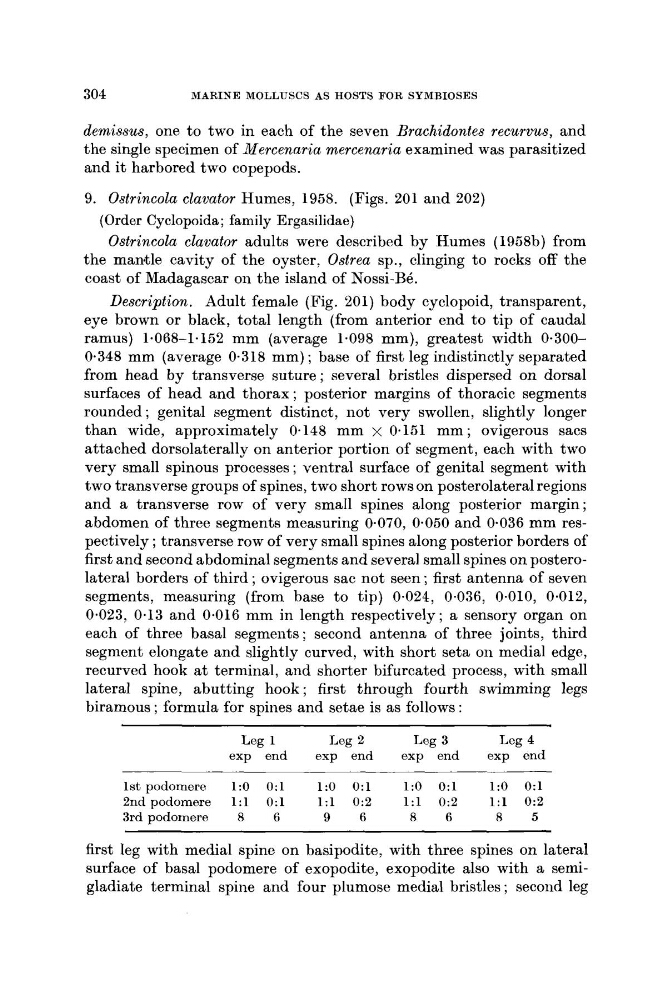
biramous ; formula for spines and setae is as follows :
Leg 1
Leg 2
Leg 3
Leg 4
exp end
esp end
exp end
exp end
1st podomere
1:0 0:l
1:0 0:l
1:0 0:1
1:0 0:l
2ndpodomere 1:l 0:1
1:l 0:2
1 : l 0:2
1 : l 0:2
3rd podomere
8
6
9
6
8
6
8
5
first leg with medial spine on basipodite, with three spines on lateral
surface of basal podomere of exopodite, exopodite also with a semigladiate terminal spine and four plumose medial bristles ; second leg
MARINE MOLLUSCS AS HOSTS FOR SYMBIOSES
dernissus, one to two in each of the seven Brachidontes recurvus, and
the single specimen of Mercenaria mercenaria examined was parasitized
and it harbored two copepods.
9. Ostrincola clavator Humes, 1958. (Figs. 201 and 202)
(Order Cyclopoida; family Ergasilidae)
Ostrincola clavator adults were described by Humes (1958b) from
the mantle cavity of the oyster, Ostrea sp., clinging to rocks off the
coast of Madagascar on the island of Nossi-BB.
Description. Adult female (Fig. 201) body cyclopoid, transparent,
eye brown or black, total length (from anterior end to tip of caudal
ramus) 1.068-1.152 mm (average 1.098 mm), greatest width 0.3000.348 mm (average 0-318 mm) ; base of first leg indistinctly separated
from head by transverse suture ; several bristles dispersed on dorsal
surfaces of head and thorax; posterior margins of thoracic segments
rounded ; genital segment distinct, not very swollen, slightly longer
than wide, approximately 0.148 mm x 0.151 mm; ovigerous sacs
attached dorsolaterally on anterior portion of segment, each with two
very small spinous processes ; ventral surface of genital segment with
two transverse groups of spines, two short rows on posterolateral regions
and a transverse row of very smaIl spines along posterior margin;
abdomen of three segments measuring 0-070, 0-050 and 0.036 mm respectively ; transverse row of very small spines along posterior borders of
first and second abdominal segments and several small spines on posterolateral borders of third ; ovigerous sac not seen ; first antenna of seven
segments, measuring (from base to tip) 0.024, 0.036, 0.010, 0.012,
0.023, 0.13 and 0.016 mm in length respectively; a sensory organ on
each of three basal segments; second antenna of three joints, third
segment elongate and slightly curved, with short seta on medial edge,
recurved hook a t terminal, and shorter bifurcated process, with small
lateral spine, abutting hook ; first through fourth swimming legs
biramous ; formula for spines and setae is as follows :
Leg 1
Leg 2
Leg 3
Leg 4
exp end
esp end
exp end
exp end
1st podomere
1:0 0:l
1:0 0:l
1:0 0:1
1:0 0:l
2ndpodomere 1:l 0:1
1:l 0:2
1 : l 0:2
1 : l 0:2
3rd podomere
8
6
9
6
8
6
8
5
first leg with medial spine on basipodite, with three spines on lateral
surface of basal podomere of exopodite, exopodite also with a semigladiate terminal spine and four plumose medial bristles ; second leg