

274
MARINE MOLLUSCS AS HOSTS POR SYMBIOSES
Polydora. A number of species have been reported in U-shaped burrows
beneath the nacrous layer of the pelecypods’ shells, primarily oysters.
The so-called blister, which is actually a large excavation over which a
thin layer of nacre has been laid down, is almost always filled with
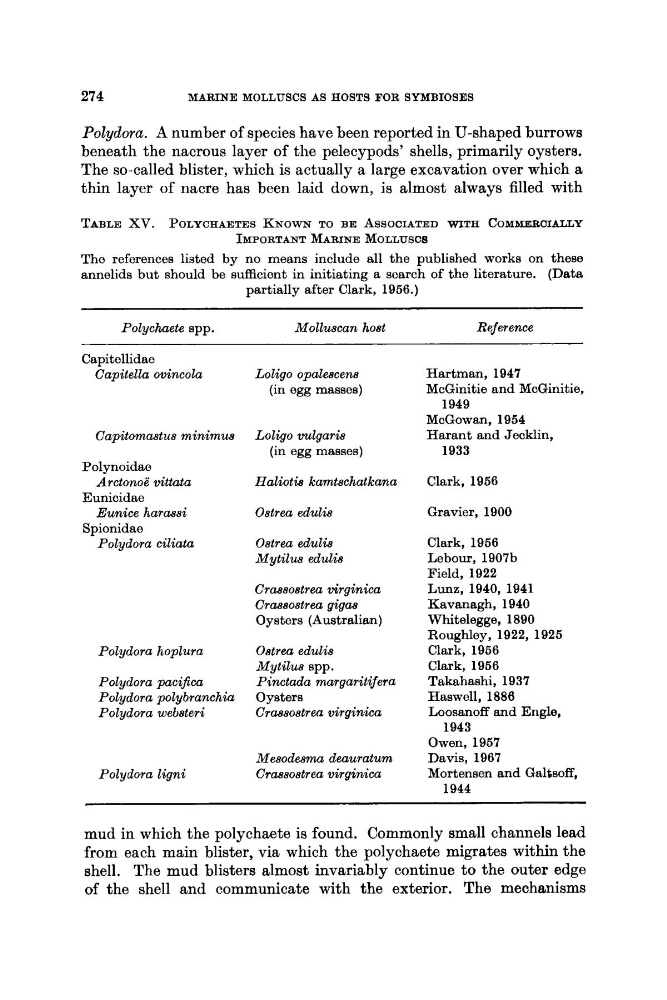
TABLE XV. POLYCHAETES KNOWN TO BE ASSOCIATED WITH COMMERCIALLY
IMPORTANT MARINE MOLLUSCS
The references listed by no means include all the published works on these
annelids but should be sufficient in initiating a search of the literature. (Data
partially after Clark, 1956.)
Polychaete spp.
Molluscan host
Reference
Capitellidae
Capitella ovincola
Loligo opalescens
(in egg masses)
Capitomastus minimus Loligo vulgaris
(in egg masses)
Polynoidae
Eunicidae
Spionidae
Arctonoe vittata
Haliotis kamtschatkana
Eunice harassi
Ostrea edulis
Polydora ciliata
Ostrea edulia
Mytilus edulis
Crassostrea virginica
Crassostrea gigas
Oysters (Australian)
Polydora hoplura
Ostrea edulis
Mytilus spp.
Polydora pacijca
Pinctada margaritqera
Polydora polybranchia Oysters
Polydora websteri
Crassostrea virginica
Mesodema deauratum
Polydora ligni
Crassostrea virginica
Hartman, 1947
McGinitie and McGinitie,
McGowan, 1954
Harant and Jecklin,
1949
1933
Clark, 1956
Gravier, 1900
Clark, 1956
Lebour, 1907b
Field, 1922
Lunz, 1940, 1941
Kavanagh, 1940
Whitelegge, 1890
Roughley, 1922, 1926
Clark, 1956
Clark, 1956
Takahashi, 1937
Haswell, 1886
Loosanoff and Engle,
Owen, 1957
Davis, 1967
Mortensen and Galbsoff,
1943
1944
mud in which the polychaete is found. Commonly small channels lead
from each main blister, via which the polychaete migrates within the
shell. The mud blisters almost invariably continue to the outer edge
of the shell and communicate with the exterior. The mechanisms
MARINE MOLLUSCS AS HOSTS POR SYMBIOSES
Polydora. A number of species have been reported in U-shaped burrows
beneath the nacrous layer of the pelecypods’ shells, primarily oysters.
The so-called blister, which is actually a large excavation over which a
thin layer of nacre has been laid down, is almost always filled with
TABLE XV. POLYCHAETES KNOWN TO BE ASSOCIATED WITH COMMERCIALLY
IMPORTANT MARINE MOLLUSCS
The references listed by no means include all the published works on these
annelids but should be sufficient in initiating a search of the literature. (Data
partially after Clark, 1956.)
Polychaete spp.
Molluscan host
Reference
Capitellidae
Capitella ovincola
Loligo opalescens
(in egg masses)
Capitomastus minimus Loligo vulgaris
(in egg masses)
Polynoidae
Eunicidae
Spionidae
Arctonoe vittata
Haliotis kamtschatkana
Eunice harassi
Ostrea edulis
Polydora ciliata
Ostrea edulia
Mytilus edulis
Crassostrea virginica
Crassostrea gigas
Oysters (Australian)
Polydora hoplura
Ostrea edulis
Mytilus spp.
Polydora pacijca
Pinctada margaritqera
Polydora polybranchia Oysters
Polydora websteri
Crassostrea virginica
Mesodema deauratum
Polydora ligni
Crassostrea virginica
Hartman, 1947
McGinitie and McGinitie,
McGowan, 1954
Harant and Jecklin,
1949
1933
Clark, 1956
Gravier, 1900
Clark, 1956
Lebour, 1907b
Field, 1922
Lunz, 1940, 1941
Kavanagh, 1940
Whitelegge, 1890
Roughley, 1922, 1926
Clark, 1956
Clark, 1956
Takahashi, 1937
Haswell, 1886
Loosanoff and Engle,
Owen, 1957
Davis, 1967
Mortensen and Galbsoff,
1943
1944
mud in which the polychaete is found. Commonly small channels lead
from each main blister, via which the polychaete migrates within the
shell. The mud blisters almost invariably continue to the outer edge
of the shell and communicate with the exterior. The mechanisms