

5 . THE PHYLUM PROTOZOA
193
would appear that A . pelseneeri is dependent on or a t least can utilize
its host’s cells as a nutrient source and hence should be considered a
parasite.
Pathology. Since A . pelseneeri is known to ingest its host’s cells,
one would expect to find some degree of pathological change on those
surfaces t o which the ciliates are attached ; however, such changes have
not been studied.
14. Ancistrocoma. sp. (Fig. 102)
(Subclass Holotrichia; order Thigmotrichida; family Ancistrocomidae)
During a survey of zooparasites of oysters, Crassostrea virginica,
in the Maryland portion of Chesapeake Bay, Burton (1961) reported the
occurrence of an unidentified species of Ancistrocoma in four out of
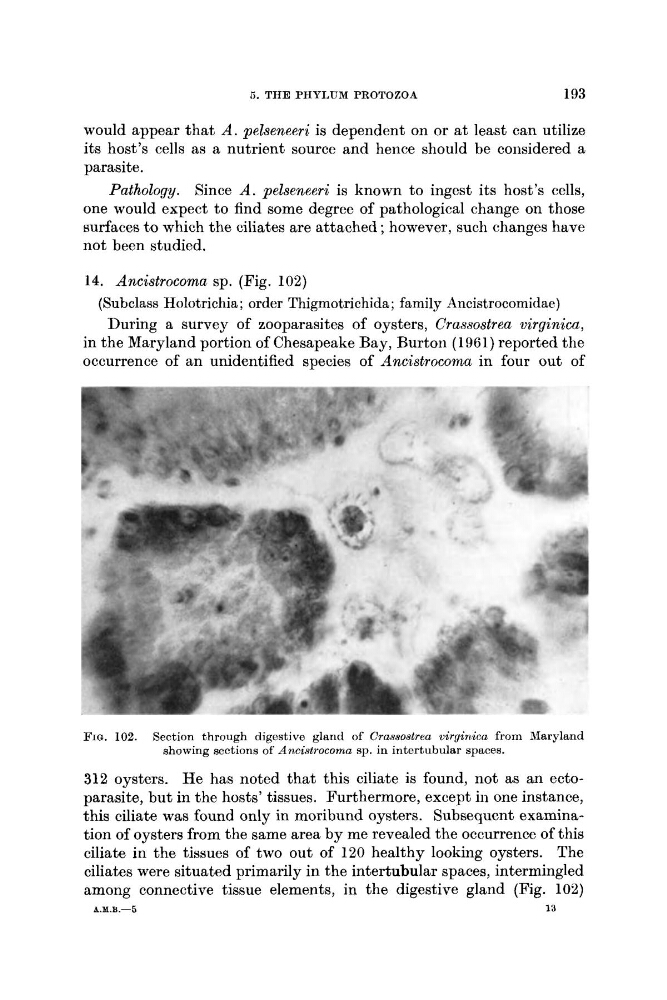
FIG. 102. Section through digestive gland of Grassostrea wirginica from Maryland
showing sections of Ancistrocoma sp. in intertubular spaces.
312 oysters. He has noted that this ciliate is found, not as an ectoparasite, but in the hosts’ tissues. Furthermore, except in one instance,
this ciliate was found only in moribund oysters. Subsequent examination of oysters from the same area by me revealed the occurrence of this
ciliate in the tissues of two out of 120 healthy looking oysters. The
ciliates were situated primarily in the intertubular spaces, intermingled
among connective tissue elements, in the digestive gland (Fig. 102)
A.M.B.-6
13
193
would appear that A . pelseneeri is dependent on or a t least can utilize
its host’s cells as a nutrient source and hence should be considered a
parasite.
Pathology. Since A . pelseneeri is known to ingest its host’s cells,
one would expect to find some degree of pathological change on those
surfaces t o which the ciliates are attached ; however, such changes have
not been studied.
14. Ancistrocoma. sp. (Fig. 102)
(Subclass Holotrichia; order Thigmotrichida; family Ancistrocomidae)
During a survey of zooparasites of oysters, Crassostrea virginica,
in the Maryland portion of Chesapeake Bay, Burton (1961) reported the
occurrence of an unidentified species of Ancistrocoma in four out of
FIG. 102. Section through digestive gland of Grassostrea wirginica from Maryland
showing sections of Ancistrocoma sp. in intertubular spaces.
312 oysters. He has noted that this ciliate is found, not as an ectoparasite, but in the hosts’ tissues. Furthermore, except in one instance,
this ciliate was found only in moribund oysters. Subsequent examination of oysters from the same area by me revealed the occurrence of this
ciliate in the tissues of two out of 120 healthy looking oysters. The
ciliates were situated primarily in the intertubular spaces, intermingled
among connective tissue elements, in the digestive gland (Fig. 102)
A.M.B.-6
13