

REVIEW OF THE SYSTEMATICS AND ECOLOQY OF OCEANIC SQUIDS
243
Because no pelagic eggs have been found and the youngest larvae
are found at more than 1 000 m, Bruun (1943) considered that eggs
were probably deposited on the bottom and the distribution suggests
that the continental slope is the most likely area of deposition-a view
substantiated by the find of a small larva embedded in ooze taken in
a trawl (Bruun, 1955). The smallest larva, (mantle length=0.28 cm)
which must have only just been hatched, has two chambers in the
shell (Bruun, 1943).
0.2 5
1-1 2
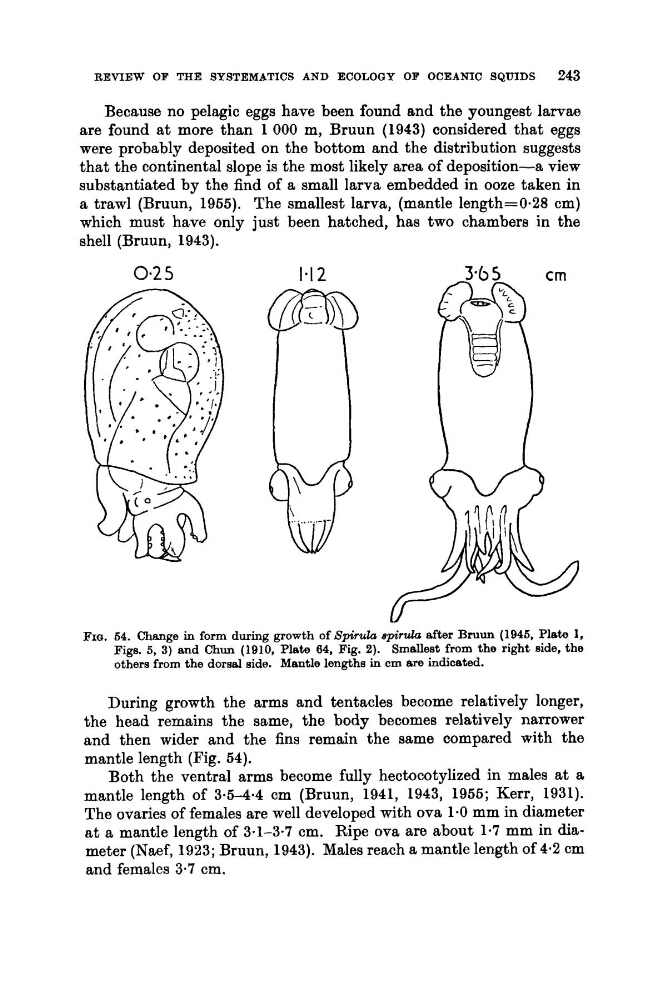
FIG. 64. Change i n form during growth of Spirula ~ p i ~ u l c r
after Bruun (1946, Plate 1.
Smallest from the right side, the
Figs. 5, 3) and Chun (1910, Plate 64, Fig. 2).
others from the dorsal side. Mantle lengths in cm are indicated.
During growth the arms and tentacles become relatively longer,
the head remains the same, the body becomes relatively narrower
and then wider and the fins remain the same compared with the
mantle length (Fig. 54).
Both the ventral arms become fully hectocotylized in males at a
mantle length of 3.5-4.4 cm (Bruun, 1941, 1943, 1955; Kerr, 1931).
The ovaries of females are well developed with ova 1.0 mm in diameter
at a mantle length of 3.1-3-7 cm. Ripe ova are about 1.7 mm in diameter (Naef, 1923; Bruun, 1943). Males reach a mantle length of 4.2 cm
and females 3.7 cm.
243
Because no pelagic eggs have been found and the youngest larvae
are found at more than 1 000 m, Bruun (1943) considered that eggs
were probably deposited on the bottom and the distribution suggests
that the continental slope is the most likely area of deposition-a view
substantiated by the find of a small larva embedded in ooze taken in
a trawl (Bruun, 1955). The smallest larva, (mantle length=0.28 cm)
which must have only just been hatched, has two chambers in the
shell (Bruun, 1943).
0.2 5
1-1 2
FIG. 64. Change i n form during growth of Spirula ~ p i ~ u l c r
after Bruun (1946, Plate 1.
Smallest from the right side, the
Figs. 5, 3) and Chun (1910, Plate 64, Fig. 2).
others from the dorsal side. Mantle lengths in cm are indicated.
During growth the arms and tentacles become relatively longer,
the head remains the same, the body becomes relatively narrower
and then wider and the fins remain the same compared with the
mantle length (Fig. 54).
Both the ventral arms become fully hectocotylized in males at a
mantle length of 3.5-4.4 cm (Bruun, 1941, 1943, 1955; Kerr, 1931).
The ovaries of females are well developed with ova 1.0 mm in diameter
at a mantle length of 3.1-3-7 cm. Ripe ova are about 1.7 mm in diameter (Naef, 1923; Bruun, 1943). Males reach a mantle length of 4.2 cm
and females 3.7 cm.