

REVLEW OF THE SYSTEMATICS AND ECOLOGY OF OCEANIC SQUIDS
121
water masses and this migration is not very clear, it seems that the
squids move into the area with deep, warm, highly-saline Atlantic
water from the south; they are found early in the season on the south
edge of the Banks and move inshore as the temperature rises (Frost and
Thompson, 1932, 1933 and 1934; Squires, 1957). Although earlier
V
V
V
0
*V
O */fee/
s
/?
V
0
0 /b
?'
1
/
8 P
/
f
/
,
a I@
/
/f
/'
/
/
/
/
/
/
/
/
/
/
/
/
//
V Individual
/
Means of C p g
0
"
"
/
/
$
/
/
/
/
/
/
1
-
1 1 1 1 1 1 1 l
I
t
6 7 8 9 1011 I2 I
6
I2
Month
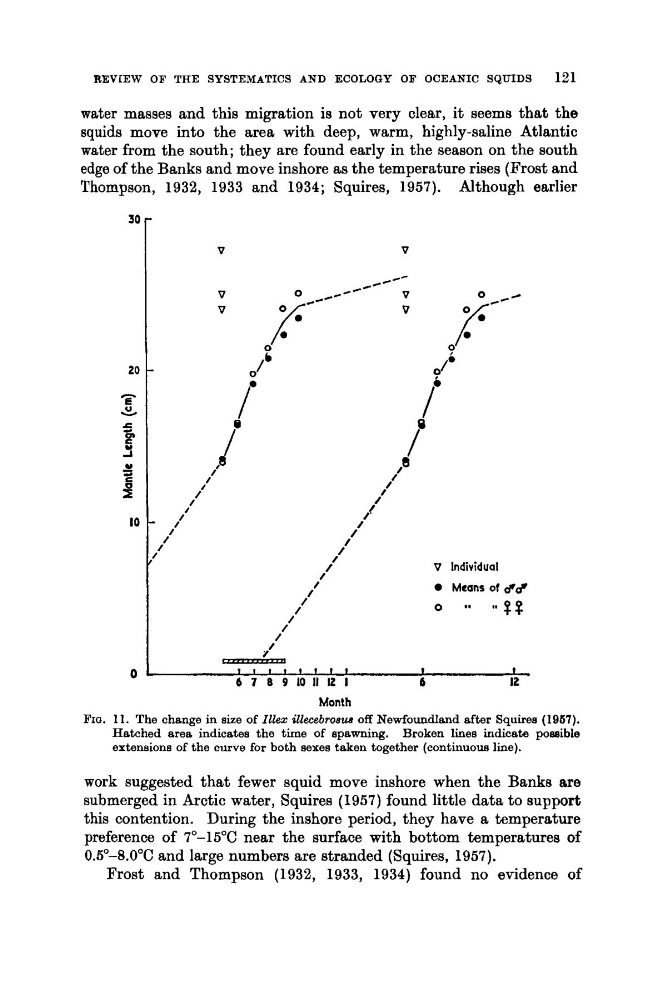
FIG. 11. The change in size of Illex illecebrosua off Newfoundland after Squires (1967).
Broken lines indicate poeeible
Hatched area indicates the time of spawning.
extensions of the curve for both sexes taken together (continuom line).
work suggested that fewer squid move inshore when the Banks are
submerged in Arctic water, Squires (1957) found little data to support
this contention. During the inshore period, they have a temperature
preference of 7"-15°C near the surface with bottom temperatures of
O.5"-8.O0C and large numbers are stranded (Squires, 1957).
Frost and Thompson (1932, 1933, 1934) found no evidence of
121
water masses and this migration is not very clear, it seems that the
squids move into the area with deep, warm, highly-saline Atlantic
water from the south; they are found early in the season on the south
edge of the Banks and move inshore as the temperature rises (Frost and
Thompson, 1932, 1933 and 1934; Squires, 1957). Although earlier
V
V
V
0
*V
O */fee/
s
/?
V
0
0 /b
?'
1
/
8 P
/
f
/
,
a I@
/
/f
/'
/
/
/
/
/
/
/
/
/
/
/
/
//
V Individual
/
Means of C p g
0
"
"
/
/
$
/
/
/
/
/
/
1
-
1 1 1 1 1 1 1 l
I
t
6 7 8 9 1011 I2 I
6
I2
Month
FIG. 11. The change in size of Illex illecebrosua off Newfoundland after Squires (1967).
Broken lines indicate poeeible
Hatched area indicates the time of spawning.
extensions of the curve for both sexes taken together (continuom line).
work suggested that fewer squid move inshore when the Banks are
submerged in Arctic water, Squires (1957) found little data to support
this contention. During the inshore period, they have a temperature
preference of 7"-15°C near the surface with bottom temperatures of
O.5"-8.O0C and large numbers are stranded (Squires, 1957).
Frost and Thompson (1932, 1933, 1934) found no evidence of