

86
E. NAYLOR
heat-tolerant species should be accidentally or deliberately introduced
from remote areas, for they will rarely spread by natural means. In
temperate fresh waters the introduction of warm water immigrants is
relativelyrare, though Mann (1958,1965) has documented the occurrence
of a tropical tubificid Branchiura sowerbyi Beddard in British waters and
Hynes (1960) records the occurrence of an immigrant plant Vallisneria
spiralis near heated effluents. In marine areas, on the other hand, interchange of animals between geographical areas is more prevalent,
largely since animals are transported by ships. However, even in those
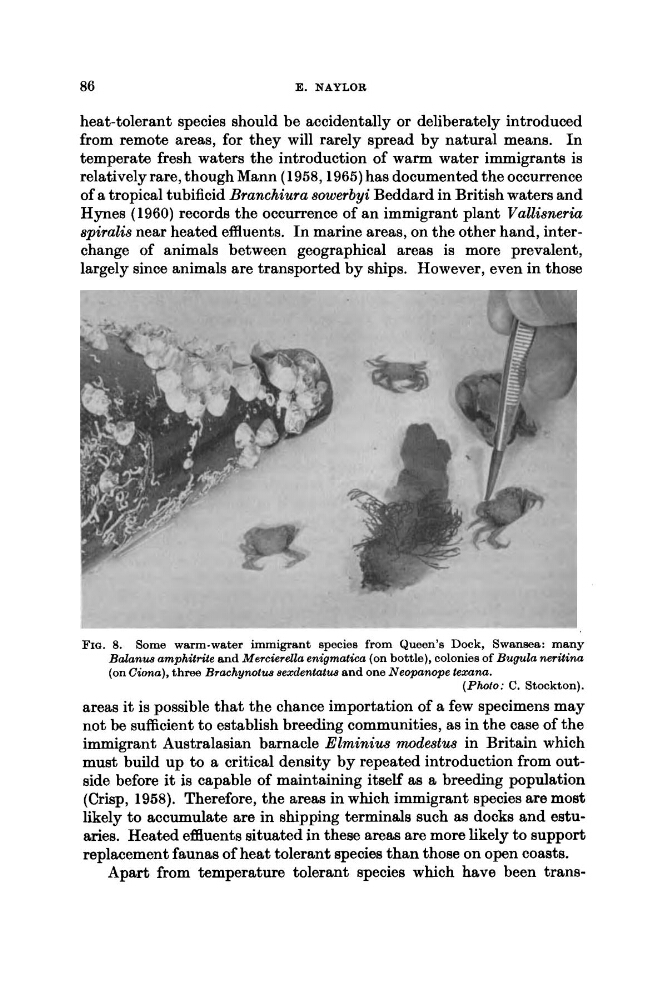
FIG. 8. Some warm-water immigrant species from Queen’s Dock, Swansea: many
Balanua amphitrite and Mercierella enigmatica (on bottle), colonies of Bugula neritina
(on Ciona), three Brachynotua sexdentatua and one Neopanope texana.
(Phofo: C. Stockton).
areas it is possible that the chance importation of a few specimens may
not be sufficient to establish breeding communities, as in the case of the
immigrant Australasian barnacle Elminius modestus in Britain which
must build up to a critical density by repeated introduction from outside before it is capable of maintaining itself as a breeding population
(Crisp, 1958). Therefore, the areas in which immigrant species are most
likely to accumulate are in shipping terminals such as docks and estuaries. Heated effluents situated in these areas are more likely to support
replacement faunas of heat tolerant species than those on open coasts.
Apart from temperature tolerant species which have been trans-
E. NAYLOR
heat-tolerant species should be accidentally or deliberately introduced
from remote areas, for they will rarely spread by natural means. In
temperate fresh waters the introduction of warm water immigrants is
relativelyrare, though Mann (1958,1965) has documented the occurrence
of a tropical tubificid Branchiura sowerbyi Beddard in British waters and
Hynes (1960) records the occurrence of an immigrant plant Vallisneria
spiralis near heated effluents. In marine areas, on the other hand, interchange of animals between geographical areas is more prevalent,
largely since animals are transported by ships. However, even in those
FIG. 8. Some warm-water immigrant species from Queen’s Dock, Swansea: many
Balanua amphitrite and Mercierella enigmatica (on bottle), colonies of Bugula neritina
(on Ciona), three Brachynotua sexdentatua and one Neopanope texana.
(Phofo: C. Stockton).
areas it is possible that the chance importation of a few specimens may
not be sufficient to establish breeding communities, as in the case of the
immigrant Australasian barnacle Elminius modestus in Britain which
must build up to a critical density by repeated introduction from outside before it is capable of maintaining itself as a breeding population
(Crisp, 1958). Therefore, the areas in which immigrant species are most
likely to accumulate are in shipping terminals such as docks and estuaries. Heated effluents situated in these areas are more likely to support
replacement faunas of heat tolerant species than those on open coasts.
Apart from temperature tolerant species which have been trans-