

350
FINDLAY E. RUSSELL
Briot (1902) demonstrated in vitro hemolytic activity for the
venom. He found it had no effect on the blood coagulation time.
Glycerine extracts were found to be lethal to rabbits. Briot attributed
the lethal effect of the toxin to respiratory paralysis, and suggested
that the action was peripheral rather than central. He also demonstrated the necrotic effect of the toxin. He succeeded in immunizing
rabbits against the lethal effect of the venom and found that the sera
of immunized rabbits would protect other rabbits against the venom.
In subsequent studies (Briot, 1903, 1904) he prepared glycerine extracts
of the opercular and dorsal spines and found the extracts of the former
to be much more dangerous. He also studied the kinase activity of the
toxin. Briot’s various studies are well conceived and give us many
valuable data.
Using venom extracted by syringe from the opercular spines of
freshly caught T . draco, Evans (1907) demonstrated a fall in blood
pressure concomitant with an increase in heart contractions and
respiratory changes, when the toxin was injected into rabbits and cats.
His studies on the hemolytic effects of the venom yielded results
quite different from those obtained by Briot. Evans (1943) reviewed
his various findings in his monograph.
De Marco (1936) observed an increase in central nervous system
permeability to potassium following injection of the venom into frogs.
I n subsequent experiments (1938) he demonstrated a more rapid
exhaustion of the frog’s gastrocnemius in the presence of the toxin, but
no significantly deleterious effect that might be attributed to the
direct action of the venom on the muscle. Maretii: (1957) found that
guinea pigs stabbed with the venom apparatus became restless and
noisy, and subsequently developed a paresis of the hind legs. Other
than one animal which developed tachycardia, he did not observe any
significant systemic effects as a result of the poisoning. Local swelling
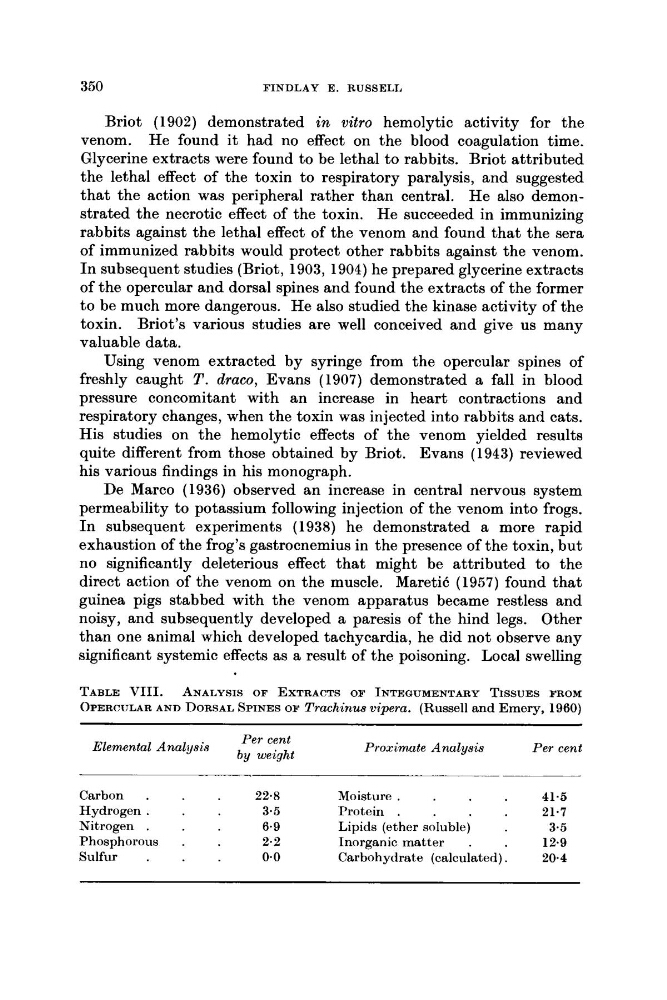
TABLE VIII. ANALYSIS OF EXTRACTS OF INTEGUMENTARY TISSUES FROM
OPERCULAR AND DORSAL SPINES OF Trachinus vipera. (Russell and Emery, 1960)
Per cent
by weight
Elemental Analysis
Proximate Analysis
Per cent
Carbon
.
.
22.8
Moisture .
.
41.5
Hydrogen.
3.5
Protein .
.
21.7
Nitrogen .
6.9
Lipids (ether soluble)
.
3.5
Phosphorous
.
2.2
Inorganic matter
.
.
12.9
Sulfur
.
0.0
Carbohydrate (calculated).
20.4
FINDLAY E. RUSSELL
Briot (1902) demonstrated in vitro hemolytic activity for the
venom. He found it had no effect on the blood coagulation time.
Glycerine extracts were found to be lethal to rabbits. Briot attributed
the lethal effect of the toxin to respiratory paralysis, and suggested
that the action was peripheral rather than central. He also demonstrated the necrotic effect of the toxin. He succeeded in immunizing
rabbits against the lethal effect of the venom and found that the sera
of immunized rabbits would protect other rabbits against the venom.
In subsequent studies (Briot, 1903, 1904) he prepared glycerine extracts
of the opercular and dorsal spines and found the extracts of the former
to be much more dangerous. He also studied the kinase activity of the
toxin. Briot’s various studies are well conceived and give us many
valuable data.
Using venom extracted by syringe from the opercular spines of
freshly caught T . draco, Evans (1907) demonstrated a fall in blood
pressure concomitant with an increase in heart contractions and
respiratory changes, when the toxin was injected into rabbits and cats.
His studies on the hemolytic effects of the venom yielded results
quite different from those obtained by Briot. Evans (1943) reviewed
his various findings in his monograph.
De Marco (1936) observed an increase in central nervous system
permeability to potassium following injection of the venom into frogs.
I n subsequent experiments (1938) he demonstrated a more rapid
exhaustion of the frog’s gastrocnemius in the presence of the toxin, but
no significantly deleterious effect that might be attributed to the
direct action of the venom on the muscle. Maretii: (1957) found that
guinea pigs stabbed with the venom apparatus became restless and
noisy, and subsequently developed a paresis of the hind legs. Other
than one animal which developed tachycardia, he did not observe any
significant systemic effects as a result of the poisoning. Local swelling
TABLE VIII. ANALYSIS OF EXTRACTS OF INTEGUMENTARY TISSUES FROM
OPERCULAR AND DORSAL SPINES OF Trachinus vipera. (Russell and Emery, 1960)
Per cent
by weight
Elemental Analysis
Proximate Analysis
Per cent
Carbon
.
.
22.8
Moisture .
.
41.5
Hydrogen.
3.5
Protein .
.
21.7
Nitrogen .
6.9
Lipids (ether soluble)
.
3.5
Phosphorous
.
2.2
Inorganic matter
.
.
12.9
Sulfur
.
0.0
Carbohydrate (calculated).
20.4