

MARINE TOXINS AND VENOMOUS AND POISONOUS MARINE ANIMALS
301
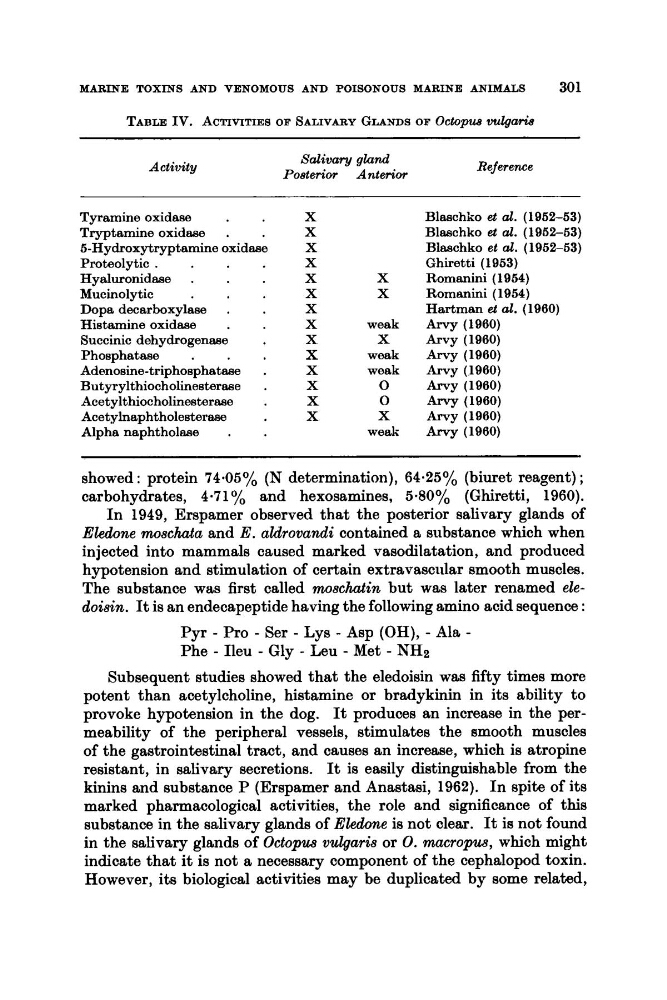
TABLE IV. ACTIVITIES OF SALIVARY GLANDS OF octopu~ vukarie
Activity
Salivary gland
Poeteriw Anterior
Reference
Tyramine oxidase
.
Tryptamine oxidase .
5-Hydroxytryptamine oxidase
Proteolytic .
Hyaluronidase .
Mucinolytic
.
Dopa decarboxylase .
Histamine oxidase
.
Succinic dehydrogenase
.
Phosphatase
.
Adenosine-triphosphatase .
Butyrylthiocholinesterase .
Acetylthiocholinesterase
.
Acetylnaphtholesterase
.
Alpha naphtholase
.
X
X
X
X
X
X
X
X
X
X
X
X
X
X
X
X
weak
X
weak
weak
0
0
X
weak
Blaschiio et al. (1962-53)
Blaschko et al. (1952-63)
Ghiretti (1953)
Romanini (1954)
Romanini (1964)
Hartman et al. (1960)
Arvy (1960)
Amy (1960)
Arvy (1960)
Arvy (1900)
Arvy (1900)
Blaschko et al. (1962-63)
Arvy (1960)
Anry (1960)
Anry (1960)
showed : protein 74.05% (N determination), 64.25% (biuret reagent) ;
carbohydrates, 4.71 yo and hexosamines, 5+30y0 (Ghiretti, 1960).
In 1949, Erspamer observed that the posterior salivary glands of
Eledone moschuta and E . aldrovandi contained a substance which when
injected into mammals caused marked vasodilatation, and produced
hypotension and stimulation of certain extravascular smooth muscles.
The substance was first called moschatin but was later renamed eledoisin. It is an endecapeptide having the following amino acid sequence :
Pyr - Pro - Ser - Lys - Asp (OH), - Ala -
Phe - Ileu - Gly - Leu - Met - NH2
Subsequent studies showed that the eledoisin was fifty times more
potent than acetylcholine, histamine or bradykinin in its ability to
provoke hypotension in the dog. It produces an increase in the permeability of the peripheral vessels, stimulates the smooth muscles
of the gastrointestinal tract, and causes an increase, which is atropine
resistant, in salivary secretions. It is easily distinguishable from the
kinins and substance P (Erspamer and Anastasi, 1962). In spite of its
marked pharmacological activities, the role and significance of this
substance in the salivary glands of Eledone is not clear. It is not found
in the salivary glands of Octopus vulgaris or 0. macropus, which might
indicate that it is not a necessary component of the cephalopod toxin.
However, its biological activities may be duplicated by some related,
301
TABLE IV. ACTIVITIES OF SALIVARY GLANDS OF octopu~ vukarie
Activity
Salivary gland
Poeteriw Anterior
Reference
Tyramine oxidase
.
Tryptamine oxidase .
5-Hydroxytryptamine oxidase
Proteolytic .
Hyaluronidase .
Mucinolytic
.
Dopa decarboxylase .
Histamine oxidase
.
Succinic dehydrogenase
.
Phosphatase
.
Adenosine-triphosphatase .
Butyrylthiocholinesterase .
Acetylthiocholinesterase
.
Acetylnaphtholesterase
.
Alpha naphtholase
.
X
X
X
X
X
X
X
X
X
X
X
X
X
X
X
X
weak
X
weak
weak
0
0
X
weak
Blaschiio et al. (1962-53)
Blaschko et al. (1952-63)
Ghiretti (1953)
Romanini (1954)
Romanini (1964)
Hartman et al. (1960)
Arvy (1960)
Amy (1960)
Arvy (1960)
Arvy (1900)
Arvy (1900)
Blaschko et al. (1962-63)
Arvy (1960)
Anry (1960)
Anry (1960)
showed : protein 74.05% (N determination), 64.25% (biuret reagent) ;
carbohydrates, 4.71 yo and hexosamines, 5+30y0 (Ghiretti, 1960).
In 1949, Erspamer observed that the posterior salivary glands of
Eledone moschuta and E . aldrovandi contained a substance which when
injected into mammals caused marked vasodilatation, and produced
hypotension and stimulation of certain extravascular smooth muscles.
The substance was first called moschatin but was later renamed eledoisin. It is an endecapeptide having the following amino acid sequence :
Pyr - Pro - Ser - Lys - Asp (OH), - Ala -
Phe - Ileu - Gly - Leu - Met - NH2
Subsequent studies showed that the eledoisin was fifty times more
potent than acetylcholine, histamine or bradykinin in its ability to
provoke hypotension in the dog. It produces an increase in the permeability of the peripheral vessels, stimulates the smooth muscles
of the gastrointestinal tract, and causes an increase, which is atropine
resistant, in salivary secretions. It is easily distinguishable from the
kinins and substance P (Erspamer and Anastasi, 1962). In spite of its
marked pharmacological activities, the role and significance of this
substance in the salivary glands of Eledone is not clear. It is not found
in the salivary glands of Octopus vulgaris or 0. macropus, which might
indicate that it is not a necessary component of the cephalopod toxin.
However, its biological activities may be duplicated by some related,