

THE BEHAVIOUR AND PHYSIOLOGY OF HERRING AND OTHER CLUPEIDS 361
water temperature, etc., can all in some degree modify fecundity.
Bibov (1960) found that the offspring of the Baltic herring did not have
the =me fecundity as their parents when they were reared in a different
environment. Anokhina (1959, 1960, 1961) reviewed fecundity as an
adaptive character that might vary as environmental factors varied.
She studied the relationships between fecundity and size of ova, tho
38
I
I
1
36 -
34 t
30 t
Summer Islandian
22f
Atlantic -Scandinavian
-c
cr - A /
d
Y C h e c h a n Bay
2ot
I
. @Kandalaskii Bay
I
I
I
I
I
I
I
I
I
I
I
I
I
I
Age
2
3 4 5 6 7 8 9 1 0 1 1 I2 13 14 I
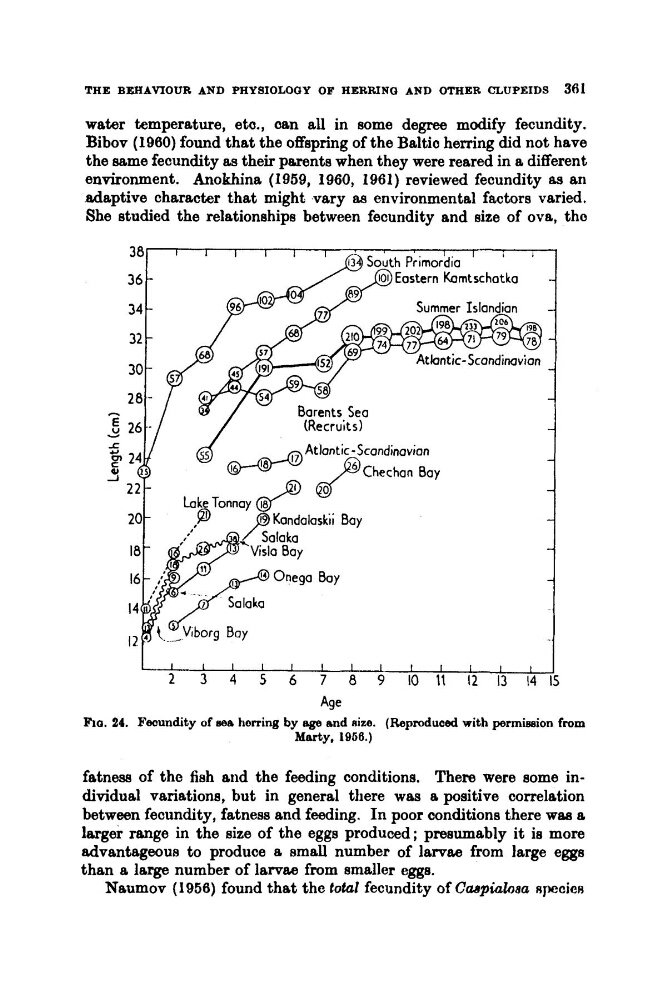
FIG. 24. Feoundity of ma homing by age and size. (Reproduaed with permission from
Mnrty, 1966.)
fatness of the fish and the feeding conditions. There were some individual variations, but in general there was a positive correlation
between fecundity, fatness and feeding. In poor oonditions there was a
larger range in the size of the egg8 produced; presumably it is more
advantageous to produce a small number of larvae from large eggs
than a large number of larvae from smaller eggs.
Naumov (1956) found that the total fecundity of C a p k h ~ ~
upecim
water temperature, etc., can all in some degree modify fecundity.
Bibov (1960) found that the offspring of the Baltic herring did not have
the =me fecundity as their parents when they were reared in a different
environment. Anokhina (1959, 1960, 1961) reviewed fecundity as an
adaptive character that might vary as environmental factors varied.
She studied the relationships between fecundity and size of ova, tho
38
I
I
1
36 -
34 t
30 t
Summer Islandian
22f
Atlantic -Scandinavian
-c
cr - A /
d
Y C h e c h a n Bay
2ot
I
. @Kandalaskii Bay
I
I
I
I
I
I
I
I
I
I
I
I
I
I
Age
2
3 4 5 6 7 8 9 1 0 1 1 I2 13 14 I
FIG. 24. Feoundity of ma homing by age and size. (Reproduaed with permission from
Mnrty, 1966.)
fatness of the fish and the feeding conditions. There were some individual variations, but in general there was a positive correlation
between fecundity, fatness and feeding. In poor oonditions there was a
larger range in the size of the egg8 produced; presumably it is more
advantageous to produce a small number of larvae from large eggs
than a large number of larvae from smaller eggs.
Naumov (1956) found that the total fecundity of C a p k h ~ ~
upecim