

THE BEHAVIOUR AND PHYSIOLOQY OF HERRmO AND OTHER CLUPEIDS 359
specialized connective tissue cells. A large proportion of the oocytes
remain in a resting pliaseq each year and have no fully formed follicle,
each oocyte apparently spending one year as a resting cell and maturing
the following year. The development of the chorion and the laying
down of yolk in the egg is dependent on the presence of the granulosa
cells of the follicle. The increase in size of the ovary in the herring is
S
(b)
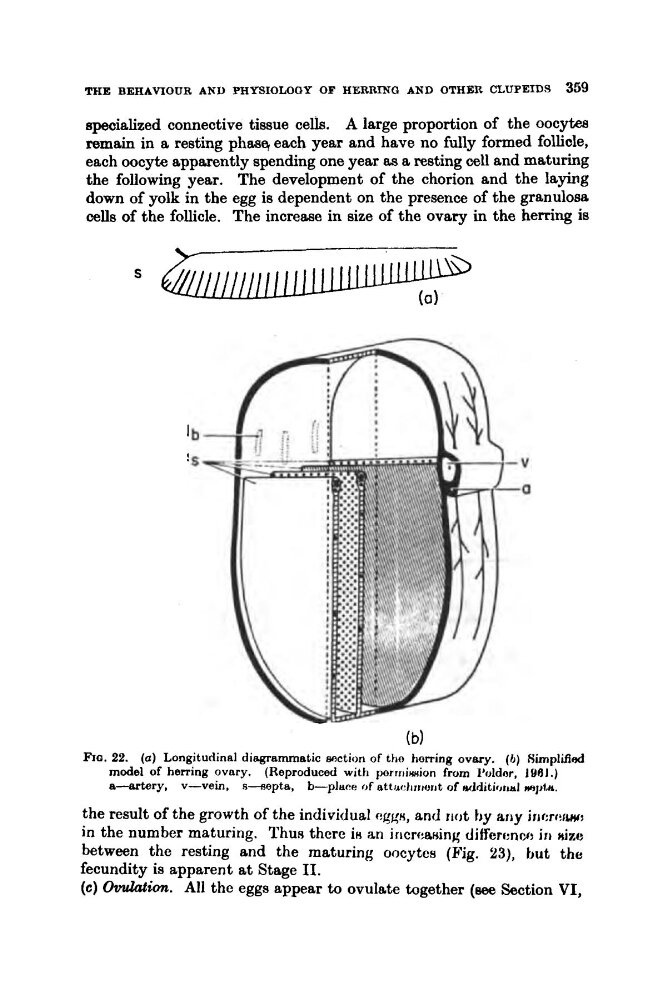
FIG. 22. (a) Longitudinal diagrammatic section of tho horring ovary. (a) RimpliBed
model of herring ovary. (Reproduced with porrriiwrrion from l’older, 1961.)
a-artery,
v-vein,
s--septa, b-place of attdinrerlt of dditirmd ) ( r t l h ~
the result of the growth of the individual egg^' and riot hy any iricrmw
in the number maturing. Thus there ie an iricrcaeing diffcranw3 iri nizs
between the resting and the maturing oocytes (Fig. 23), but the
fecundity is apparent at Stage 11.
(c) ovulation. All the eggs appear to ovulate together (see Section VI,
specialized connective tissue cells. A large proportion of the oocytes
remain in a resting pliaseq each year and have no fully formed follicle,
each oocyte apparently spending one year as a resting cell and maturing
the following year. The development of the chorion and the laying
down of yolk in the egg is dependent on the presence of the granulosa
cells of the follicle. The increase in size of the ovary in the herring is
S
(b)
FIG. 22. (a) Longitudinal diagrammatic section of tho horring ovary. (a) RimpliBed
model of herring ovary. (Reproduced with porrriiwrrion from l’older, 1961.)
a-artery,
v-vein,
s--septa, b-place of attdinrerlt of dditirmd ) ( r t l h ~
the result of the growth of the individual egg^' and riot hy any iricrmw
in the number maturing. Thus there ie an iricrcaeing diffcranw3 iri nizs
between the resting and the maturing oocytes (Fig. 23), but the
fecundity is apparent at Stage 11.
(c) ovulation. All the eggs appear to ovulate together (see Section VI,