

292
J . H. 9. BLAXTER AND F. (3. T. HOLLIDAY
el al. (1953) noted that herring larvae were more evenly distributed in
black than in white vessels. Larger larvae in tanks with transparent
walls developed deformities in the head and survived less well, presumably due to swimming against the walls.
V. METAMORPHOSIS
Little is known about metamorphosis except in herring. This is
partly due to the difficuhy ofrearing the young, but also to the lack of
suitable fish samples from the sea, this particular size of fish demanding
special techniques for ita capture.
Metamorphosis is said to occur in herring between 25 and 45 mm,
,
,
,
,
,
14
18
22
26
30
34
PO
f 10
Standard length, G, at metamorphosis (mmf
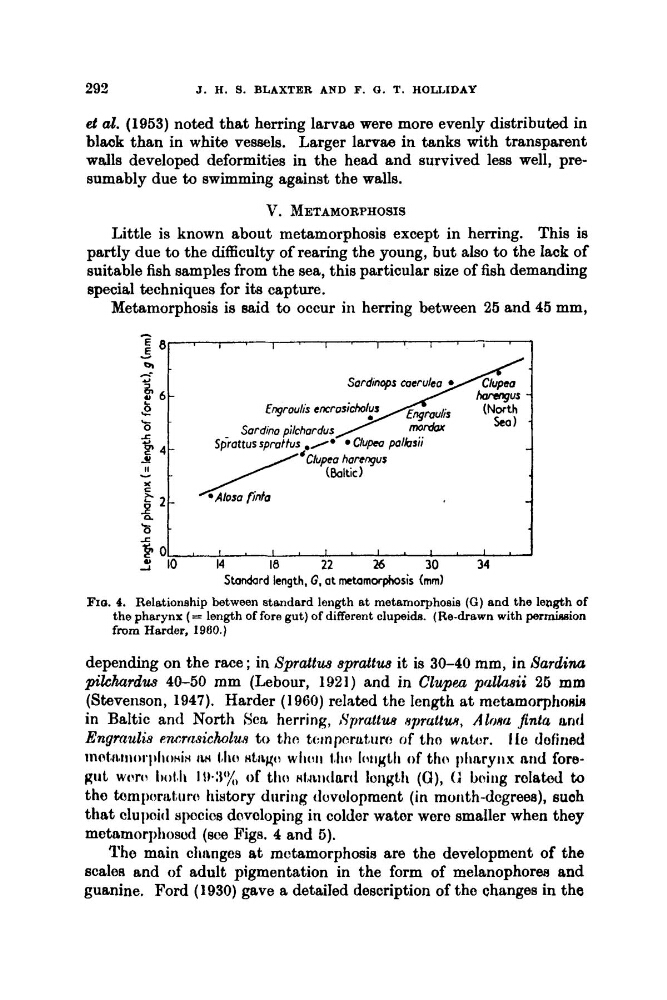
FIG. 4. Relationship between standard length at metamorphosis ( G ) and the length of
the pharynx (= length of fore gut) of different clupeids. (Re-drawn with permhion
from Harder, 1960.)
depending on the race ; in Sprattus eprattus it is 30-40 mm, in sardina
pilchardus 40-50 mm (Lebour, 1921) and in Clupea pallnsii 26 m m
(Stevenson, 1947). Harder (1960) related the lcngth at metamorphowiR
in Baltic and North Sea herring, Sprultue npruitw, Alonu jinta ant1
Engradis encmsicholue to the tc:inpcr&t,iirrt of tho wntcw. I lo dofined
inctt,rwiroi.l,lioHI" iLN (Jro HtiLgo wlrcw tho I ~ g b h of tfitr plrnryirx arid foregirt w t w I)olth I w : ~ ' ~ , of tho Htmitlarcl loiigth (a), (; baiiig rolatod to
tho tornprat,ut.cr history during tlovolopmont (in month-dcgrees), suoh
that clupoid spocics dnvoloping in colder water were smaller when they
motamorpliosod (so0 Figs. 4 and 5).
Tho main cliangcs at metamorphosis are the development of the
scalee and of adult pigmentation in the form of melanophores and
guanine. Ford (1930) gave a detailed deecription of the changes in the
J . H. 9. BLAXTER AND F. (3. T. HOLLIDAY
el al. (1953) noted that herring larvae were more evenly distributed in
black than in white vessels. Larger larvae in tanks with transparent
walls developed deformities in the head and survived less well, presumably due to swimming against the walls.
V. METAMORPHOSIS
Little is known about metamorphosis except in herring. This is
partly due to the difficuhy ofrearing the young, but also to the lack of
suitable fish samples from the sea, this particular size of fish demanding
special techniques for ita capture.
Metamorphosis is said to occur in herring between 25 and 45 mm,
,
,
,
,
,
14
18
22
26
30
34
PO
f 10
Standard length, G, at metamorphosis (mmf
FIG. 4. Relationship between standard length at metamorphosis ( G ) and the length of
the pharynx (= length of fore gut) of different clupeids. (Re-drawn with permhion
from Harder, 1960.)
depending on the race ; in Sprattus eprattus it is 30-40 mm, in sardina
pilchardus 40-50 mm (Lebour, 1921) and in Clupea pallnsii 26 m m
(Stevenson, 1947). Harder (1960) related the lcngth at metamorphowiR
in Baltic and North Sea herring, Sprultue npruitw, Alonu jinta ant1
Engradis encmsicholue to the tc:inpcr&t,iirrt of tho wntcw. I lo dofined
inctt,rwiroi.l,lioHI" iLN (Jro HtiLgo wlrcw tho I ~ g b h of tfitr plrnryirx arid foregirt w t w I)olth I w : ~ ' ~ , of tho Htmitlarcl loiigth (a), (; baiiig rolatod to
tho tornprat,ut.cr history during tlovolopmont (in month-dcgrees), suoh
that clupoid spocics dnvoloping in colder water were smaller when they
motamorpliosod (so0 Figs. 4 and 5).
Tho main cliangcs at metamorphosis are the development of the
scalee and of adult pigmentation in the form of melanophores and
guanine. Ford (1930) gave a detailed deecription of the changes in the