

118
VICTOR L. LOOSAXOFF AND H A R R Y C. DAYIS
that time their gonads contained some eggs that appeared morphologically ripe and active sperm, the clams would not spawn. Even
after 6 or 8 weeks of conditioning, attempts to spawn these bivalves
often met with failure. In those cases, however, when stimulation was
successful, spawning proceeded normally. Some females were observed
spawning almost continuously for a period of approximately 45 min,
and males that spawned for periods sometimes as long a8 2 hr were
common.
When the clams were ripe they usually spawned within an hour
after the temperature was increased to about 25°C. Males continued
to spawn profusely even after being returned to water of only 13°C.
Clams became sluggish a t 30°C but, nevertheless, would spawn even
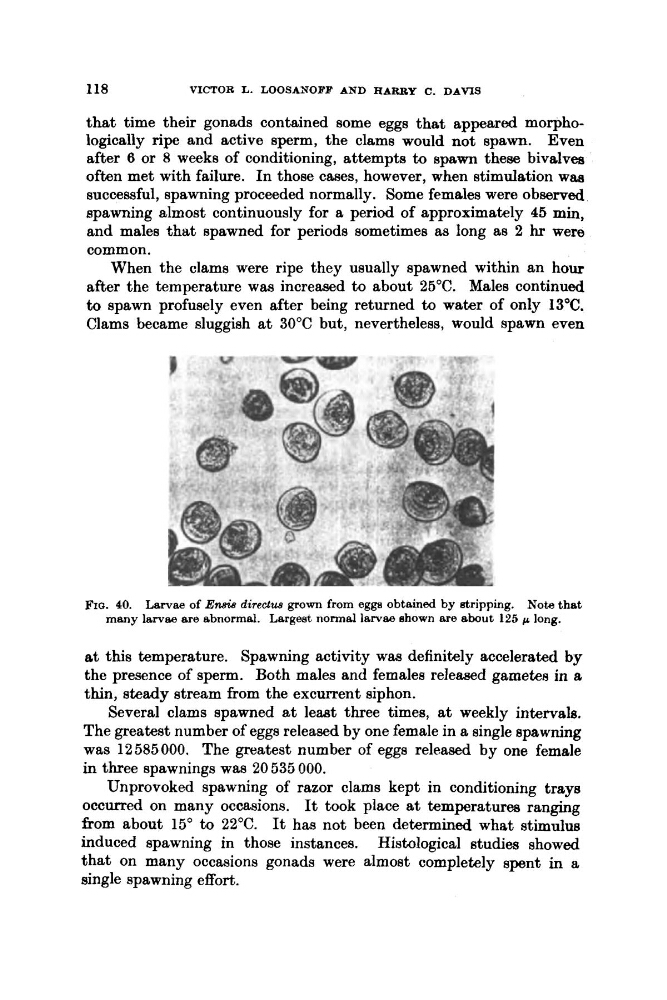
FIG 40. Larvae of E d directw, grown from eggs obtained by stripping. Note that
many larvae are abnormal. Largest normal larvae shown are about 125 p long.
at this temperature. Spawning activity waa definitely accelerated by
the presence of sperm. Both males and females released gametes in
thin, steady stream from the excurrent siphon.
Several clams spawned at leaat three times, at weekly intervals,
The greatest number of eggs released by one female in a single spawning
was 12585000. The greatest number of eggs released by one female
in three spawnings was 20 535 000.
Unprovoked spawning of razor clams kept in conditioning trays
occurred on many occasions. It took place at temperatures ranging
from about 15" to 22°C. It has not been determined what stimulus
induced spawning in those instances. Histological studies showed
that on many occasions gonads were almost completely spent in a
single spawning effort.
VICTOR L. LOOSAXOFF AND H A R R Y C. DAYIS
that time their gonads contained some eggs that appeared morphologically ripe and active sperm, the clams would not spawn. Even
after 6 or 8 weeks of conditioning, attempts to spawn these bivalves
often met with failure. In those cases, however, when stimulation was
successful, spawning proceeded normally. Some females were observed
spawning almost continuously for a period of approximately 45 min,
and males that spawned for periods sometimes as long a8 2 hr were
common.
When the clams were ripe they usually spawned within an hour
after the temperature was increased to about 25°C. Males continued
to spawn profusely even after being returned to water of only 13°C.
Clams became sluggish a t 30°C but, nevertheless, would spawn even
FIG 40. Larvae of E d directw, grown from eggs obtained by stripping. Note that
many larvae are abnormal. Largest normal larvae shown are about 125 p long.
at this temperature. Spawning activity waa definitely accelerated by
the presence of sperm. Both males and females released gametes in
thin, steady stream from the excurrent siphon.
Several clams spawned at leaat three times, at weekly intervals,
The greatest number of eggs released by one female in a single spawning
was 12585000. The greatest number of eggs released by one female
in three spawnings was 20 535 000.
Unprovoked spawning of razor clams kept in conditioning trays
occurred on many occasions. It took place at temperatures ranging
from about 15" to 22°C. It has not been determined what stimulus
induced spawning in those instances. Histological studies showed
that on many occasions gonads were almost completely spent in a
single spawning effort.