

110
VICTOR L. L O O S ~ O F F AND H m Y C. DAVIS
Attempts at artificial fertilization of eggs .of P . p h o l d i f m b were
partially successful, indicating that this can be done. As usual in the&
cases, the majority of stripped eggs were somewhat injured.
Ripe eggs meclsured immediately after discharge varied in diameter
from 61 to 58 p, but the modal size was quite clearly defined at 52 p .
No speciai sttdies were made as to the number of eggs produced by a
single female during the season. However, ip one case a large female
discharged approximately 1 125 000 eggs in a; single spawning.
According to Sullivan (1948) straight-hinge larvae of P . p h o b
diformis are quite large, measuring 115 x 100 p. We found, however,
that young straight-hinge larvae are considerably smaller than reported
by Sullivan. With the exception of one, apparently an abnormal lama
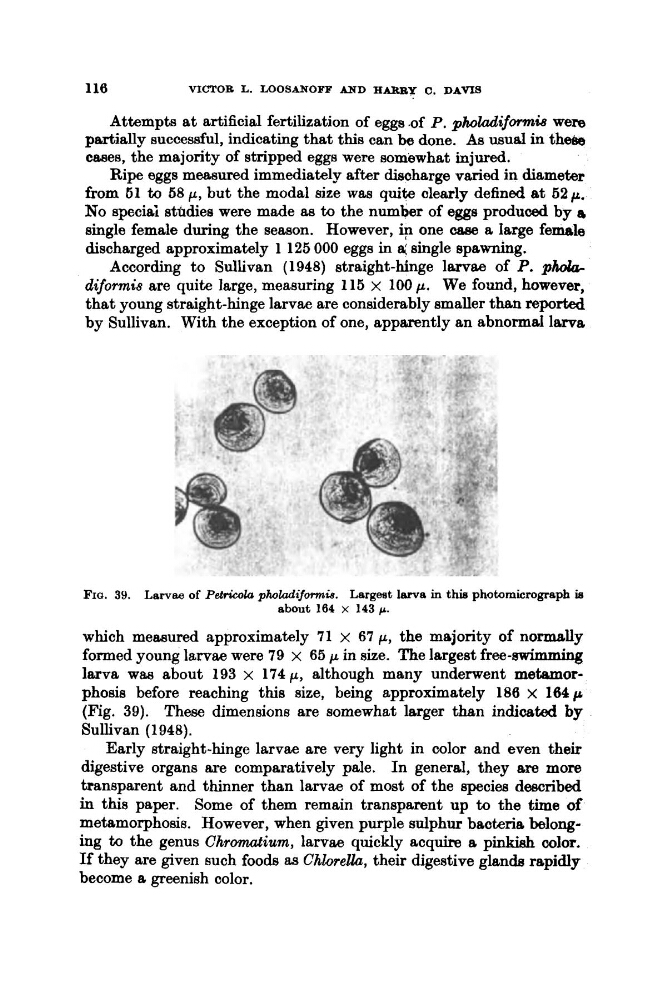
FIG. 39. Larvae of Petrieola pholadifomia. Largest larva in this photomicrograph is
which memured approximately 71 x 67 p, the majority of normally
formed young larvae were 79 x 65 p in size. The largest free-swimming
larva wm about 193 x 174p, although many underwent metamorphosis before reaching this size, being approximately 186 x 164p
(Fig. 39). These dimensions are somewhat larger than indicated bg
Sullivan (1948).
Early straight-hinge larvae are very light in color and even their
digestive organs me comparatively pale. I n general, they are more
transparent and thinner than larvae of most of the species described
i n this paper. Some of them remain transparent up to the time of
metamorphosis. However, when given purple sulphur bacteria belonging to the genus Chromatium, larvae quickly acquire a pinkish color.
If they are given such foods as Chlore.eUa, their digestive glands rapidly
become a greenish color.
about 164 X 143p.
VICTOR L. L O O S ~ O F F AND H m Y C. DAVIS
Attempts at artificial fertilization of eggs .of P . p h o l d i f m b were
partially successful, indicating that this can be done. As usual in the&
cases, the majority of stripped eggs were somewhat injured.
Ripe eggs meclsured immediately after discharge varied in diameter
from 61 to 58 p, but the modal size was quite clearly defined at 52 p .
No speciai sttdies were made as to the number of eggs produced by a
single female during the season. However, ip one case a large female
discharged approximately 1 125 000 eggs in a; single spawning.
According to Sullivan (1948) straight-hinge larvae of P . p h o b
diformis are quite large, measuring 115 x 100 p. We found, however,
that young straight-hinge larvae are considerably smaller than reported
by Sullivan. With the exception of one, apparently an abnormal lama
FIG. 39. Larvae of Petrieola pholadifomia. Largest larva in this photomicrograph is
which memured approximately 71 x 67 p, the majority of normally
formed young larvae were 79 x 65 p in size. The largest free-swimming
larva wm about 193 x 174p, although many underwent metamorphosis before reaching this size, being approximately 186 x 164p
(Fig. 39). These dimensions are somewhat larger than indicated bg
Sullivan (1948).
Early straight-hinge larvae are very light in color and even their
digestive organs me comparatively pale. I n general, they are more
transparent and thinner than larvae of most of the species described
i n this paper. Some of them remain transparent up to the time of
metamorphosis. However, when given purple sulphur bacteria belonging to the genus Chromatium, larvae quickly acquire a pinkish color.
If they are given such foods as Chlore.eUa, their digestive glands rapidly
become a greenish color.
about 164 X 143p.