

88
VICTOR L. LOOSANOFF AND HARRY C. DAVIS
for Sullivan’s (1948) article, there are no other references to larval
development of this species. Considerable literature, nevertheless,
exists on larvae of Modiolus modiolus and closely-related forms.
These references can be found in the papers of Jmgensen (1946) and
Rees (1950).
Various methods used to stimulate spawning of other bivalves
proved unsuccessful for ribbed mussels. On two occasions, however,
mussels kept in aquaria spawned without artificial stimulation. In
both cases spawning occurred at night m d , when the eggs were found
in the morning they were already undergoing segmentation. Thus,
no measurements of recently discharged eggs were made. Jsrgensen
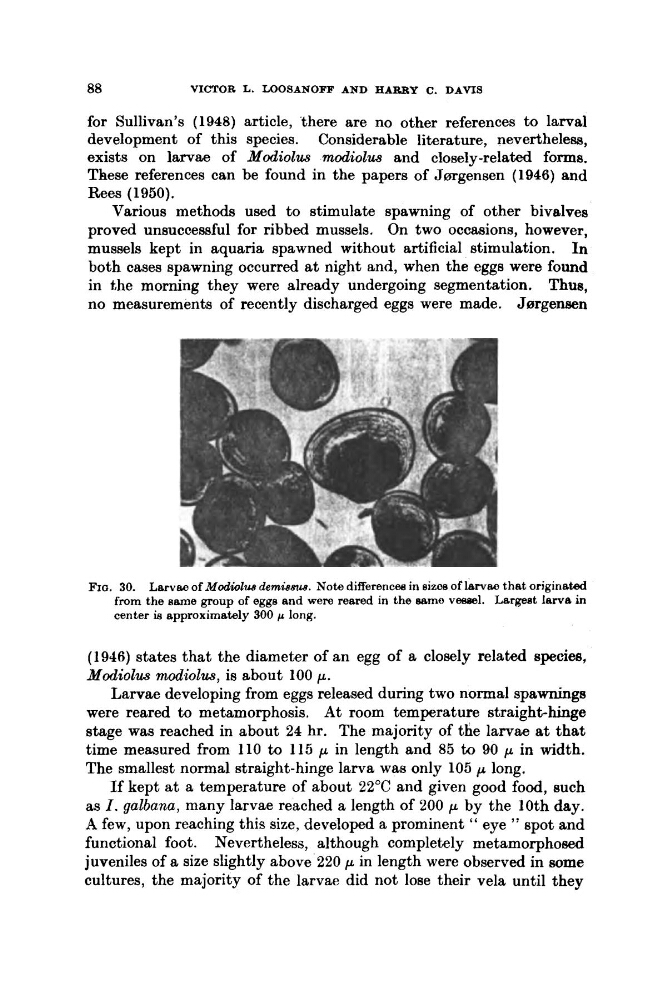
FIG. 30. Larvae of Modwlus derninsue. Note differencee in sizos of larvae that originated
from the same group of eggs and were reared in the earno veaeel. Lsrgeet larva in
center is approximately 300 p long.
(1946) states that the diameter of an egg of a closely related species,
Modiolus modiolus, is about 100 p.
Larvae developing from eggs released during two normal spawnings
were reared to metamorphosis. At room temperature straight-hinge
stage was reached in about 24 hr. The majority of the l a ~ a e
at that
time measured from 110 to 115 p in length and 85 to 90 p in width.
The smallest normal straight-hinge larva was only 105 p long.
If kept at a temperature of about 22°C and given good food, such
as I . galbana, many larvae reached a length of 200 p by the 10th day.
A few, upon reaching this size, developed a prominent “ eye ” spot and
functional foot. Nevertheless, although completely metamorphosed
juveniles of a size slightly above 220 p in length were observed in some
cultures, the majority of the larvae did not lose their vela until they
VICTOR L. LOOSANOFF AND HARRY C. DAVIS
for Sullivan’s (1948) article, there are no other references to larval
development of this species. Considerable literature, nevertheless,
exists on larvae of Modiolus modiolus and closely-related forms.
These references can be found in the papers of Jmgensen (1946) and
Rees (1950).
Various methods used to stimulate spawning of other bivalves
proved unsuccessful for ribbed mussels. On two occasions, however,
mussels kept in aquaria spawned without artificial stimulation. In
both cases spawning occurred at night m d , when the eggs were found
in the morning they were already undergoing segmentation. Thus,
no measurements of recently discharged eggs were made. Jsrgensen
FIG. 30. Larvae of Modwlus derninsue. Note differencee in sizos of larvae that originated
from the same group of eggs and were reared in the earno veaeel. Lsrgeet larva in
center is approximately 300 p long.
(1946) states that the diameter of an egg of a closely related species,
Modiolus modiolus, is about 100 p.
Larvae developing from eggs released during two normal spawnings
were reared to metamorphosis. At room temperature straight-hinge
stage was reached in about 24 hr. The majority of the l a ~ a e
at that
time measured from 110 to 115 p in length and 85 to 90 p in width.
The smallest normal straight-hinge larva was only 105 p long.
If kept at a temperature of about 22°C and given good food, such
as I . galbana, many larvae reached a length of 200 p by the 10th day.
A few, upon reaching this size, developed a prominent “ eye ” spot and
functional foot. Nevertheless, although completely metamorphosed
juveniles of a size slightly above 220 p in length were observed in some
cultures, the majority of the larvae did not lose their vela until they