

POPULATION CYCLES IN SMALL MAMMALS
381
and among different local populations. Furthermore, characteristics of
fitness such as survival and growth show generally consistent patterns,
although there is some variation.
, While there is now general agreement that populations are composites of organisms with considerable genetic variation, and that the
genetic make up of populations can change in association with density
MICROTUS PENNSYLVANICUS
>
q 20 10
0
GRID GRID GRID
F
I
K
VAGINAL
ORIFICE
PERFORATE
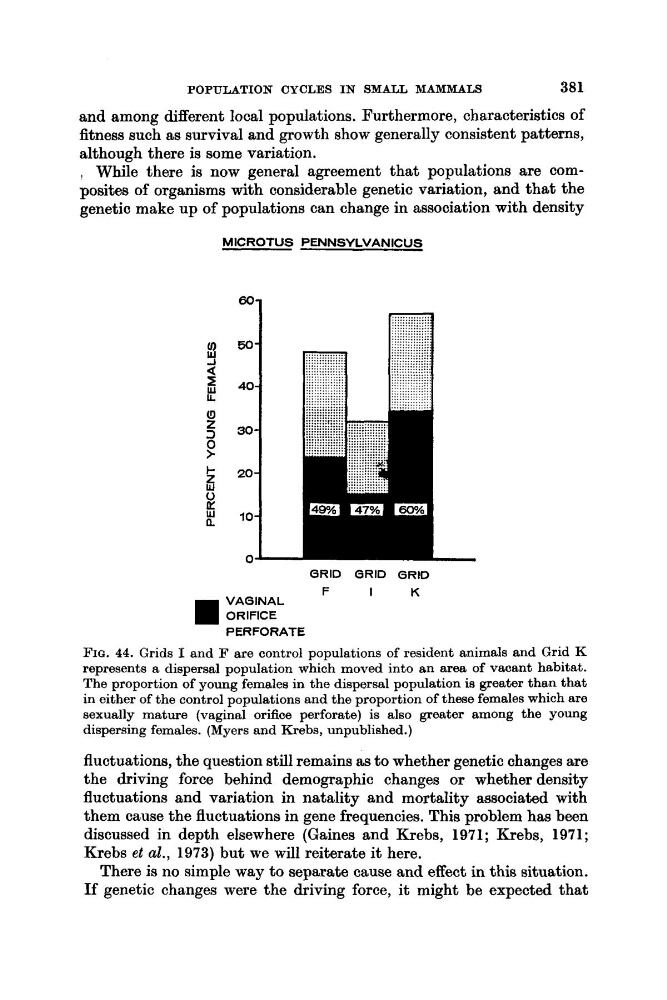
FIG. 44. Grids I and F are control populations of resident animals and Grid K
represents a dispersal population which moved into an area of vacant habitat.
The proportion of young females in the dispersal population is greater than that
in either of the control populations and the proportion of these females which are
sexually mature (vaginal orifice perforate) is also greater among the young
dispersing females. (Myers and Krebs, unpublished.)
fluctuations, the question still remains as to whether genetic changes are
the driving force behind demographic changes or whether density
fluctuations and variation in natality and mortality associated with
them cause the fluctuations in gene frequencies. This problem has been
discussed in depth elsewhere (Gaines and Krebs, 1971; Krebs, 1971;
Krebs et al., 1973) but we will reiterate it here.
There is no simple way to separate cause and effect in this situation.
If genetic changes were the driving force, it might be expected that
381
and among different local populations. Furthermore, characteristics of
fitness such as survival and growth show generally consistent patterns,
although there is some variation.
, While there is now general agreement that populations are composites of organisms with considerable genetic variation, and that the
genetic make up of populations can change in association with density
MICROTUS PENNSYLVANICUS
>
q 20 10
0
GRID GRID GRID
F
I
K
VAGINAL
ORIFICE
PERFORATE
FIG. 44. Grids I and F are control populations of resident animals and Grid K
represents a dispersal population which moved into an area of vacant habitat.
The proportion of young females in the dispersal population is greater than that
in either of the control populations and the proportion of these females which are
sexually mature (vaginal orifice perforate) is also greater among the young
dispersing females. (Myers and Krebs, unpublished.)
fluctuations, the question still remains as to whether genetic changes are
the driving force behind demographic changes or whether density
fluctuations and variation in natality and mortality associated with
them cause the fluctuations in gene frequencies. This problem has been
discussed in depth elsewhere (Gaines and Krebs, 1971; Krebs, 1971;
Krebs et al., 1973) but we will reiterate it here.
There is no simple way to separate cause and effect in this situation.
If genetic changes were the driving force, it might be expected that