

320
CHARLES J. KREBS AND JUDITH H. MYERS
1.10
z
f l c 5
0
0
U
O 100
E z
09S
-- I
1
~~
1965
1966
1967
1868
1969
1970
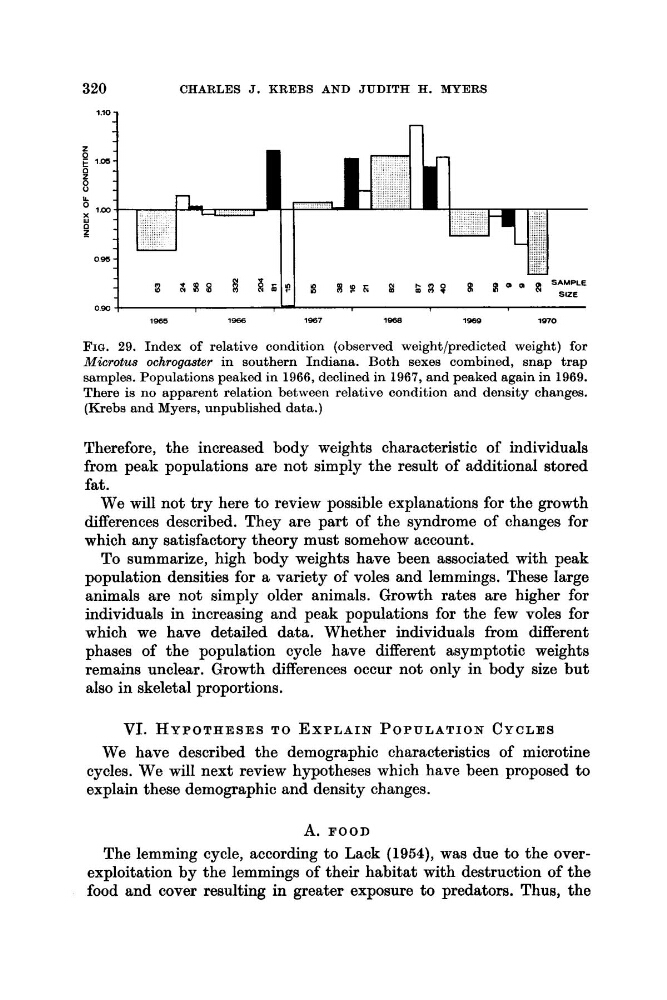
FIG. 29. Index of relative condition (observed weight/predicted weight) for
Microtus ochroguster in southern Indiana. Both sexes combined, snap trap
samples. Populations peaked in 1966, declined in 1967, and peaked again in 1969.
There is no apparent relation between relative condition and density changes.
(Krebs and Myers, unpublished data.)
Therefore, the increased body weights characteristic of individuals
from peak populations are not simply the result of additional stored
fat.
We will not try here to review possible explanations for the growth
differences described. They are part of the syndrome of changes for
which any satisfactory theory must somehow account.
To summarize, high body weights have been associated with peak
population densities for a variety of voles and lemmings. These large
animals are not simply older animals. Growth rates are higher for
individuals in increasing and peak populations for the few voles for
which we have detailed data. Whether individuals from different
phases of the population cycle have different asymptotic weights
remains unclear. Growth differences occur not only in body size but
also in skeletal proportions.
VI. HYPOTHESES T O EXPLAIN POPULATION CYCLES
We have described the demographic characteristics of microtine
cycles. We will next review hypotheses which have been proposed to
explain these demographic and density changes.
A. F O O D
The lemming cycle, according to Lack (1954), was due to the overexploitation by the lemmings of their habitat with destruction of the
food and cover resulting in greater exposure to predators. Thus, the
CHARLES J. KREBS AND JUDITH H. MYERS
1.10
z
f l c 5
0
0
U
O 100
E z
09S
-- I
1
~~
1965
1966
1967
1868
1969
1970
FIG. 29. Index of relative condition (observed weight/predicted weight) for
Microtus ochroguster in southern Indiana. Both sexes combined, snap trap
samples. Populations peaked in 1966, declined in 1967, and peaked again in 1969.
There is no apparent relation between relative condition and density changes.
(Krebs and Myers, unpublished data.)
Therefore, the increased body weights characteristic of individuals
from peak populations are not simply the result of additional stored
fat.
We will not try here to review possible explanations for the growth
differences described. They are part of the syndrome of changes for
which any satisfactory theory must somehow account.
To summarize, high body weights have been associated with peak
population densities for a variety of voles and lemmings. These large
animals are not simply older animals. Growth rates are higher for
individuals in increasing and peak populations for the few voles for
which we have detailed data. Whether individuals from different
phases of the population cycle have different asymptotic weights
remains unclear. Growth differences occur not only in body size but
also in skeletal proportions.
VI. HYPOTHESES T O EXPLAIN POPULATION CYCLES
We have described the demographic characteristics of microtine
cycles. We will next review hypotheses which have been proposed to
explain these demographic and density changes.
A. F O O D
The lemming cycle, according to Lack (1954), was due to the overexploitation by the lemmings of their habitat with destruction of the
food and cover resulting in greater exposure to predators. Thus, the