

294
CHARLES J. KREBS AND JUDITH H. MYERS
I
I
I
I
I
1
I
I
I
I
1 0 0 - t
-
c
8 0 -
t n -
-
2 a 6 0 -
-
al t n -
1956
0
2 40 -
I
I
I
I
I
I
I
10
20
10
20
10
20
10
20
JUNE
JULY
AUGUST
SE PT.
G
2 2 0 -
0
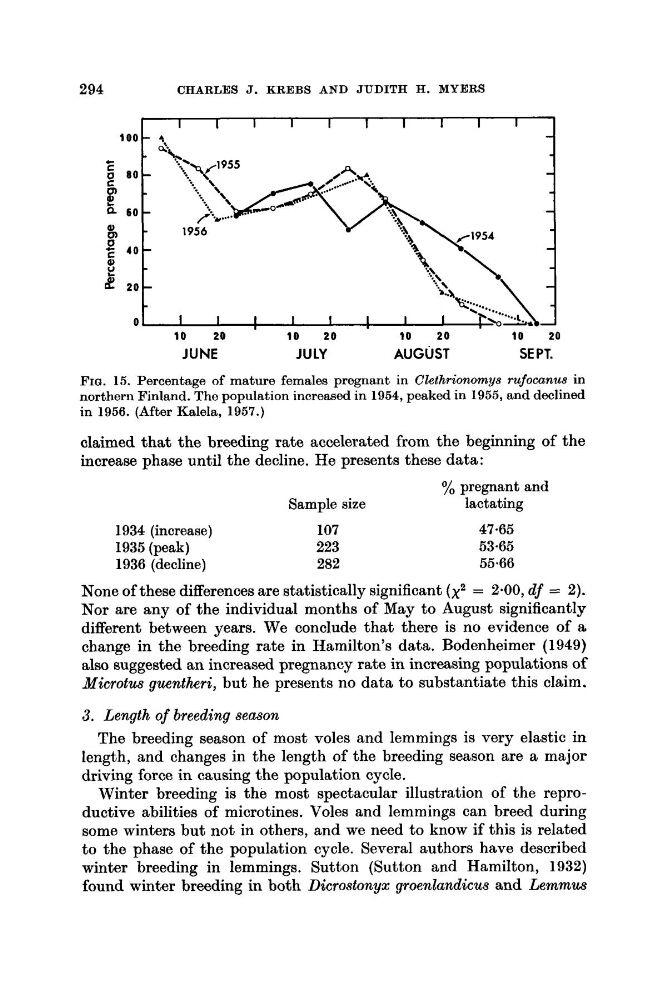
FIG. 15. Percentage of mature females pregnant in Clethrionomys rufocanus in
northern Finland. The population increased in 1954, peaked in 1955, and declined
in 1956. (After Kalela, 1957.)
claimed that the breeding rate accelerated from the beginning of the
increase phase until the decline. He presents these data:
yo pregnant and
Sample size
lactating
1934 (increase)
1935 (peak)
1936 (decline)
107
223
282
47.65
53.65
55.66
None of these differences are statistically significant (x2 = 2.00, df = 2).
Nor are any of the individual months of May to August significantly
different between years. We conclude that there is no evidence of a
change in the breeding rate in Hamilton’s data. Bodenheimer (1949)
also suggested an increased pregnancy rate in increasing populations of
Microtus guentheri, but he presents no data to substantiate this claim.
3. Length of breeding semon
The breeding season of most voles and lemmings is very elastic in
length, and changes in the length of the breeding season are a major
driving force in causing the population cycle.
Winter breeding is the most spectacular illustration of the reproductive abilities of microtines. Voles and lemmings can breed during
some winters but not in others, and we need to know if this is related
to the phase of the population cycle. Several authors have described
winter breeding in lemmings. Sutton (Sutton and Hamilton, 1932)
found winter breeding in both Dicrostonyx groenlandicus and Lernrnus
CHARLES J. KREBS AND JUDITH H. MYERS
I
I
I
I
I
1
I
I
I
I
1 0 0 - t
-
c
8 0 -
t n -
-
2 a 6 0 -
-
al t n -
1956
0
2 40 -
I
I
I
I
I
I
I
10
20
10
20
10
20
10
20
JUNE
JULY
AUGUST
SE PT.
G
2 2 0 -
0
FIG. 15. Percentage of mature females pregnant in Clethrionomys rufocanus in
northern Finland. The population increased in 1954, peaked in 1955, and declined
in 1956. (After Kalela, 1957.)
claimed that the breeding rate accelerated from the beginning of the
increase phase until the decline. He presents these data:
yo pregnant and
Sample size
lactating
1934 (increase)
1935 (peak)
1936 (decline)
107
223
282
47.65
53.65
55.66
None of these differences are statistically significant (x2 = 2.00, df = 2).
Nor are any of the individual months of May to August significantly
different between years. We conclude that there is no evidence of a
change in the breeding rate in Hamilton’s data. Bodenheimer (1949)
also suggested an increased pregnancy rate in increasing populations of
Microtus guentheri, but he presents no data to substantiate this claim.
3. Length of breeding semon
The breeding season of most voles and lemmings is very elastic in
length, and changes in the length of the breeding season are a major
driving force in causing the population cycle.
Winter breeding is the most spectacular illustration of the reproductive abilities of microtines. Voles and lemmings can breed during
some winters but not in others, and we need to know if this is related
to the phase of the population cycle. Several authors have described
winter breeding in lemmings. Sutton (Sutton and Hamilton, 1932)
found winter breeding in both Dicrostonyx groenlandicus and Lernrnus