

174
a. R. POTTS AND U. P. VICKERMAN
area B. The estimated numbers of the four major potential chick
predator groups were ( 1 ) fox (Vulpes vulpes) 26; (2) carrion crow
(Corvus corone L.) 35; magpie (Pica pica L . ) 12; ( 3 ) rat (Rattus norvegicus
(Erxleben)) > 200; (4) weasel (Mustela nivalis L.) 112; stoat (Mustela
erminea L.) 36.
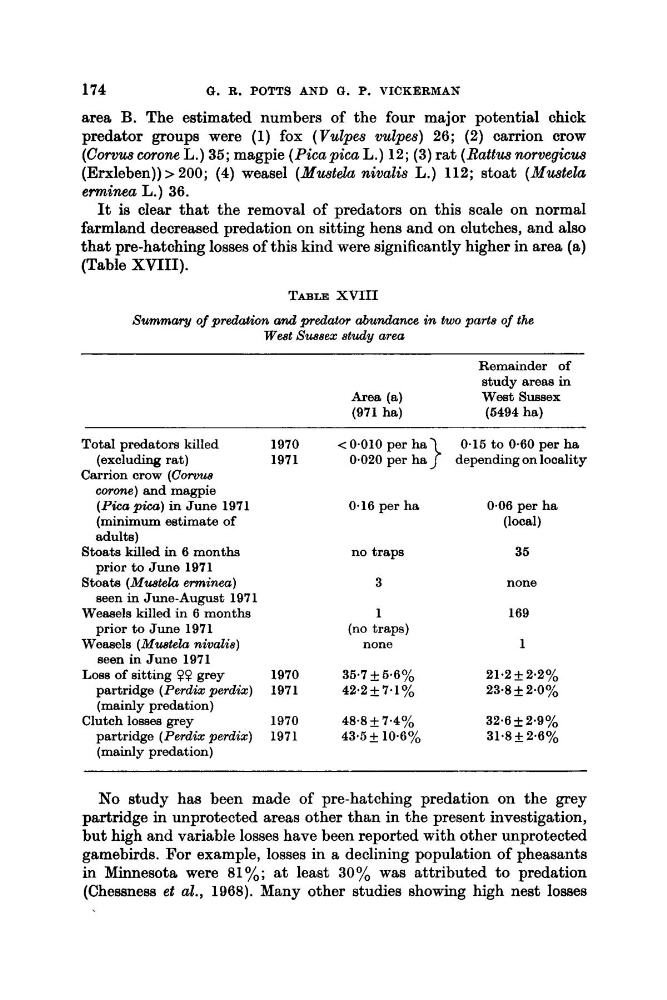
It is clear that the removal of predators on this scale on normal
farmland decreased predation on sitting hens and on clutches, and also
that pre-hatching losses of this kind were significantly higher in area (a)
(Table XVIII).
TABLE XVIII
Summary of predation and predator abundance in two parts of the
Weat Suasex study area
Remainder of
study areas in
Area (a)
West Sussex
(971 ha)
(6494 ha)
0.16 to 0-60 per ha
depending on locality
Total predators killed
(excluding rat)
1971
Carrion crow ( C o w
corone) and magpie
(Picapica) in June 1971
0-16 per ha
0.06 per ha
(minimum estimate of
adults)
Stoats killed in 6 months
prior to June 1971
Stoats (Mustela emninea)
seen in June-August 1971
Weasels killed in 6 months
prior to June 1971
Weasels (Muatela nivalia)
seen in June 1971
Loss of sitting 99 grey
partridge (Perdix perdix)
(mainly predation)
partridge (Perdix perdix)
(mainly predation)
Clutch losses grey
no traps
3
1
(no traps)
none
1970
36-7 f 6.6%
1971
42*2+7*1y0
1970
48.8 f 7.4%
1971
43.5 10.6y0
(local)
36
none
169
1
21.2 f 2.2%
23.8 2.0%
32.6 f 2.9%
31.8 f 2.6%
No study has been made of pre-hatching predation on the grey
partridge in unprotected areas other than in the present investigation,
but high and variable losses have been reported with other unprotected
gamebirds. For example, losses in a declining population of pheasants
in Minnesota were 81%; at least 30% was attributed to predation
(Chessness et al., 1968). Many other studies showing high nest losses
a. R. POTTS AND U. P. VICKERMAN
area B. The estimated numbers of the four major potential chick
predator groups were ( 1 ) fox (Vulpes vulpes) 26; (2) carrion crow
(Corvus corone L.) 35; magpie (Pica pica L . ) 12; ( 3 ) rat (Rattus norvegicus
(Erxleben)) > 200; (4) weasel (Mustela nivalis L.) 112; stoat (Mustela
erminea L.) 36.
It is clear that the removal of predators on this scale on normal
farmland decreased predation on sitting hens and on clutches, and also
that pre-hatching losses of this kind were significantly higher in area (a)
(Table XVIII).
TABLE XVIII
Summary of predation and predator abundance in two parts of the
Weat Suasex study area
Remainder of
study areas in
Area (a)
West Sussex
(971 ha)
(6494 ha)
0.16 to 0-60 per ha
depending on locality
Total predators killed
(excluding rat)
1971
Carrion crow ( C o w
corone) and magpie
(Picapica) in June 1971
0-16 per ha
0.06 per ha
(minimum estimate of
adults)
Stoats killed in 6 months
prior to June 1971
Stoats (Mustela emninea)
seen in June-August 1971
Weasels killed in 6 months
prior to June 1971
Weasels (Muatela nivalia)
seen in June 1971
Loss of sitting 99 grey
partridge (Perdix perdix)
(mainly predation)
partridge (Perdix perdix)
(mainly predation)
Clutch losses grey
no traps
3
1
(no traps)
none
1970
36-7 f 6.6%
1971
42*2+7*1y0
1970
48.8 f 7.4%
1971
43.5 10.6y0
(local)
36
none
169
1
21.2 f 2.2%
23.8 2.0%
32.6 f 2.9%
31.8 f 2.6%
No study has been made of pre-hatching predation on the grey
partridge in unprotected areas other than in the present investigation,
but high and variable losses have been reported with other unprotected
gamebirds. For example, losses in a declining population of pheasants
in Minnesota were 81%; at least 30% was attributed to predation
(Chessness et al., 1968). Many other studies showing high nest losses