

ECOLOGICAL STUDIES AT LOUOH INE
213
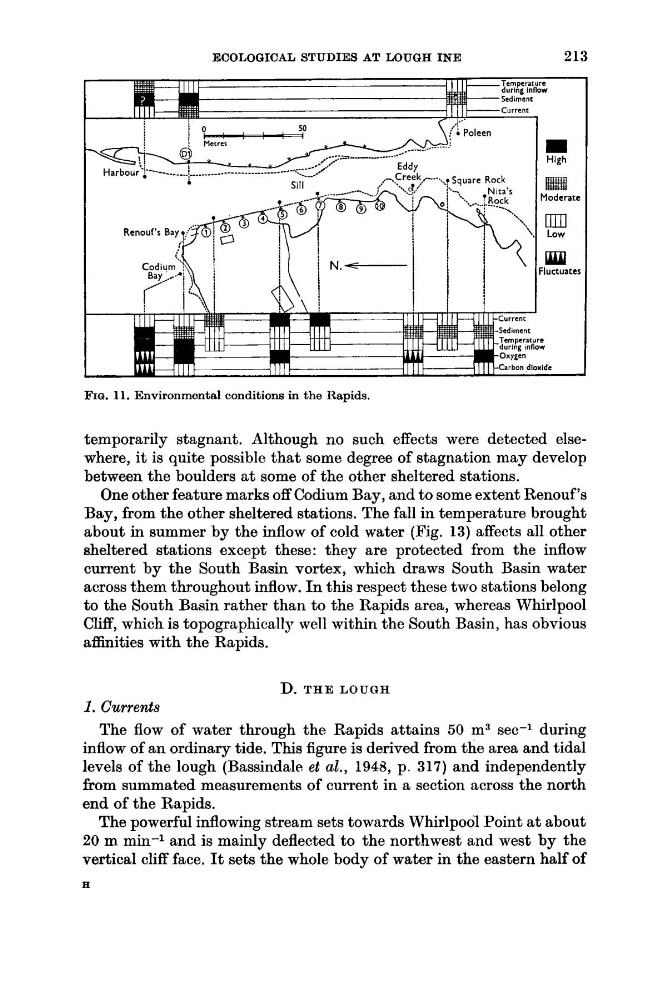
FIG. 11. Environmental conditions i n the Rapids.
temporarily stagnant. Although no such effects were detected elsewhere, it is quite possible that some degree of stagnation may develop
between the boulders at some of the other sheltered stations.
One other feature marks off Codium Bay, and to some extent Renouf’s
Bay, from the other sheltered stations. The fall in temperature brought
about in summer by the inflow of cold water (Fig. 13) affects all other
sheltered stations except these: they are protected from the inflow
current by the South Basin vortex, which draws South Basin water
across them throughout inflow. I n this respect these two stations belong
to the South Basin rather than to the Rapids area, whereas Whirlpool
Cliff, which is topographically well within the South Basin, has obvious
affinities with the Rapids.
D. T H E LOUGH
1. Currents
The flow of water through the Rapids attains 50 m3 sec-l during
inflow of an ordinary tide. This figure is derived from the area and tidal
levels of the lough (Bassindale et al., 1948, p. 317) and independently
from summated measurements of current in a section across the north
end of the Rapids.
The powerful inflowing stream sets towards Whirlpool Point a t about
20 m min-l and is mainly deflected to the northwest and west by the
vertical cliff face. It sets the whole body of water in the eastern half of
H
213
FIG. 11. Environmental conditions i n the Rapids.
temporarily stagnant. Although no such effects were detected elsewhere, it is quite possible that some degree of stagnation may develop
between the boulders at some of the other sheltered stations.
One other feature marks off Codium Bay, and to some extent Renouf’s
Bay, from the other sheltered stations. The fall in temperature brought
about in summer by the inflow of cold water (Fig. 13) affects all other
sheltered stations except these: they are protected from the inflow
current by the South Basin vortex, which draws South Basin water
across them throughout inflow. I n this respect these two stations belong
to the South Basin rather than to the Rapids area, whereas Whirlpool
Cliff, which is topographically well within the South Basin, has obvious
affinities with the Rapids.
D. T H E LOUGH
1. Currents
The flow of water through the Rapids attains 50 m3 sec-l during
inflow of an ordinary tide. This figure is derived from the area and tidal
levels of the lough (Bassindale et al., 1948, p. 317) and independently
from summated measurements of current in a section across the north
end of the Rapids.
The powerful inflowing stream sets towards Whirlpool Point a t about
20 m min-l and is mainly deflected to the northwest and west by the
vertical cliff face. It sets the whole body of water in the eastern half of
H