

174
J. E. G . RAYMONT
quantity for the northern Atlantic. There is a considerable seasonal
fluctuation but the summer maximum (0.7-0.8 cc/m3) compares
favourably with that of the North Sea and is considerably higher than
the volume of zooplankton in the English Channel (cf. Table V).
Tranter (1962) has studied the biomass of zooplankton in Australian
seas. Oceanic regions, except where upwelling occurs, have a low crop -
normally < 25 mg/m3 (wet biomass weight). Continental shelf areas
had a higher crop, and inshore shallow stations, for example a t Port
3000
n
E
-
._ c 2000
VI c
E
._ 0
3
L
0
1000
8
n
z 5
I n n
1
2
4
-ILL 6 7 8
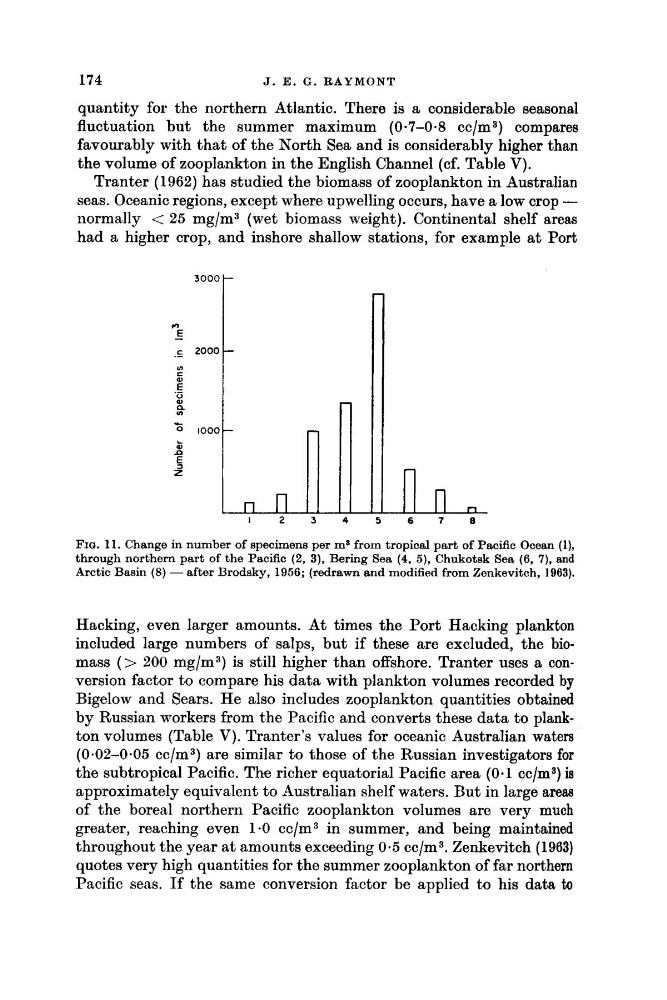
FIG. 11. Change in number of specimens per ma from tropical part of Pacific Ocean (l),
through northern part of the Pacific (2, 3), Bering Sea (4, 5), Chukotsk Sea (6, 7), and
Arctic Basin (8) - after Brodsky, 1956; (redrawn and modified from Zenkevitch, 1963).
Hacking, even larger amounts. At times the Port Hacking plankton
included large numbers of salps, but if these are excluded, the biomass (> 200 mg/m3) is still higher than offshore. Tranter uses a conversion factor to compare his data with plankton volumes recorded by
Bigelow and Sears. He also includes zooplankton quantities obtained
by Russian workers from the Pacific and converts these data to plankton volumes (Table V). Tranter’s values for oceanic Australian waters
(0.02-0.05 cc/m3) are similar to those of the Russian investigators for
the subtropical Pacific. The richer equatorial Pacific area (0.1 cc/m3) is
approximately equivalent to Australian shelf waters. But in large area
of the boreal northern Pacific zooplankton volumes are very much
greater, reaching even 1.0 cc/m3 in summer, and being maintained
throughout the year at amounts exceeding 0 - 5 cc/m3. Zenkevitch (1963)
quotes very high quantities for the summer zooplankton of far northern
Pacific seas. If the same conversion factor be applied to his data to
J. E. G . RAYMONT
quantity for the northern Atlantic. There is a considerable seasonal
fluctuation but the summer maximum (0.7-0.8 cc/m3) compares
favourably with that of the North Sea and is considerably higher than
the volume of zooplankton in the English Channel (cf. Table V).
Tranter (1962) has studied the biomass of zooplankton in Australian
seas. Oceanic regions, except where upwelling occurs, have a low crop -
normally < 25 mg/m3 (wet biomass weight). Continental shelf areas
had a higher crop, and inshore shallow stations, for example a t Port
3000
n
E
-
._ c 2000
VI c
E
._ 0
3
L
0
1000
8
n
z 5
I n n
1
2
4
-ILL 6 7 8
FIG. 11. Change in number of specimens per ma from tropical part of Pacific Ocean (l),
through northern part of the Pacific (2, 3), Bering Sea (4, 5), Chukotsk Sea (6, 7), and
Arctic Basin (8) - after Brodsky, 1956; (redrawn and modified from Zenkevitch, 1963).
Hacking, even larger amounts. At times the Port Hacking plankton
included large numbers of salps, but if these are excluded, the biomass (> 200 mg/m3) is still higher than offshore. Tranter uses a conversion factor to compare his data with plankton volumes recorded by
Bigelow and Sears. He also includes zooplankton quantities obtained
by Russian workers from the Pacific and converts these data to plankton volumes (Table V). Tranter’s values for oceanic Australian waters
(0.02-0.05 cc/m3) are similar to those of the Russian investigators for
the subtropical Pacific. The richer equatorial Pacific area (0.1 cc/m3) is
approximately equivalent to Australian shelf waters. But in large area
of the boreal northern Pacific zooplankton volumes are very much
greater, reaching even 1.0 cc/m3 in summer, and being maintained
throughout the year at amounts exceeding 0 - 5 cc/m3. Zenkevitch (1963)
quotes very high quantities for the summer zooplankton of far northern
Pacific seas. If the same conversion factor be applied to his data to