

X
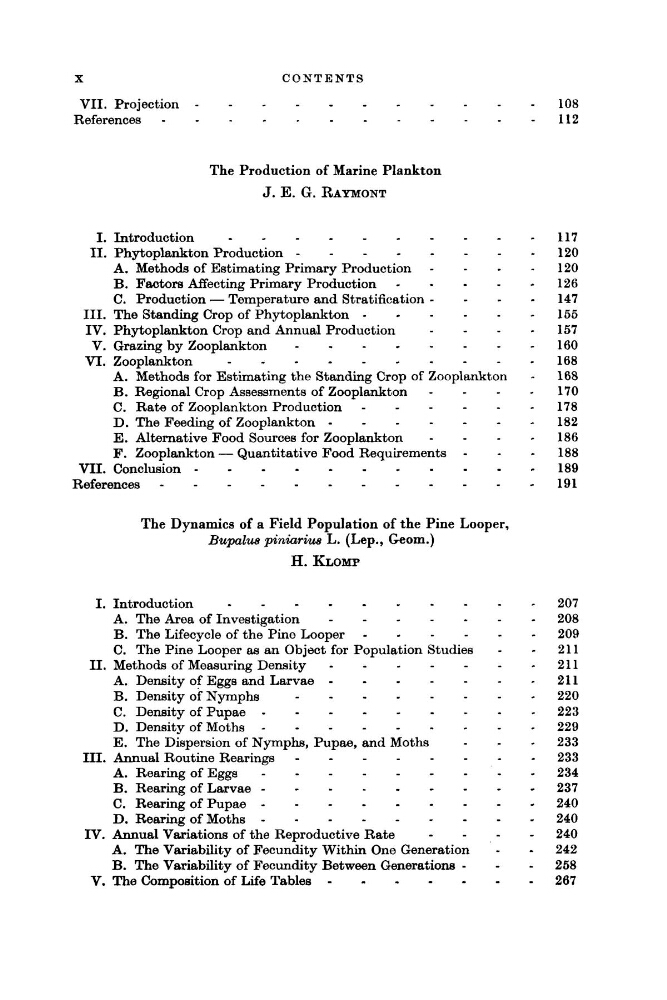
C O N T E N T S
VII. Projection -
References -
The Production of Marine Plankton
J. E. G. RAYMONT
I. Introduction
-
11. Phytoplankton Production -
- . -
A. Methods of Estimating Primary Production -
B. Factors Affecting Primary Production - -
C. Production - Temperature and Stratification - -
111. The Standing Crop of Phytoplankton -
IV. Phytoplankton Crop and Annual Production
-
V. Grazing by Zooplankton
-
- - -
VI. Zooplankton
-
- -
A. Methods for Estimating the Standing Crop of Zooplankton
B. Regional Crop Assessments of Zooplankton
C. Rate of Zooplankton Production -
D. The Feeding of Zooplankton -
E. Alternative Food Sources for Zooplankton
-
F. Zooplankton - Quantitative Food Requirements
VII. Conclusion -
. -
-
-
References -
The Dynamics of a Field Population of the Pine Looper,
Buplus piniarius L. (Lep., Geom.)
H. KLOMP
I. Introduction
-
A. The Area of Investigation
B. The Lifecycle of the Pine Looper
C. The Pine Looper as an Object for Population Studies
A. Density of Eggs and Larvae
B. Density of Nymphs
-
C. Density of Pupae -
D. Density of Moths -
E. The Dispersion of Nymphs, Pupae, and Moths
III. Annual Routine Rearings -
A. Rearingof Eggs -
-
-
11. Methods of Meaauring Density
-
-
-
B. Rearing of Larvae -
-
- -
C. RearingofPupae -
- -
D. RearingofMoths - -
A. The Variability of Fecundity Within One Generation
B. The Variability of Fecundity Between Generations -
V. The Composition of Life Tables - - - - -
IV. Annual Variations of the Reproductive Rate
-
108
112
117
120
120
126
147
155
157
160
168
168
170
178
182
186
188
189
191
207
208
209
211
211
211
220
223
229
233
233
234
237
240
240
240
242
268
267
C O N T E N T S
VII. Projection -
References -
The Production of Marine Plankton
J. E. G. RAYMONT
I. Introduction
-
11. Phytoplankton Production -
- . -
A. Methods of Estimating Primary Production -
B. Factors Affecting Primary Production - -
C. Production - Temperature and Stratification - -
111. The Standing Crop of Phytoplankton -
IV. Phytoplankton Crop and Annual Production
-
V. Grazing by Zooplankton
-
- - -
VI. Zooplankton
-
- -
A. Methods for Estimating the Standing Crop of Zooplankton
B. Regional Crop Assessments of Zooplankton
C. Rate of Zooplankton Production -
D. The Feeding of Zooplankton -
E. Alternative Food Sources for Zooplankton
-
F. Zooplankton - Quantitative Food Requirements
VII. Conclusion -
. -
-
-
References -
The Dynamics of a Field Population of the Pine Looper,
Buplus piniarius L. (Lep., Geom.)
H. KLOMP
I. Introduction
-
A. The Area of Investigation
B. The Lifecycle of the Pine Looper
C. The Pine Looper as an Object for Population Studies
A. Density of Eggs and Larvae
B. Density of Nymphs
-
C. Density of Pupae -
D. Density of Moths -
E. The Dispersion of Nymphs, Pupae, and Moths
III. Annual Routine Rearings -
A. Rearingof Eggs -
-
-
11. Methods of Meaauring Density
-
-
-
B. Rearing of Larvae -
-
- -
C. RearingofPupae -
- -
D. RearingofMoths - -
A. The Variability of Fecundity Within One Generation
B. The Variability of Fecundity Between Generations -
V. The Composition of Life Tables - - - - -
IV. Annual Variations of the Reproductive Rate
-
108
112
117
120
120
126
147
155
157
160
168
168
170
178
182
186
188
189
191
207
208
209
211
211
211
220
223
229
233
233
234
237
240
240
240
242
268
267