

46
M. E. SOLOMON
U
Blortno
00
200
400
600
800
1000
No. of cocoons per ocre, thousands
200 400 600 800 1000 1200 1400
No. of cocoons per acre, thousands
200
600
1000
1400
1800
200
600
1000
1400
1800
No. of cocoons per ocre, thousands
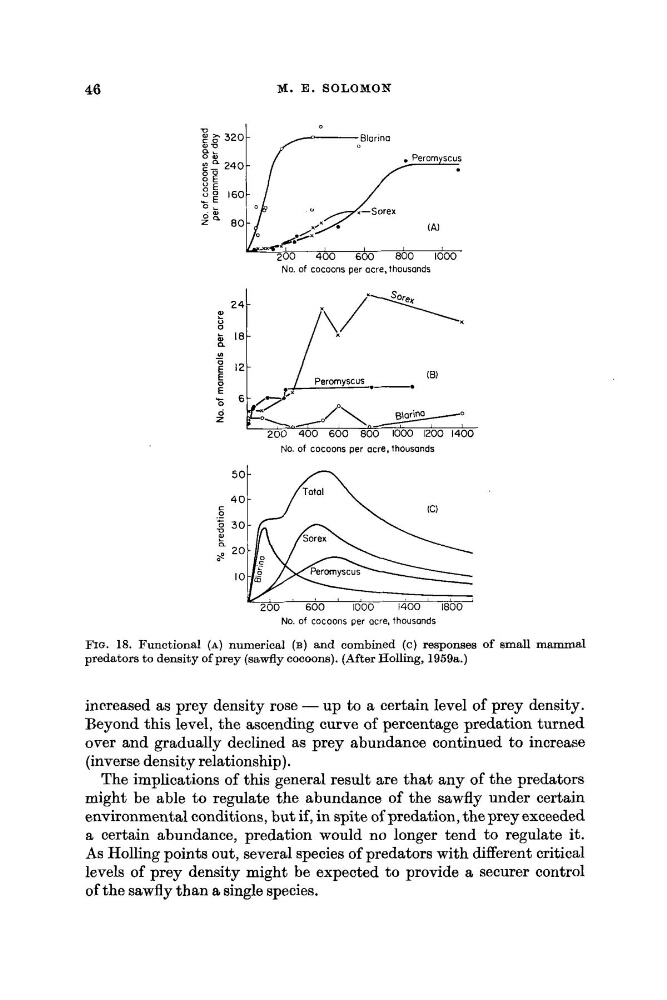
FIG. 18. Functional (A) numerical (B) and combined ( c ) responses of small mammal
predators to density of prey (sawfly cocoons). (After Holling, 1959e.)
increased as prey density rose - up to a certain level of prey density.
Beyond this level, the ascending curve of percentage predation turned
over and gradually declined as prey abundance continued to increase
(inverse density relationship).
The implications of this general result are that any of the predators
might be able to regulate the abundance of the sawfly under certain
environmental conditions, but if, in spite of predation, the prey exceeded
a certain abundance, predation would no longer tend to regulate it.
As Holling points out, several species of predators with different critical
levels of prey density might be expected to provide a securer control
of the sawfly than a single species.
M. E. SOLOMON
U
Blortno
00
200
400
600
800
1000
No. of cocoons per ocre, thousands
200 400 600 800 1000 1200 1400
No. of cocoons per acre, thousands
200
600
1000
1400
1800
200
600
1000
1400
1800
No. of cocoons per ocre, thousands
FIG. 18. Functional (A) numerical (B) and combined ( c ) responses of small mammal
predators to density of prey (sawfly cocoons). (After Holling, 1959e.)
increased as prey density rose - up to a certain level of prey density.
Beyond this level, the ascending curve of percentage predation turned
over and gradually declined as prey abundance continued to increase
(inverse density relationship).
The implications of this general result are that any of the predators
might be able to regulate the abundance of the sawfly under certain
environmental conditions, but if, in spite of predation, the prey exceeded
a certain abundance, predation would no longer tend to regulate it.
As Holling points out, several species of predators with different critical
levels of prey density might be expected to provide a securer control
of the sawfly than a single species.