

QUANTITATIVE ECOLOGY AND WOODLAND ECOSYSTEM 125
30 -
o
vl
f
Y
- 200
r'
Y
t.
m
.-0
I
0
20
40
Age of trees !years)
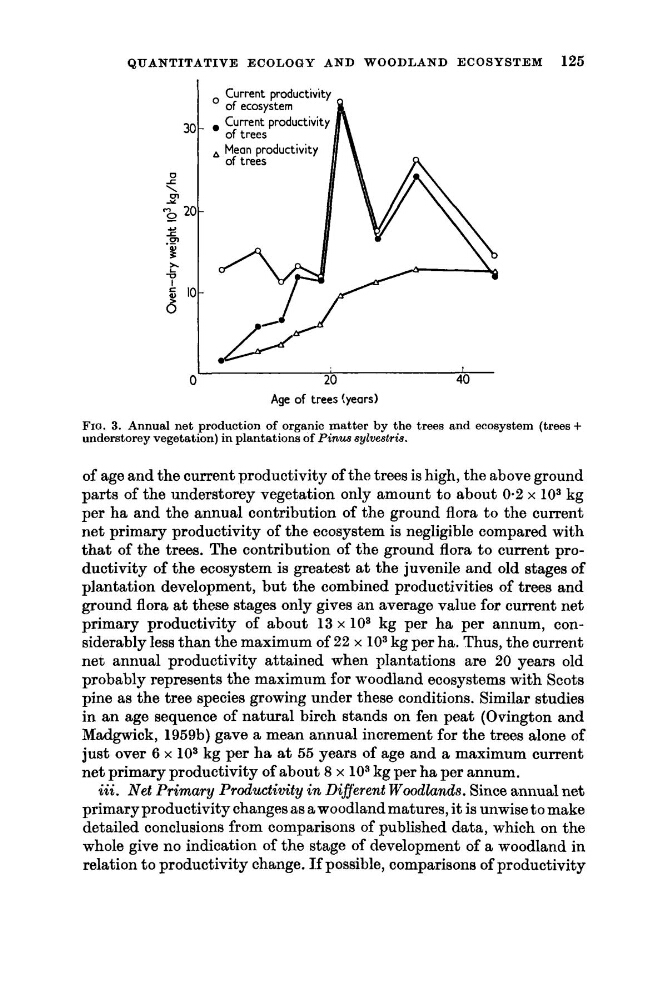
FIG. 3. Annual net production of organic matter by the trees and ecosystem (trees +
understorey vegetation) in plantations of Pinus sylvestris.
of age and the current productivity of the trees is high, the above ground
parts of the understorey vegetation only amount t o about 0.2 x 10³ kg
per ha and the annual contribution of the ground flora to the current
net primary productivity of the ecosystem is negligible compared with
that of the trees. The contribution of the ground flora t o current productivity of the ecosystem is greatest at the juvenile and old stages of
plantation development, but the combined productivities of trees and
ground flora at these stages only gives an average value for current net
primary productivity of about 13 x lo3 kg per ha per annum, considerably less than the maximum of 22 x lo3 kg per ha. Thus, the current
net annual productivity attained when plantations are 20 years old
probably represents the maximum for woodland ecosystems with Scots
pine as the tree species growing under these conditions. Similar studies
in an age sequence of natural birch stands on fen peat (Ovington and
Madgwick, 1959b) gave a mean annual increment for the trees alone of
just over 6 x 10³ kg per ha at 55 years of age and a maximum current
net primary productivity of about 8 x lo3 kg per ha per annum.
iii. Net Primary Productivity in Different Woodlands. Since annual net
primary productivity changes ss a woodland matures, it is unwise t o make
detailed conclusions from comparisons of published data, which on the
whole give no indication of the stage of development of a woodland in
relation to productivity change. If possible, comparisons of productivity
30 -
o
vl
f
Y
- 200
r'
Y
t.
m
.-0
I
0
20
40
Age of trees !years)
FIG. 3. Annual net production of organic matter by the trees and ecosystem (trees +
understorey vegetation) in plantations of Pinus sylvestris.
of age and the current productivity of the trees is high, the above ground
parts of the understorey vegetation only amount t o about 0.2 x 10³ kg
per ha and the annual contribution of the ground flora to the current
net primary productivity of the ecosystem is negligible compared with
that of the trees. The contribution of the ground flora t o current productivity of the ecosystem is greatest at the juvenile and old stages of
plantation development, but the combined productivities of trees and
ground flora at these stages only gives an average value for current net
primary productivity of about 13 x lo3 kg per ha per annum, considerably less than the maximum of 22 x lo3 kg per ha. Thus, the current
net annual productivity attained when plantations are 20 years old
probably represents the maximum for woodland ecosystems with Scots
pine as the tree species growing under these conditions. Similar studies
in an age sequence of natural birch stands on fen peat (Ovington and
Madgwick, 1959b) gave a mean annual increment for the trees alone of
just over 6 x 10³ kg per ha at 55 years of age and a maximum current
net primary productivity of about 8 x lo3 kg per ha per annum.
iii. Net Primary Productivity in Different Woodlands. Since annual net
primary productivity changes ss a woodland matures, it is unwise t o make
detailed conclusions from comparisons of published data, which on the
whole give no indication of the stage of development of a woodland in
relation to productivity change. If possible, comparisons of productivity