

1. FATTY ACID OCCURRENCE AND DISTRIBUTION
53
referred to in Section IV,D,l,a, serve to characterize the waxes of the
acid-fast bacteria, as distinct from waxes found in other forms of life.
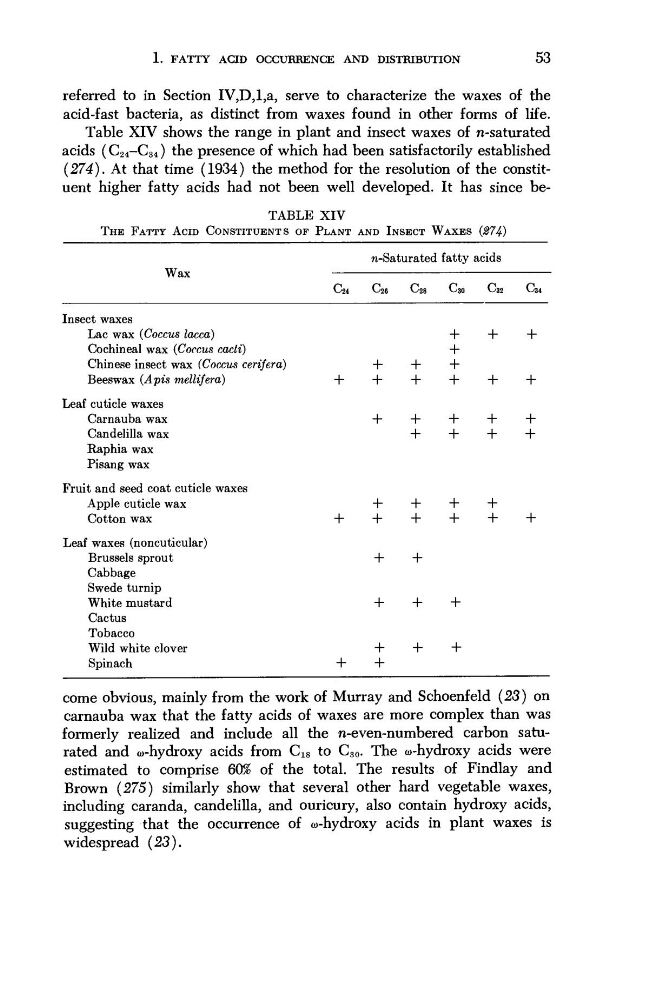
Table XIV shows the range in plant and insect waxes of n-saturated
acids (C24-C34) the presence of which had been satisfactorily established
(274). At that time (1934) the method for the resolution of the constituent higher fatty acids had not been well developed. It has since beTABLE XIV
THE FATTY ACID CONSTITUENTS OF PLANT AND INSECT WAXES
(274)
Wax
Insect waxes
Lac wax {Coccus lacca)
Cochineal wax (Coccus cacti)
Chinese insect wax (Coccus cerifera)
Beeswax (Apis mellifera)
Leaf cuticle waxes
Carnauba wax
Candelilla wax
Raphia wax
Pisang wax
C24
+
n-Saturated fatty acids
C26
+
+
+
C28
+
+
+
+
C30
+
+
+
+
+
+
C32
+
+
+
+
C34
+
+
+
+
Fruit and seed coat cuticle waxes
Apple cuticle wax
+
+
+
+
Cotton wax
+
+
+
+
+
+
Leaf waxes (noncuticular)
Brussels sprout
+
+
Cabbage
Swede turnip
White mustard
+
+
+
Cactus
Tobacco
Wild white clover
+
+
-f
Spinach
+
+
come obvious, mainly from the work of Murray and Schoenfeld (23) on
carnauba wax that the fatty acids of waxes are more complex than was
formerly realized and include all the n-even-numbered carbon saturated and ω-hydroxy acids from Ci 8 to C 30 . The ω-hydroxy acids were
estimated to comprise 60% of the total. The results of Findlay and
Brown (275) similarly show that several other hard vegetable waxes,
including caranda, candelilla, and ouricury, also contain hydroxy acids,
suggesting that the occurrence of ω-hydroxy acids in plant waxes is
widespread (23).
53
referred to in Section IV,D,l,a, serve to characterize the waxes of the
acid-fast bacteria, as distinct from waxes found in other forms of life.
Table XIV shows the range in plant and insect waxes of n-saturated
acids (C24-C34) the presence of which had been satisfactorily established
(274). At that time (1934) the method for the resolution of the constituent higher fatty acids had not been well developed. It has since beTABLE XIV
THE FATTY ACID CONSTITUENTS OF PLANT AND INSECT WAXES
(274)
Wax
Insect waxes
Lac wax {Coccus lacca)
Cochineal wax (Coccus cacti)
Chinese insect wax (Coccus cerifera)
Beeswax (Apis mellifera)
Leaf cuticle waxes
Carnauba wax
Candelilla wax
Raphia wax
Pisang wax
C24
+
n-Saturated fatty acids
C26
+
+
+
C28
+
+
+
+
C30
+
+
+
+
+
+
C32
+
+
+
+
C34
+
+
+
+
Fruit and seed coat cuticle waxes
Apple cuticle wax
+
+
+
+
Cotton wax
+
+
+
+
+
+
Leaf waxes (noncuticular)
Brussels sprout
+
+
Cabbage
Swede turnip
White mustard
+
+
+
Cactus
Tobacco
Wild white clover
+
+
-f
Spinach
+
+
come obvious, mainly from the work of Murray and Schoenfeld (23) on
carnauba wax that the fatty acids of waxes are more complex than was
formerly realized and include all the n-even-numbered carbon saturated and ω-hydroxy acids from Ci 8 to C 30 . The ω-hydroxy acids were
estimated to comprise 60% of the total. The results of Findlay and
Brown (275) similarly show that several other hard vegetable waxes,
including caranda, candelilla, and ouricury, also contain hydroxy acids,
suggesting that the occurrence of ω-hydroxy acids in plant waxes is
widespread (23).