

9. SACCHARIDES: ALTERNATE ROUTES OF METABOLISM
467
is linked with flavin and the other with pyridine nucleotide. The former
is usually called glucose oxidase and the latter glucose dehydrogenase.
► 5-Ketogluconic acid
a-D-Glucose
I
ß-D-Glucose
> D-Gluconic acid
ATP
-> 2-Ketogluconic acid
>► 2, 5-Diketogluconic acid
I ATP
— 2-Keto-6-phosphogluconic acid
I
2 moles pyruvate + P z
-*> 6 - Phosphogluconic acid
I
2-Keto-3-deoxy-6-phosphogluconic acid
I
ieo
I
Pyruvic acid + 3-Phosphoglyceric acid
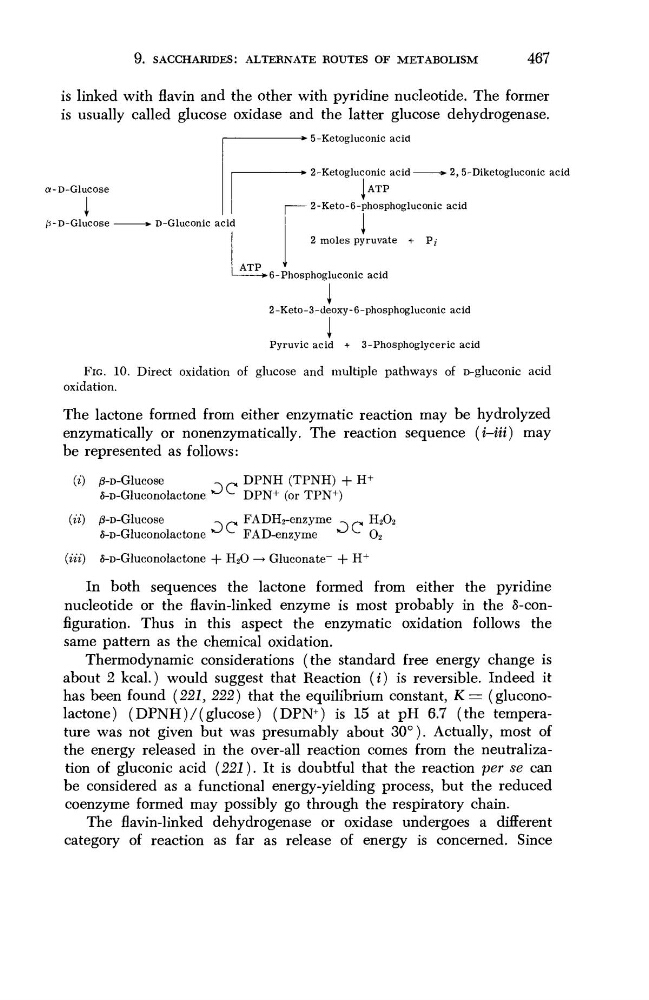
FIG. 10. Direct oxidation of glucose and multiple pathways of D-gluconic acid
oxidation.
The lactone formed from either enzymatic reaction may be hydrolyzed
enzymatically or nonenzymatically. The reaction sequence (i-iii) may
be represented as follows:
(i) /3-D-Glucose
- n DPNH (TPNH) + H
+
δ-D-Gluconolactone ^
L
DPN+ (or TPN+)
(it) /3-D-Glucose
-^^ FADH 2 -enzyme -^^ Η2Ο2
δ-D-Gluconolactone
^- FAD-enzyme
0 2
{iii) δ-D-Gluconolactone + H 2 0 —■* Gluconate" + H
+
In both sequences the lactone formed from either the pyridine
nucleotide or the flavin-linked enzyme is most probably in the δ-configuration. Thus in this aspect the enzymatic oxidation follows the
same pattern as the chemical oxidation.
Thermodynamic considerations (the standard free energy change is
about 2 kcal.) would suggest that Reaction (i) is reversible. Indeed it
has been found (221, 222) that the equilibrium constant, K = (gluconolactone) (DPNH)/(glucose) (DPN
+ ) is 15 at pH 6.7 (the temperature was not given but was presumably about 30°). Actually, most of
the energy released in the over-all reaction comes from the neutralization of gluconic acid (221). It is doubtful that the reaction per se can
be considered as a functional energy-yielding process, but the reduced
coenzyme formed may possibly go through the respiratory chain.
The flavin-linked dehydrogenase or oxidase undergoes a different
category of reaction as far as release of energy is concerned. Since
467
is linked with flavin and the other with pyridine nucleotide. The former
is usually called glucose oxidase and the latter glucose dehydrogenase.
► 5-Ketogluconic acid
a-D-Glucose
I
ß-D-Glucose
> D-Gluconic acid
ATP
-> 2-Ketogluconic acid
>► 2, 5-Diketogluconic acid
I ATP
— 2-Keto-6-phosphogluconic acid
I
2 moles pyruvate + P z
-*> 6 - Phosphogluconic acid
I
2-Keto-3-deoxy-6-phosphogluconic acid
I
ieo
I
Pyruvic acid + 3-Phosphoglyceric acid
FIG. 10. Direct oxidation of glucose and multiple pathways of D-gluconic acid
oxidation.
The lactone formed from either enzymatic reaction may be hydrolyzed
enzymatically or nonenzymatically. The reaction sequence (i-iii) may
be represented as follows:
(i) /3-D-Glucose
- n DPNH (TPNH) + H
+
δ-D-Gluconolactone ^
L
DPN+ (or TPN+)
(it) /3-D-Glucose
-^^ FADH 2 -enzyme -^^ Η2Ο2
δ-D-Gluconolactone
^- FAD-enzyme
0 2
{iii) δ-D-Gluconolactone + H 2 0 —■* Gluconate" + H
+
In both sequences the lactone formed from either the pyridine
nucleotide or the flavin-linked enzyme is most probably in the δ-configuration. Thus in this aspect the enzymatic oxidation follows the
same pattern as the chemical oxidation.
Thermodynamic considerations (the standard free energy change is
about 2 kcal.) would suggest that Reaction (i) is reversible. Indeed it
has been found (221, 222) that the equilibrium constant, K = (gluconolactone) (DPNH)/(glucose) (DPN
+ ) is 15 at pH 6.7 (the temperature was not given but was presumably about 30°). Actually, most of
the energy released in the over-all reaction comes from the neutralization of gluconic acid (221). It is doubtful that the reaction per se can
be considered as a functional energy-yielding process, but the reduced
coenzyme formed may possibly go through the respiratory chain.
The flavin-linked dehydrogenase or oxidase undergoes a different
category of reaction as far as release of energy is concerned. Since