

11. ORGANISMS AND THERMAL ENERGY
491
reach a state of thermal equilibrium with the atmosphere, whereas fleshy
organisms do so much more slowly. Coatings which act as insulators
may influence the result. Penetration of infrared radiation into organisms has been reported to be able to raise their temperature as much
as 20-30° above that of the surrounding atmosphere (13-15). This excess thermal energy tends to be lost through convection, reradiation,
Solar radiation
9%
I00% = 2cal./cm?min.
33%
Heat conduction (Soil)
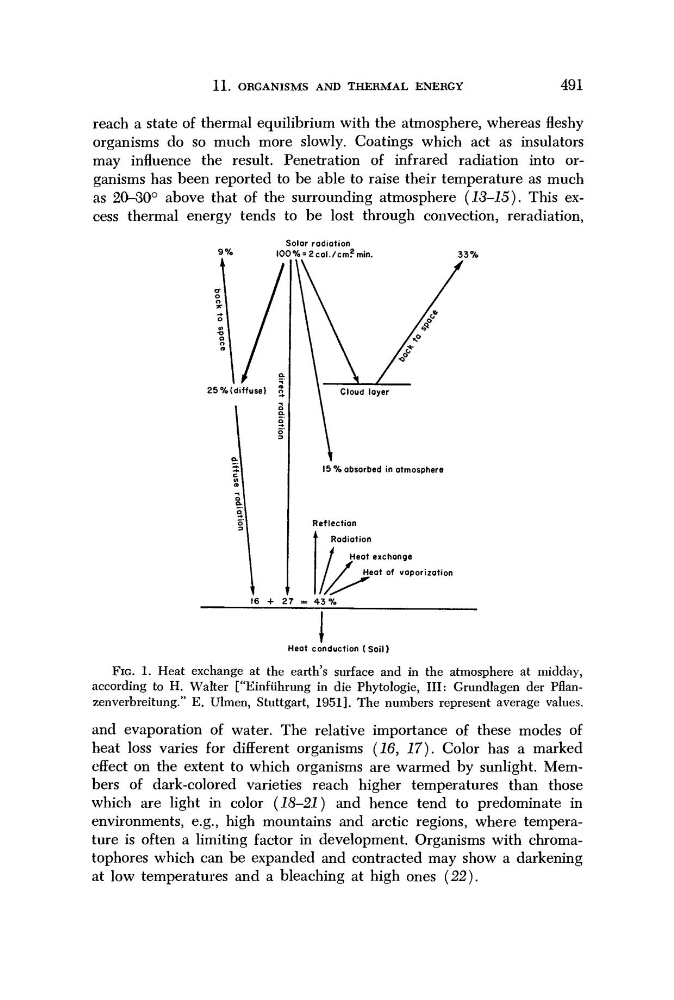
FIG. 1. Heat exchange at the earth's surface and in the atmosphere at midday,
according to H. Walter ["Einführung in die Phytologie, III: Grundlagen der Pflanzenverbreitung." E. Ulmen, Stuttgart, 1951]. The numbers represent average values.
and evaporation of water. The relative importance of these modes of
heat loss varies for different organisms (16, 17). Color has a marked
effect on the extent to which organisms are warmed by sunlight. Members of dark-colored varieties reach higher temperatures than those
which are light in color (18-21) and hence tend to predominate in
environments, e.g., high mountains and arctic regions, where temperature is often a limiting factor in development. Organisms with chromatophores which can be expanded and contracted may show a darkening
at low temperatures and a bleaching at high ones (22).
491
reach a state of thermal equilibrium with the atmosphere, whereas fleshy
organisms do so much more slowly. Coatings which act as insulators
may influence the result. Penetration of infrared radiation into organisms has been reported to be able to raise their temperature as much
as 20-30° above that of the surrounding atmosphere (13-15). This excess thermal energy tends to be lost through convection, reradiation,
Solar radiation
9%
I00% = 2cal./cm?min.
33%
Heat conduction (Soil)
FIG. 1. Heat exchange at the earth's surface and in the atmosphere at midday,
according to H. Walter ["Einführung in die Phytologie, III: Grundlagen der Pflanzenverbreitung." E. Ulmen, Stuttgart, 1951]. The numbers represent average values.
and evaporation of water. The relative importance of these modes of
heat loss varies for different organisms (16, 17). Color has a marked
effect on the extent to which organisms are warmed by sunlight. Members of dark-colored varieties reach higher temperatures than those
which are light in color (18-21) and hence tend to predominate in
environments, e.g., high mountains and arctic regions, where temperature is often a limiting factor in development. Organisms with chromatophores which can be expanded and contracted may show a darkening
at low temperatures and a bleaching at high ones (22).