

D E V E L O P M E N T S I N SEXUAL O R G A N O G E N E S I S
273
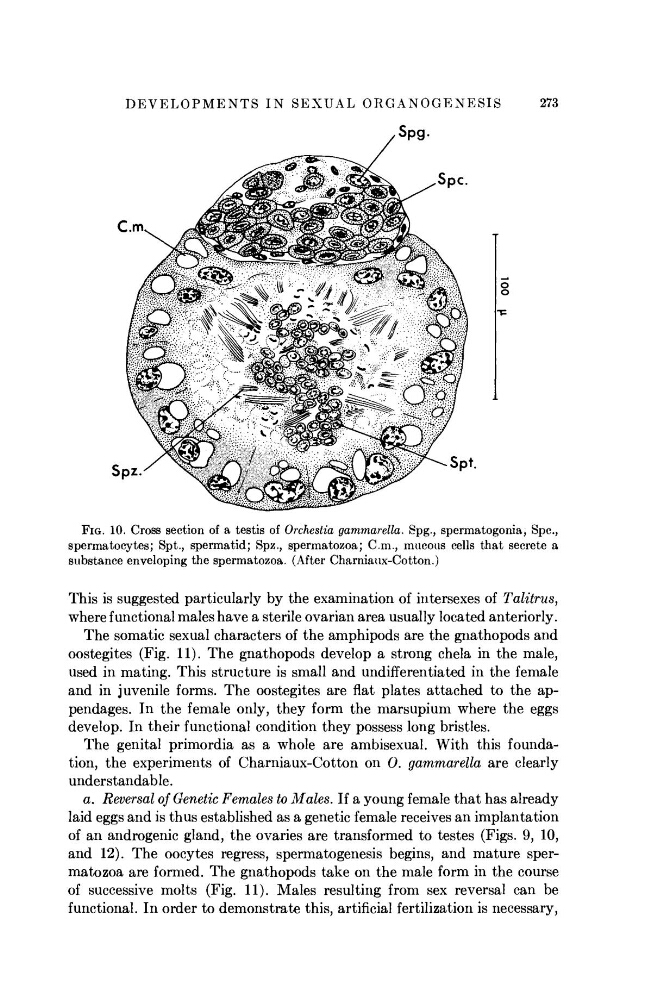
FIG. 10. Cross section of a testis of Orchestia gammarella. Spg., spermatogonia, Spc,
spermatocytes; Spt., spermatid; Spz., spermatozoa; C.m., mucous cells that secrete a
substance enveloping the spermatozoa. (After Charniaux-Cotton.)
This is suggested particularly by the examination of intersexes of Talitrus,
where functional males have a sterile ovarian area usually located anteriorly.
The somatic sexual characters of the amphipods are the gnathopods and
oostegites (Fig. 11). The gnathopods develop a strong chela in the male,
used in mating. This structure is small and undifferentiated in the female
and in juvenile forms. The oostegites are flat plates attached to the appendages. In the female only, they form the marsupium where the eggs
develop. In their functional condition they possess long bristles.
The genital primordia as a whole are ambisexual. With this foundation, the experiments of Charniaux-Cotton on 0. gammarella are clearly
understandable.
a. Reversal of Genetic Females to Males. If a young female that has already
laid eggs and is thus established as a genetic female receives an implantation
of an androgenic gland, the ovaries are transformed to testes (Figs. 9, 10,
and 12). The oocytes regress, spermatogenesis begins, and mature spermatozoa are formed. The gnathopods take on the male form in the course
of successive molts (Fig. 11). Males resulting from sex reversal can be
functional. In order to demonstrate this, artificial fertilization is necessary,
273
FIG. 10. Cross section of a testis of Orchestia gammarella. Spg., spermatogonia, Spc,
spermatocytes; Spt., spermatid; Spz., spermatozoa; C.m., mucous cells that secrete a
substance enveloping the spermatozoa. (After Charniaux-Cotton.)
This is suggested particularly by the examination of intersexes of Talitrus,
where functional males have a sterile ovarian area usually located anteriorly.
The somatic sexual characters of the amphipods are the gnathopods and
oostegites (Fig. 11). The gnathopods develop a strong chela in the male,
used in mating. This structure is small and undifferentiated in the female
and in juvenile forms. The oostegites are flat plates attached to the appendages. In the female only, they form the marsupium where the eggs
develop. In their functional condition they possess long bristles.
The genital primordia as a whole are ambisexual. With this foundation, the experiments of Charniaux-Cotton on 0. gammarella are clearly
understandable.
a. Reversal of Genetic Females to Males. If a young female that has already
laid eggs and is thus established as a genetic female receives an implantation
of an androgenic gland, the ovaries are transformed to testes (Figs. 9, 10,
and 12). The oocytes regress, spermatogenesis begins, and mature spermatozoa are formed. The gnathopods take on the male form in the course
of successive molts (Fig. 11). Males resulting from sex reversal can be
functional. In order to demonstrate this, artificial fertilization is necessary,