

66
G. RE VERBERI
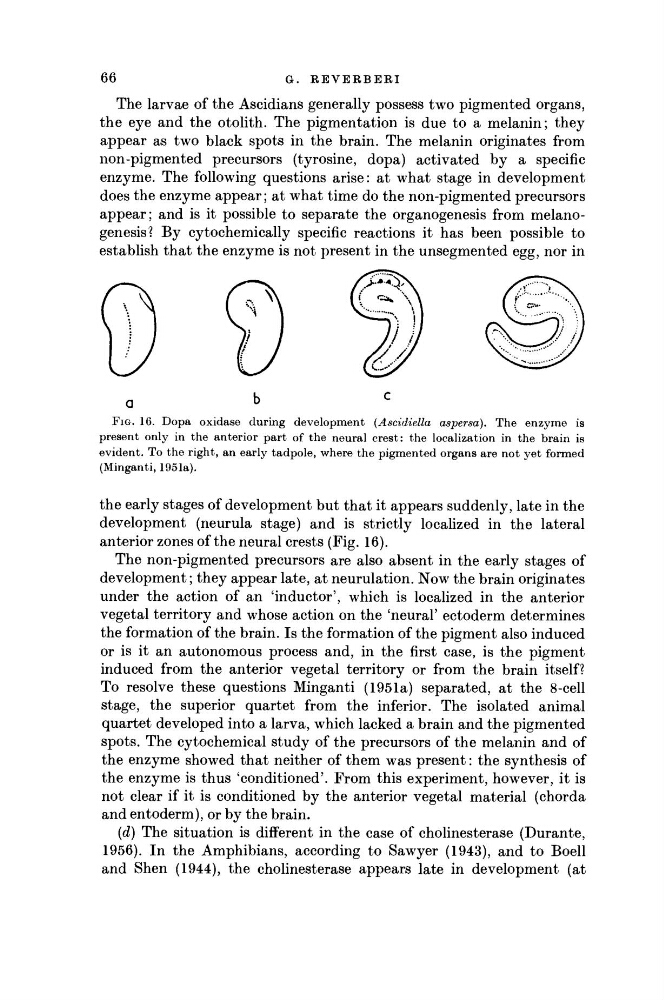
FIG. 16. Dopa oxidase during development (Ascidiella
aspersa).
The enzyme is
present only in the anterior part of the neural crest: the localization in the brain is
evident. To the right, an early tadpole, where the pigmented organs are not yet formed
(Minganti, 1951a).
the early stages of development but that it appears suddenly, late in the
development (neurula stage) and is strictly localized in the lateral
anterior zones of the neural crests (Fig. 16).
The non-pigmented precursors are also absent in the early stages of
development; they appear late, at neurulation. Now the brain originates
under the action of an 'inductor', which is localized in the anterior
vegetal territory and whose action on the 'neural' ectoderm determines
the formation of the brain. Is the formation of the pigment also induced
or is it an autonomous process and, in the first case, is the pigment
induced from the anterior vegetal territory or from the brain itself?
To resolve these questions Minganti (1951a) separated, at the 8-cell
stage, the superior quartet from the inferior. The isolated animal
quartet developed into a larva, which lacked a brain and the pigmented
spots. The cytochemical study of the precursors of the melanin and of
the enzyme showed that neither of them was present: the synthesis of
the enzyme is thus 'conditioned'. From this experiment, however, it is
not clear if it is conditioned by the anterior vegetal material (chorda
and entoderm), or by the brain.
(d) The situation is different in the case of Cholinesterase (Durante,
1956). In the Amphibians, according to Sawyer (1943), and to Boell
and Shen (1944), the Cholinesterase appears late in development (at
The larvae of the Ascidians generally possess two pigmented organs,
the eye and the otolith. The pigmentation is due to a melanin; they
appear as two black spots in the brain. The melanin originates from
non-pigmented precursors (tyrosine, dopa) activated by a specific
enzyme. The following questions arise: at what stage in development
does the enzyme appear; at what time do the non-pigmented precursors
appear; and is it possible to separate the organogenesis from melanogenesis? By cytochemically specific reactions it has been possible to
establish that the enzyme is not present in the unsegmented egg, nor in
G. RE VERBERI
FIG. 16. Dopa oxidase during development (Ascidiella
aspersa).
The enzyme is
present only in the anterior part of the neural crest: the localization in the brain is
evident. To the right, an early tadpole, where the pigmented organs are not yet formed
(Minganti, 1951a).
the early stages of development but that it appears suddenly, late in the
development (neurula stage) and is strictly localized in the lateral
anterior zones of the neural crests (Fig. 16).
The non-pigmented precursors are also absent in the early stages of
development; they appear late, at neurulation. Now the brain originates
under the action of an 'inductor', which is localized in the anterior
vegetal territory and whose action on the 'neural' ectoderm determines
the formation of the brain. Is the formation of the pigment also induced
or is it an autonomous process and, in the first case, is the pigment
induced from the anterior vegetal territory or from the brain itself?
To resolve these questions Minganti (1951a) separated, at the 8-cell
stage, the superior quartet from the inferior. The isolated animal
quartet developed into a larva, which lacked a brain and the pigmented
spots. The cytochemical study of the precursors of the melanin and of
the enzyme showed that neither of them was present: the synthesis of
the enzyme is thus 'conditioned'. From this experiment, however, it is
not clear if it is conditioned by the anterior vegetal material (chorda
and entoderm), or by the brain.
(d) The situation is different in the case of Cholinesterase (Durante,
1956). In the Amphibians, according to Sawyer (1943), and to Boell
and Shen (1944), the Cholinesterase appears late in development (at
The larvae of the Ascidians generally possess two pigmented organs,
the eye and the otolith. The pigmentation is due to a melanin; they
appear as two black spots in the brain. The melanin originates from
non-pigmented precursors (tyrosine, dopa) activated by a specific
enzyme. The following questions arise: at what stage in development
does the enzyme appear; at what time do the non-pigmented precursors
appear; and is it possible to separate the organogenesis from melanogenesis? By cytochemically specific reactions it has been possible to
establish that the enzyme is not present in the unsegmented egg, nor in