

64
G.
REVERBERI
development of Ascidians is cytochrome oxidase (Ries, 1937; Reverberi
and Pitotti, 1939). The treatment of the egg at different stages of
development by the Nadi-reaction reveals a very peculiar enzymatic
segregation. The nature of this enzyme was not known at the time of
the earlier research; generally, the enzymes responsible for the Nadireaction were named 'indophenol oxidases', or
c
phenolases'. Ries thought
that they were implicated in the oxidation-reduction processes, and
also supposed that they were strictly linked to the ground or hyaline
plasm; their presence in the mitochondria, which according to Ries
would not intervene at all in the oxidation-reduction processes, was
positively excluded. Later biochemical research showed that the
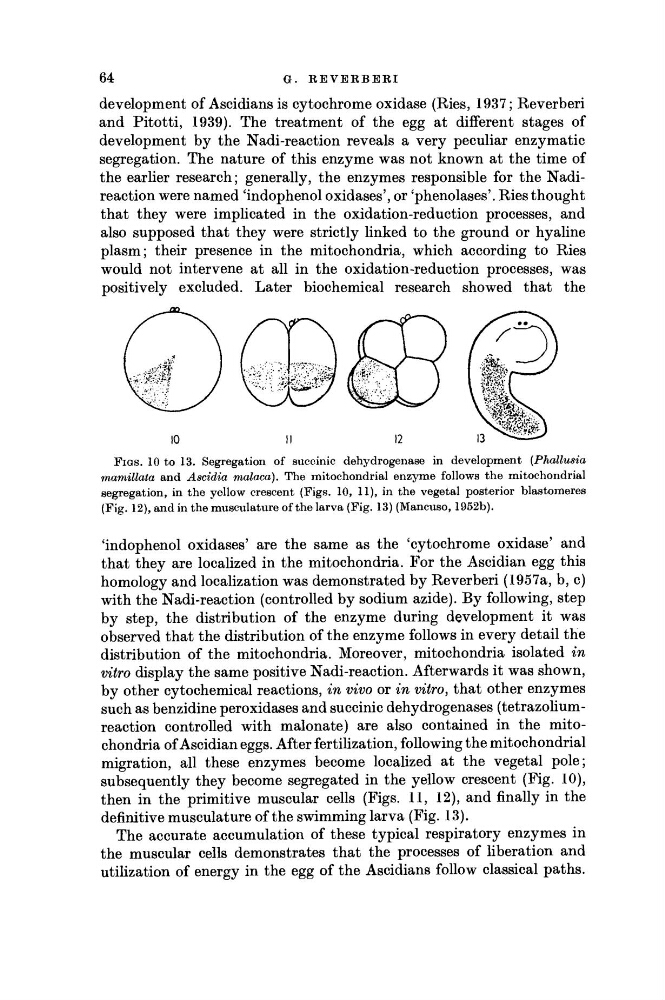
FIGS. 10 to 13. Segregation of succinic dehydrogenase in development
(Phallusia
mamillata and Ascidia malaca). The mitochondrial enzyme follows the mitochondrial
segregation, in the yellow crescent (Figs. 10, 11), in the vegetal posterior blastomeres
(Fig. 12), and in the musculature of the larva (Fig. 13) (Mancuso, 1952b).
'indophenol oxidases' are the same as the 'cytochrome oxidase' and
that they are localized in the mitochondria. For the Ascidian egg this
homology and localization was demonstrated by Reverberi (1957a, b, c)
with the Nadi-reaction (controlled by sodium azide). By following, step
by step, the distribution of the enzyme during development it was
observed that the distribution of the enzyme follows in every detail the
distribution of the mitochondria. Moreover, mitochondria isolated in
vitro display the same positive Nadi-reaction. Afterwards it was shown,
by other cytochemical reactions, in vivo or in vitro, that other enzymes
such as benzidine peroxidases and succinic dehydrogenases (tetrazoliumreaction controlled with malonate) are also contained in the mitochondria of Ascidian eggs. After fertilization, following the mitochondrial
migration, all these enzymes become localized at the vegetal pole;
subsequently they become segregated in the yellow crescent (Fig. 10),
then in the primitive muscular cells (Figs. 11, 12), and finally in the
definitive musculature of the swimming larva (Fig. 13).
The accurate accumulation of these typical respiratory enzymes in
the muscular cells demonstrates that the processes of liberation and
utilization of energy in the egg of the Ascidians follow classical paths.
10
II
12
G.
REVERBERI
development of Ascidians is cytochrome oxidase (Ries, 1937; Reverberi
and Pitotti, 1939). The treatment of the egg at different stages of
development by the Nadi-reaction reveals a very peculiar enzymatic
segregation. The nature of this enzyme was not known at the time of
the earlier research; generally, the enzymes responsible for the Nadireaction were named 'indophenol oxidases', or
c
phenolases'. Ries thought
that they were implicated in the oxidation-reduction processes, and
also supposed that they were strictly linked to the ground or hyaline
plasm; their presence in the mitochondria, which according to Ries
would not intervene at all in the oxidation-reduction processes, was
positively excluded. Later biochemical research showed that the
FIGS. 10 to 13. Segregation of succinic dehydrogenase in development
(Phallusia
mamillata and Ascidia malaca). The mitochondrial enzyme follows the mitochondrial
segregation, in the yellow crescent (Figs. 10, 11), in the vegetal posterior blastomeres
(Fig. 12), and in the musculature of the larva (Fig. 13) (Mancuso, 1952b).
'indophenol oxidases' are the same as the 'cytochrome oxidase' and
that they are localized in the mitochondria. For the Ascidian egg this
homology and localization was demonstrated by Reverberi (1957a, b, c)
with the Nadi-reaction (controlled by sodium azide). By following, step
by step, the distribution of the enzyme during development it was
observed that the distribution of the enzyme follows in every detail the
distribution of the mitochondria. Moreover, mitochondria isolated in
vitro display the same positive Nadi-reaction. Afterwards it was shown,
by other cytochemical reactions, in vivo or in vitro, that other enzymes
such as benzidine peroxidases and succinic dehydrogenases (tetrazoliumreaction controlled with malonate) are also contained in the mitochondria of Ascidian eggs. After fertilization, following the mitochondrial
migration, all these enzymes become localized at the vegetal pole;
subsequently they become segregated in the yellow crescent (Fig. 10),
then in the primitive muscular cells (Figs. 11, 12), and finally in the
definitive musculature of the swimming larva (Fig. 13).
The accurate accumulation of these typical respiratory enzymes in
the muscular cells demonstrates that the processes of liberation and
utilization of energy in the egg of the Ascidians follow classical paths.
10
II
12