

60
G . R E V E R B E R I
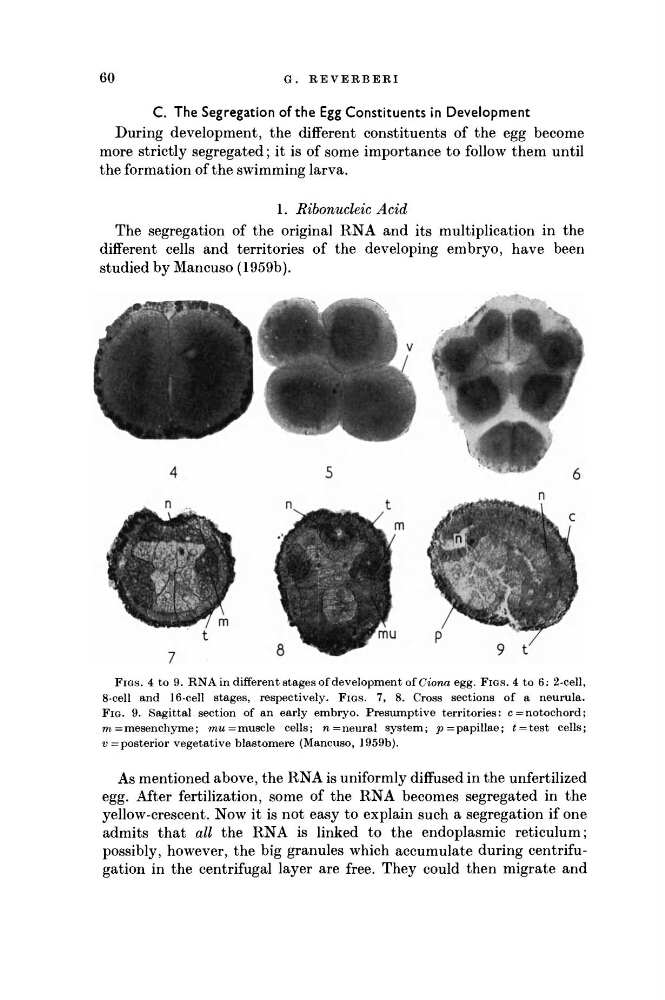
FIGS. 4 to 9. R N A in different stages of development of Ciona egg. FIGS. 4 to 6: 2-cell,
8-cell and 16-cell stages, respectively. FIGS. 7, 8. Cross sections of a neurula.
F I G . 9. Sagittal section of an early e m b r y o . Presumptive territories: c = n o t o c h o r d ;
m — mesenchyme; raw = muscle cells; η = neural system; p= papillae; £ = t e s t cells;
v= posterior vegetative blastomere (Mancuso, 1959b).
As mentioned above, the RNA is uniformly diffused in the unfertilized
egg. After fertilization, some of the RNA becomes segregated in the
yellow-crescent. Now it is not easy to explain such a segregation if one
admits that all the R N A is linked to the endoplasmic reticulum;
possibly, however, the big granules which accumulate during centrifugation in the centrifugal layer are free. They could then migrate and
C . The Segregation of the Egg Constituents in Development
During development, the different constituents of the egg become
more strictly segregated; it is of some importance to follow them until
the formation of the swimming larva.
1. Ribonucleic Acid
The segregation of the original R N A and its multiplication in the
different cells and territories of the developing embryo, have been
studied by Mancuso (1959b).
G . R E V E R B E R I
FIGS. 4 to 9. R N A in different stages of development of Ciona egg. FIGS. 4 to 6: 2-cell,
8-cell and 16-cell stages, respectively. FIGS. 7, 8. Cross sections of a neurula.
F I G . 9. Sagittal section of an early e m b r y o . Presumptive territories: c = n o t o c h o r d ;
m — mesenchyme; raw = muscle cells; η = neural system; p= papillae; £ = t e s t cells;
v= posterior vegetative blastomere (Mancuso, 1959b).
As mentioned above, the RNA is uniformly diffused in the unfertilized
egg. After fertilization, some of the RNA becomes segregated in the
yellow-crescent. Now it is not easy to explain such a segregation if one
admits that all the R N A is linked to the endoplasmic reticulum;
possibly, however, the big granules which accumulate during centrifugation in the centrifugal layer are free. They could then migrate and
C . The Segregation of the Egg Constituents in Development
During development, the different constituents of the egg become
more strictly segregated; it is of some importance to follow them until
the formation of the swimming larva.
1. Ribonucleic Acid
The segregation of the original R N A and its multiplication in the
different cells and territories of the developing embryo, have been
studied by Mancuso (1959b).