

I . P R O B L E M
O F T H E
O R G A N I Z E R
31
induction, we should consider the subcytolytic stimulus of the sample
used. As discussed above, many conditions of culture, which are not
physiological, may lead to archencephalic differentiation of cultured
ectoderm. Although we have no particular reason to suspect that the
test solution was toxic, we wish to be careful to leave the possibility
open at this preliminary phase of our investigation.
That the microsome fraction isolated from Triturus neurulae actually
contains ribonucleoprotein is evidenced by a very high content of R N A
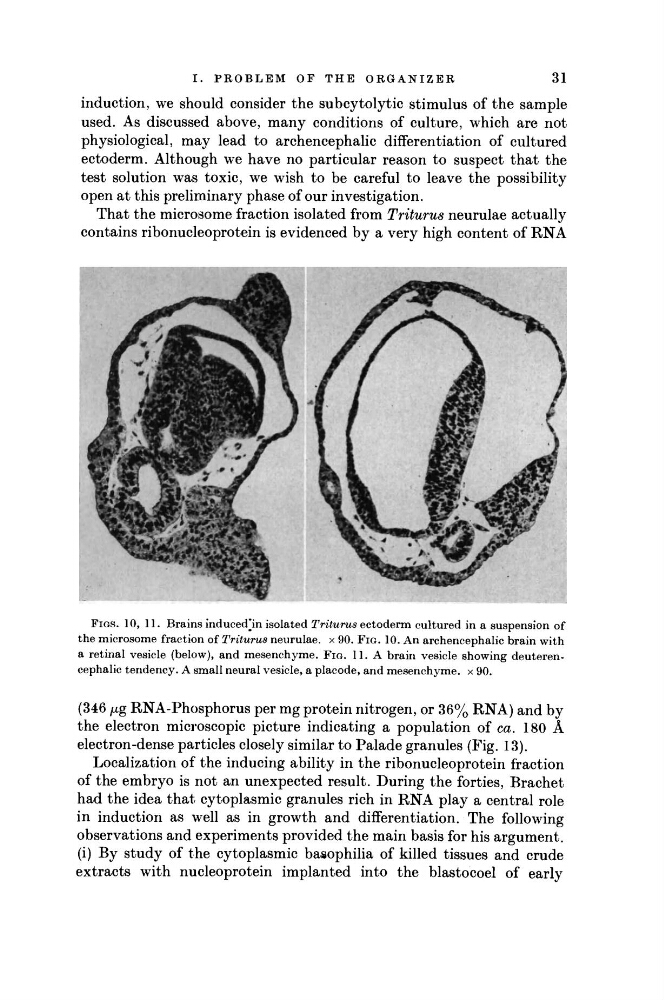
FIGS. 1 0 , 1 1 . Brains inducecfin isolated Triturus ectoderm cultured in a suspension of
the microsome fraction of Triturus neurulae. χ 9 0 . F I G . 1 0 . A n archencephalic brain with
a retinal vesicle (below), and mesenchyme. F I G . 1 1 . A brain vesicle showing deuterencephalic tendency. A small neural vesicle, a placode, and mesenchyme, χ 9 0 .
(346
RNA-Phosphorus per mg protein nitrogen, or 36% RNA) and b y
the electron microscopic picture indicating a population of ca. 180 Á
electron-dense particles closely similar to Palade granules (Fig. 13).
Localization of the inducing ability in the ribonucleoprotein fraction
of the embryo is not an unexpected result. During the forties, Brächet
had the idea that cytoplasmic granules rich in R N A play a central role
in induction as well as in growth and differentiation. The following
observations and experiments provided the main basis for his argument,
(i) By study of the cytoplasmic basophilia of killed tissues and crude
extracts with nucleoprotein implanted into the blastocoel of early
O F T H E
O R G A N I Z E R
31
induction, we should consider the subcytolytic stimulus of the sample
used. As discussed above, many conditions of culture, which are not
physiological, may lead to archencephalic differentiation of cultured
ectoderm. Although we have no particular reason to suspect that the
test solution was toxic, we wish to be careful to leave the possibility
open at this preliminary phase of our investigation.
That the microsome fraction isolated from Triturus neurulae actually
contains ribonucleoprotein is evidenced by a very high content of R N A
FIGS. 1 0 , 1 1 . Brains inducecfin isolated Triturus ectoderm cultured in a suspension of
the microsome fraction of Triturus neurulae. χ 9 0 . F I G . 1 0 . A n archencephalic brain with
a retinal vesicle (below), and mesenchyme. F I G . 1 1 . A brain vesicle showing deuterencephalic tendency. A small neural vesicle, a placode, and mesenchyme, χ 9 0 .
(346
RNA-Phosphorus per mg protein nitrogen, or 36% RNA) and b y
the electron microscopic picture indicating a population of ca. 180 Á
electron-dense particles closely similar to Palade granules (Fig. 13).
Localization of the inducing ability in the ribonucleoprotein fraction
of the embryo is not an unexpected result. During the forties, Brächet
had the idea that cytoplasmic granules rich in R N A play a central role
in induction as well as in growth and differentiation. The following
observations and experiments provided the main basis for his argument,
(i) By study of the cytoplasmic basophilia of killed tissues and crude
extracts with nucleoprotein implanted into the blastocoel of early