

334
G. V. LOPASHOV AND O. G.
STEOEVA
This in no way implies, however, that the eye-forming capacity is
strictly localized in this area of the neural plate. Upon explantation
(von Woellwarth, 1952; Nieuwkoop, Oikawa and Boddingius, 1958),
eye rudiments arise from the same area more often than after their
transplantation into whole embryos (Adelmann, 1930; Alderman,
1935; Gallera, 1947, 1948). This is more clearly revealed when various
combinations are made of the areas of the neural plate with the underlying mesodermal substrate. Lateral areas of the anterior end of the
neural plate of Ambystoma punctatum with their substrate form eyes
α
b
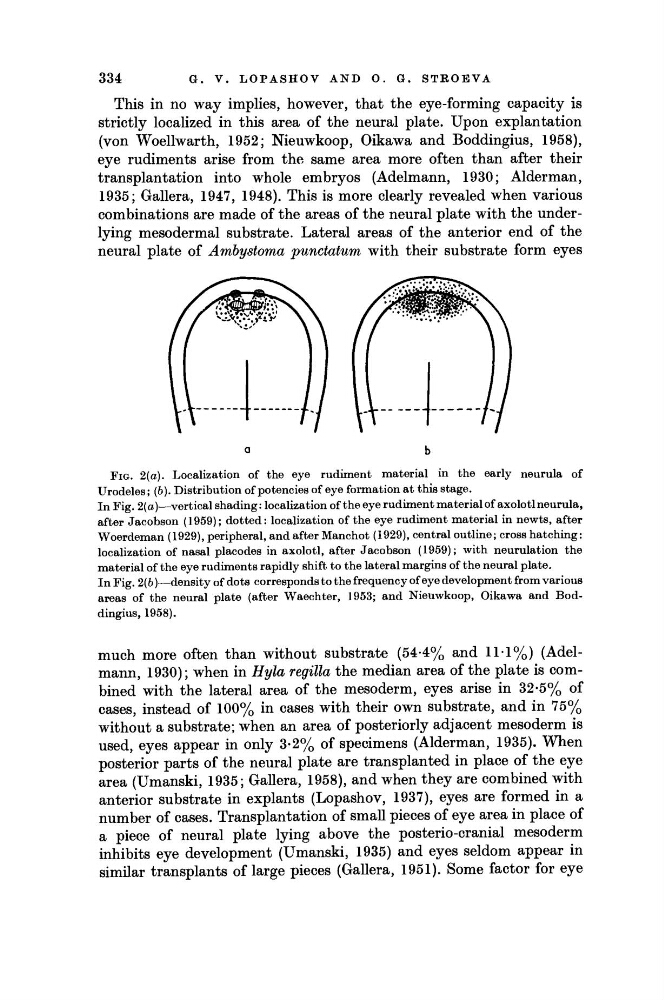
FIG. 2(a). Localization of the eye rudiment material in the early neurula of
Urodeles; (b). Distribution of potencies of eye formation at this stage.
In Fig. 2(a)—vertical shading: localization of the eye rudiment material of axolotl neurula,
after Jacobson (1959); dotted: localization of the eye rudiment material in newts, after
Woerdeman (1929), peripheral, and after Manchot (1929), central outline; cross hatching:
localization of nasal placodes in axolotl, after Jacobson (1959); with neurulation the
material of the eye rudiments rapidly shift to the lateral margins of the neural plate.
In Fig. 2(6)—density of dots corresponds to the frequency of eye development from various
areas of the neural plate (after Waechter, 1953; and Nieuwkoop, Oikawa and Boddingius, 1958).
much more often than without substrate (54-4% and 11-1%) (Adelmann, 1930); when in Hyla regula the median area of the plate is combined with the lateral area of the mesoderm, eyes arise in 32-5% of
cases, instead of 100% in cases with their own substrate, and in 75%
without a substrate; when an area of posteriorly adjacent mesoderm is
used, eyes appear in only 3-2% of specimens (Alderman, 1935). When
posterior parts of the neural plate are transplanted in place of the eye
area (Umanski, 1935; Gallera, 1958), and when they are combined with
anterior substrate in explants (Lopashov, 1937), eyes are formed in a
number of cases. Transplantation of small pieces of eye area in place of
a piece of neural plate lying above the posterio-cranial mesoderm
inhibits eye development (Umanski, 1935) and eyes seldom appear in
similar transplants of large pieces (Gallera, 1951). Some factor for eye
G. V. LOPASHOV AND O. G.
STEOEVA
This in no way implies, however, that the eye-forming capacity is
strictly localized in this area of the neural plate. Upon explantation
(von Woellwarth, 1952; Nieuwkoop, Oikawa and Boddingius, 1958),
eye rudiments arise from the same area more often than after their
transplantation into whole embryos (Adelmann, 1930; Alderman,
1935; Gallera, 1947, 1948). This is more clearly revealed when various
combinations are made of the areas of the neural plate with the underlying mesodermal substrate. Lateral areas of the anterior end of the
neural plate of Ambystoma punctatum with their substrate form eyes
α
b
FIG. 2(a). Localization of the eye rudiment material in the early neurula of
Urodeles; (b). Distribution of potencies of eye formation at this stage.
In Fig. 2(a)—vertical shading: localization of the eye rudiment material of axolotl neurula,
after Jacobson (1959); dotted: localization of the eye rudiment material in newts, after
Woerdeman (1929), peripheral, and after Manchot (1929), central outline; cross hatching:
localization of nasal placodes in axolotl, after Jacobson (1959); with neurulation the
material of the eye rudiments rapidly shift to the lateral margins of the neural plate.
In Fig. 2(6)—density of dots corresponds to the frequency of eye development from various
areas of the neural plate (after Waechter, 1953; and Nieuwkoop, Oikawa and Boddingius, 1958).
much more often than without substrate (54-4% and 11-1%) (Adelmann, 1930); when in Hyla regula the median area of the plate is combined with the lateral area of the mesoderm, eyes arise in 32-5% of
cases, instead of 100% in cases with their own substrate, and in 75%
without a substrate; when an area of posteriorly adjacent mesoderm is
used, eyes appear in only 3-2% of specimens (Alderman, 1935). When
posterior parts of the neural plate are transplanted in place of the eye
area (Umanski, 1935; Gallera, 1958), and when they are combined with
anterior substrate in explants (Lopashov, 1937), eyes are formed in a
number of cases. Transplantation of small pieces of eye area in place of
a piece of neural plate lying above the posterio-cranial mesoderm
inhibits eye development (Umanski, 1935) and eyes seldom appear in
similar transplants of large pieces (Gallera, 1951). Some factor for eye