

CHAPTER
VIII
MORPHOGENESIS OF THE VERTEBRATE EYE
G. V. LOPASHOV and O. G. S TRO EVA
I. Introduction
331
II. Appearance of the Primary Eye Rudiment Within the Neural Plate
333
III. Mechanisms of Segregation and Organization of the Primary Eye Rudiment
338
IV. Induction of the Lens
347
V. Mechanisms of Cornea Formation
355
VI. Development of Mesenchymal Eye Envelopes
362
VII. Morphogenesis of the Eye and Some General Problems of Embryology
365
References
370
I. Introduction
The eye is formed from parts of different origin which build together a
harmonious entity, a complex optical system which is the most important organ relating animals and humans to the surrounding world
c.b
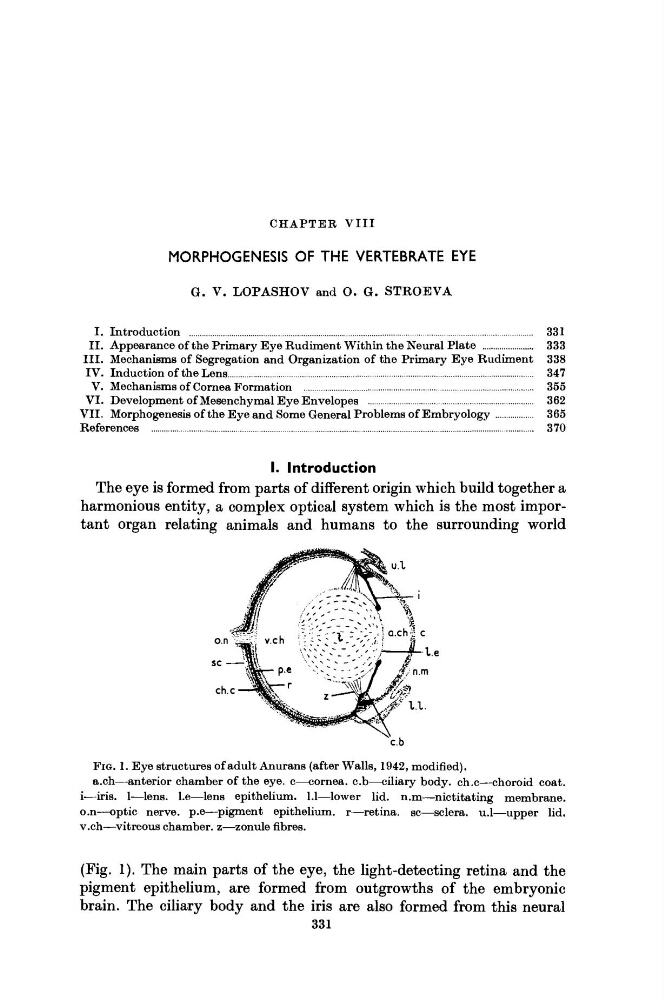
FIG. 1. Eye structures of adult Anurans (after Walls, 1942, modified).
a.ch—anterior chamber of the eye. c—cornea, c.b—ciliary body, ch.c—choroid coat,
i—iris. 1—lens, l.e—lens epithelium. 1.1—lower lid. n.m—nictitating
membrane,
o.n—optic nerve, p.e—pigment epithelium, r—retina,
sc—sclera, u.l—upper lid.
v.ch—vitreous chamber, ζ—zonule fibres.
(Fig. 1). The main parts of the eye, the light-detecting retina and the
pigment epithelium, are formed from outgrowths of the embryonic
brain. The ciliary body and the iris are also formed from this neural
331
VIII
MORPHOGENESIS OF THE VERTEBRATE EYE
G. V. LOPASHOV and O. G. S TRO EVA
I. Introduction
331
II. Appearance of the Primary Eye Rudiment Within the Neural Plate
333
III. Mechanisms of Segregation and Organization of the Primary Eye Rudiment
338
IV. Induction of the Lens
347
V. Mechanisms of Cornea Formation
355
VI. Development of Mesenchymal Eye Envelopes
362
VII. Morphogenesis of the Eye and Some General Problems of Embryology
365
References
370
I. Introduction
The eye is formed from parts of different origin which build together a
harmonious entity, a complex optical system which is the most important organ relating animals and humans to the surrounding world
c.b
FIG. 1. Eye structures of adult Anurans (after Walls, 1942, modified).
a.ch—anterior chamber of the eye. c—cornea, c.b—ciliary body, ch.c—choroid coat,
i—iris. 1—lens, l.e—lens epithelium. 1.1—lower lid. n.m—nictitating
membrane,
o.n—optic nerve, p.e—pigment epithelium, r—retina,
sc—sclera, u.l—upper lid.
v.ch—vitreous chamber, ζ—zonule fibres.
(Fig. 1). The main parts of the eye, the light-detecting retina and the
pigment epithelium, are formed from outgrowths of the embryonic
brain. The ciliary body and the iris are also formed from this neural
331