

2 4 0
J O H N R U N N S T R Ö M
to a reduction of the matrix and a relative increase in size of the extralamellar bodies. Figures 12A and B , copied from Afzelius (1956, Fig. 2 ) ,
show t h a t the lamella is attached at the membrane of the cortical particle
by one or two stalklike filaments, similar to the shanks in Brissopsis or
the stalks in Paracentrotus.
Observations of longitudinally sectioned cortical particles indicate that filaments branch out from the stalk of the
lamella (Fig. 12A). As in Paracentrotus,
the lamella is a spongelike structure; its configuration is, however, less elaborate than in
Paracentrotus.
I t is more difficult in Echi?ius to distinguish main filaments and connections; they are of about equal width, 300-400 Â. In Echinus the gradual
transition from a denser bottom plate is less pronounced than in Paracentrotus. No fine structure could be distinguished in the filaments of
the lamella, which is in keeping with the general more compact configuration of the cortical particles of Echinus.
According to S. Lönning (personal communication, 1964) the cortical particles in Echinus acutus are very similar to those of Echinus esculentus. With respect to the cortical particles the two species are genetically very alike. In this respect it is of interest t h a t the two species
cross-breed even under natural conditions (Hagström and Lönning,
1961).
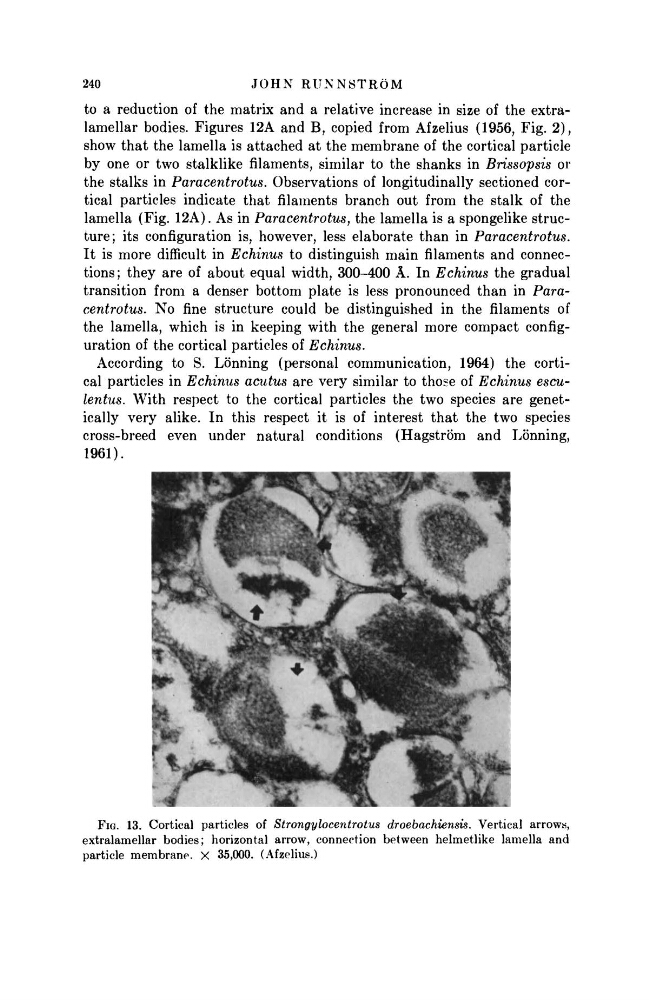
FIG. 13. Cortical particles of Strongylocentrotus
droebachiensis. Vertical arrows,
extralamellar bodies; horizontal arrow, connection between helmetlike lamella and
particle membrane. X 35,000. (Afzelius.)
J O H N R U N N S T R Ö M
to a reduction of the matrix and a relative increase in size of the extralamellar bodies. Figures 12A and B , copied from Afzelius (1956, Fig. 2 ) ,
show t h a t the lamella is attached at the membrane of the cortical particle
by one or two stalklike filaments, similar to the shanks in Brissopsis or
the stalks in Paracentrotus.
Observations of longitudinally sectioned cortical particles indicate that filaments branch out from the stalk of the
lamella (Fig. 12A). As in Paracentrotus,
the lamella is a spongelike structure; its configuration is, however, less elaborate than in
Paracentrotus.
I t is more difficult in Echi?ius to distinguish main filaments and connections; they are of about equal width, 300-400 Â. In Echinus the gradual
transition from a denser bottom plate is less pronounced than in Paracentrotus. No fine structure could be distinguished in the filaments of
the lamella, which is in keeping with the general more compact configuration of the cortical particles of Echinus.
According to S. Lönning (personal communication, 1964) the cortical particles in Echinus acutus are very similar to those of Echinus esculentus. With respect to the cortical particles the two species are genetically very alike. In this respect it is of interest t h a t the two species
cross-breed even under natural conditions (Hagström and Lönning,
1961).
FIG. 13. Cortical particles of Strongylocentrotus
droebachiensis. Vertical arrows,
extralamellar bodies; horizontal arrow, connection between helmetlike lamella and
particle membrane. X 35,000. (Afzelius.)